

The Bombing of Pan Am 103 has arrived on Netflix, bringing one of history’s most devastating terrorist attacks back into the spotlight for viewers around the world.
The six-part drama stars Connor Swindells, Merritt Wever and Patrick J. Adams. It originally premiered on BBC One in May 2025 and is now available for a wider audience to watch on Netflix.
The series opens on Christmas Eve and begins with scenes of everyday life: families eating dinner, a police officer starting work, and airline passengers settling in for a journey home ahead of the holidays.
What none of them knew was that high above Scotland, a catastrophe was only moments away.
Almost four decades later, the Lockerbie bombing remains a defining event in the history of aviation security and the global fight against terrorism.
With the drama renewing interest in the case, many people may be wondering what actually happened on that night in 1988.
On 21 December 1988, just four days before Christmas, Pan Am Flight 103 was travelling from London Heathrow to New York’s JFK Airport after beginning its route as a feeder flight from Frankfurt.
There were 259 people onboard, including passengers and crew. Among them were 35 Syracuse University students returning home after studying abroad.
At 7:03pm, as the aircraft flew at 31,000 feet over Lockerbie in Scotland, a bomb concealed in the forward cargo hold exploded. The Boeing 747 broke apart in the sky, with debris falling over roughly 845 square miles.
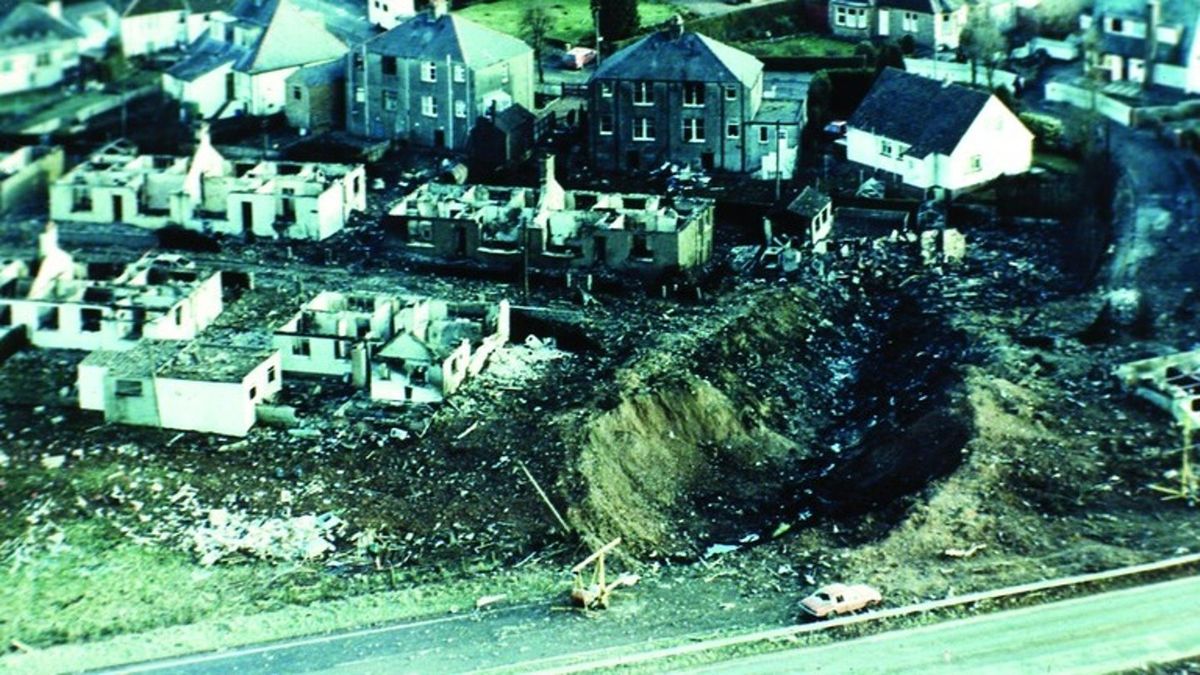
The wings and fuel tanks crashed into Sherwood Crescent in Lockerbie, carving a crater more than 150 feet deep and unleashing an enormous fireball.
Everyone aboard the plane was killed, along with 11 people on the ground.
Altogether, 270 victims from 21 different countries died in the attack. Of those, 190 were Americans, including students, grandparents and even a baby only two months old.
Before 9/11, it stood as the deadliest terrorist attack ever committed against US citizens.
For Lockerbie residents, the evening had begun like any other in the run-up to Christmas, with people at home eating, watching television or preparing for the holiday. Then wreckage from a passenger jet rained down on the town.
David Jardine, who was 19 at the time and newly qualified with the local fire brigade, was among those sent to the scene.
He told the FBI he remembers seeing the glow of the fire from miles away before he even got there, and instantly realising the scale of what had happened.
Police inspector George Stobbs first learned of the disaster through a television newsflash while he was at home. When he arrived at Sherwood Crescent, the sight stayed with him forever: flames roaring from a huge crater, heavy smoke, and heat strong enough to melt a wrought iron gate, which he said looked like it had ‘turned to butter and was dripping’.
The aircraft’s tail section and landing gear fell in Rosebank Crescent nearby. The nose cone landed miles away in a field opposite Tundergarth Church, later becoming one of the enduring and most haunting images linked to the disaster.
The investigation first fell to Dumfries and Galloway Constabulary, which at that time was Britain’s smallest mainland police force.
They were suddenly responsible for one of the largest criminal inquiries the country had ever seen, as thousands of police officers, firefighters, soldiers and volunteers descended on the region.
Detective Stuart Cossar, who later served as deputy senior investigating officer, remembered colleagues finishing exhausting ten-hour shifts only to return almost immediately for more overnight work without complaint.
Detective Harry Bell took charge of one of the debris sectors and said he ended up going out out to the scene, and ‘not coming home for three years’.
He said the devastation did not resemble any previous crime scene he had dealt with, but instead felt more like a battlefield.

Search teams eventually recovered around 300 tons of wreckage from the countryside, carefully logging and reconstructing thousands of separate fragments.
One of the most important discoveries was a damaged piece of clothing that had a fragment of circuit board embedded in it.
That single fragment moved from investigators in Scotland to the FBI and then to the CIA, where an electronics specialist recognised it as matching a timer linked to an earlier Libyan terrorist operation.
Further investigation established that the timer had been manufactured specifically for Libya.
The clothing was traced back to a shop in Malta, allowing investigators to reconstruct the route taken by the bomb suitcase. Authorities concluded that the device, hidden inside a Toshiba radio-cassette player and packed into a brown Samsonite case, travelled without a passenger from Malta to Frankfurt before ultimately being loaded onto Pan Am Flight 103.
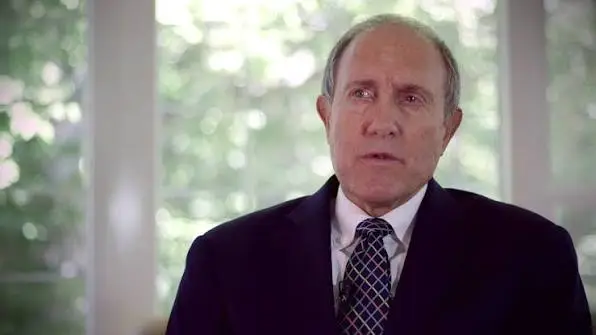
Retired FBI Special Agent Dick Marquise, who led the Bureau’s investigation, later said the case was solved through the slow assembly of countless tiny details.
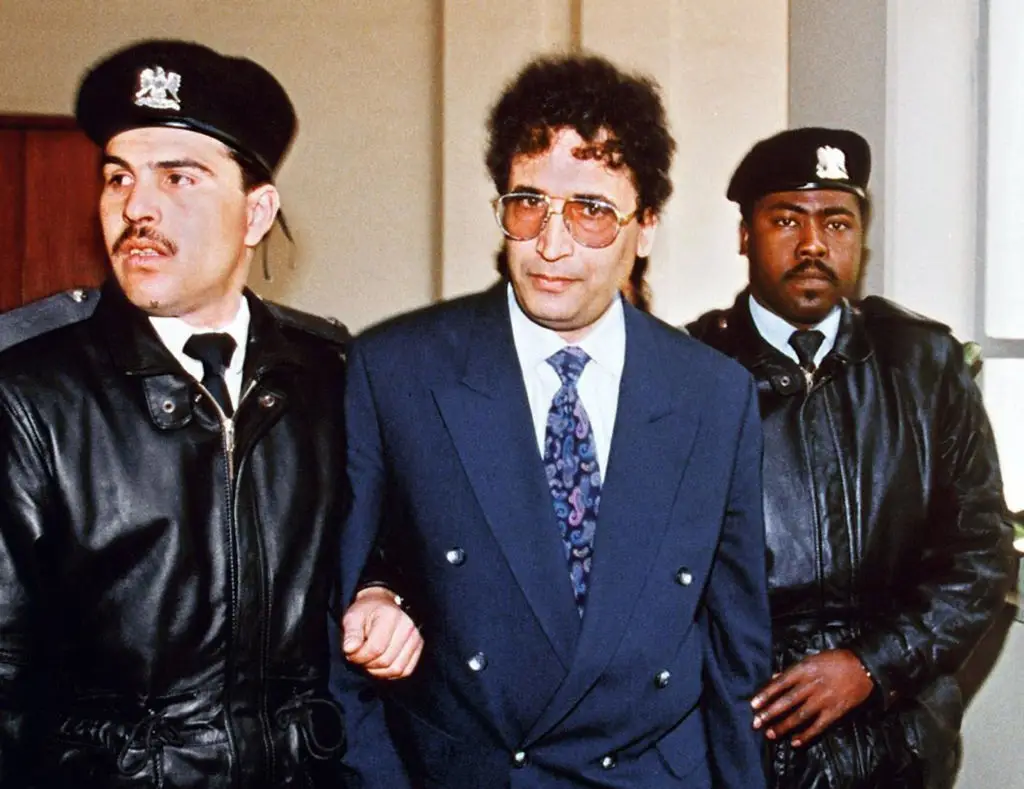
Almost three years after the bombing, British and American officials charged two Libyan intelligence operatives: Abdelbaset Ali Mohmed al-Megrahi and Lamin Khalifah Fhimah.
Investigators concluded that the bombing was likely retaliation for US airstrikes on Libya and Muammar Gaddafi.
Libya would not surrender the two men, leading to years of diplomatic stalemate.
A deal was eventually reached under which the suspects would stand trial under Scottish law, but outside Scotland. In May 2000, proceedings began at Camp Zeist in the Netherlands, a former US Air Force base converted into a Scottish court.
Following nine months of testimony and evidence, al-Megrahi was convicted of murder and sentenced to life imprisonment. Fhimah was acquitted.
For many relatives of those killed, the verdict answered some questions but left others unresolved.
Marquise later said his greatest regret was that not everyone involved had been brought to justice, with some suspects dead and others still thought to be alive.
Al-Megrahi was released from prison in August 2009 on compassionate grounds after being diagnosed with terminal prostate cancer, and returned to Libya where he died in May 2012 at the age of 60. His release sparked significant controversy, with many families of victims expressing outrage at the decision.
However, the case has never fully closed. In December 2022, nearly 34 years after the bombing, the United States announced it had taken custody of Abu Agila Mohammad Mas’ud Kheir Al-Marimi, a former Libyan intelligence officer and alleged bomb maker. The arrest marked a significant development in the decades-long investigation, though prosecutors acknowledged that not all perpetrators had been brought to justice. Mas’ud pleaded not guilty to charges in 2023 and a trial is expected to begin in 2026.
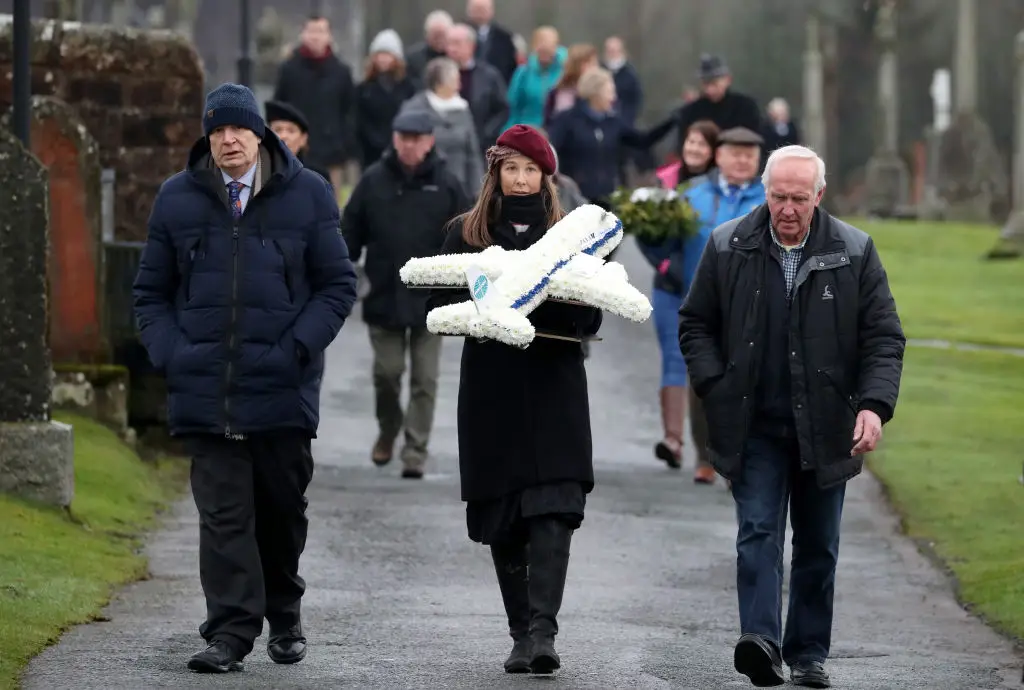
Outside the legal case, Lockerbie also became known for extraordinary acts of compassion. Local volunteers, later referred to as the ‘laundry ladies’, spent months cleaning victims’ possessions and returning them to devastated families around the world.
The bombing also changed official responses to terrorism, helping shape the way governments support victims and influencing aspects of the US response after 9/11.
The series was created by Jonathan Lee and directed by Michael Keillor, with the original score composed by Scottish post-rock band Mogwai. The soundtrack was recorded at Mogwai’s Castle of Doom studio with longtime collaborator Tony Doogan.
The Bombing of Pan Am 103 is now streaming on Netflix.