

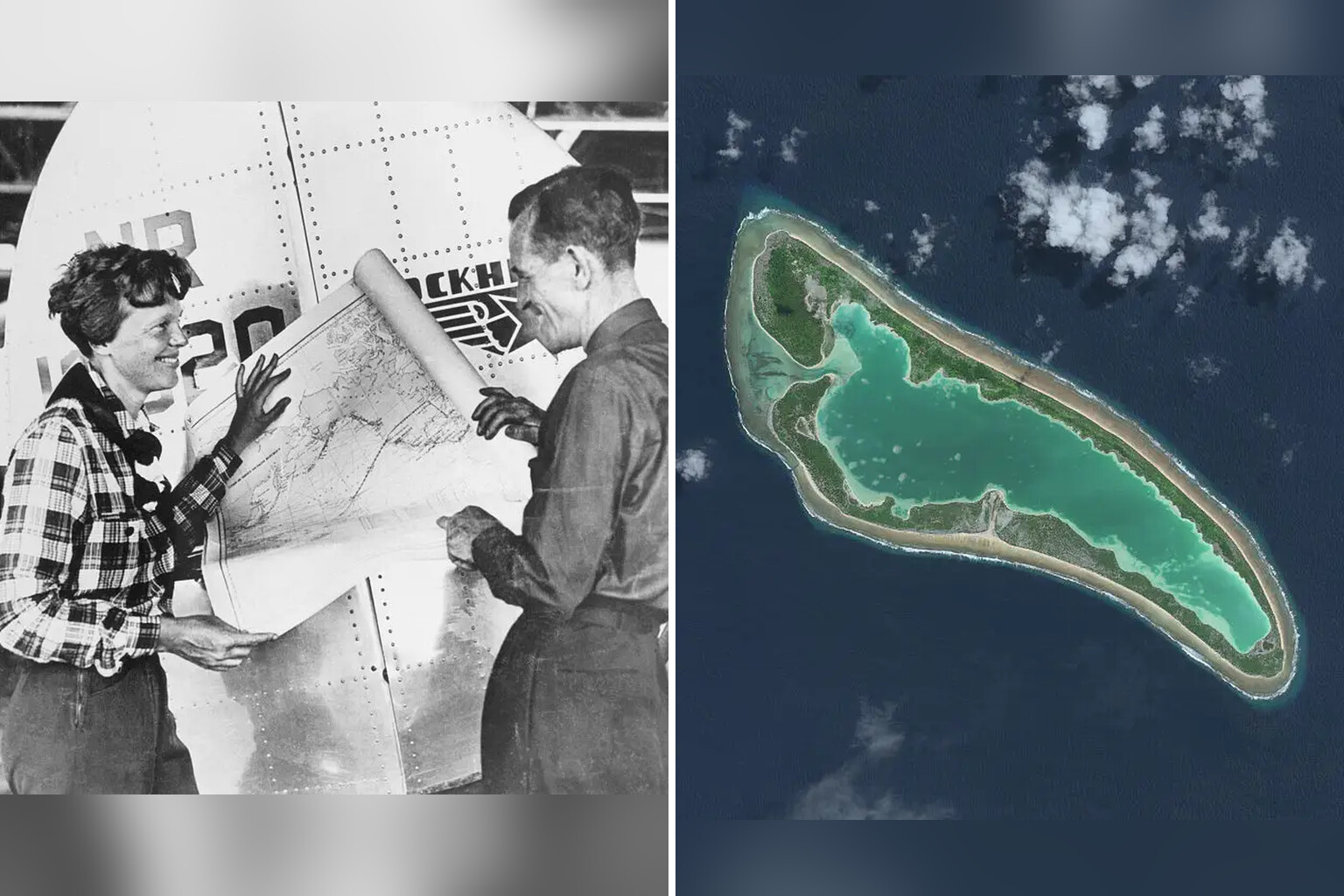
A 17-person research team hunting Amelia Earhart’s missing plane has extended its Pacific expedition after El Niño-driven squalls made it too dangerous to reach Nikumaroro Island.
The crew, drawn from Purdue University, the Purdue Research Foundation and the Archaeological Legacy Institute, had traveled to the remote atoll to investigate a visual anomaly first spotted in satellite imagery. Rick Pettigrew, executive director of the Archaeological Legacy Institute, addressed the delay directly.
“We know many people around the world are watching and awaiting updates,” Pettigrew said in a university release. “We are committed to sharing information as soon as we are able, while ensuring it is accurate and appropriate to release. Above all, the safety of our team and the ship’s crew is our No. 1 priority.”
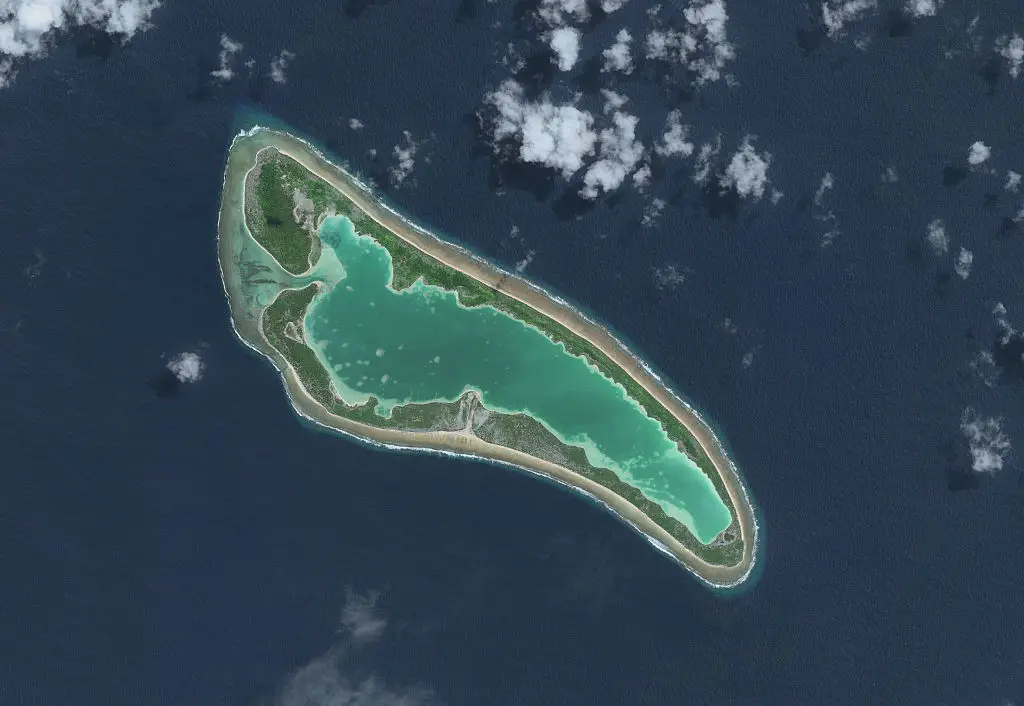
The object that drew the team to Nikumaroro was detected by researcher Michael Ashmore in 2020 while he was examining an Apple Maps image. Investigators later determined the same shape appears in photographs dating back to 1938, the year after Earhart and her navigator Fred Noonan vanished during their attempted around-the-world flight.
The anomaly’s persistence across decades of imagery has fueled speculation that it could be the remains of Earhart’s Lockheed Electra 10-E, which disappeared somewhere over the Pacific in July 1937. Both aviators were declared legally dead in January 1939.
To confirm what the object actually is, the team needs to get physically close to it. The planned Phase 2 operation would deploy a hydroprobe to make direct contact, measuring the object’s depth, orientation and surface composition. That work cannot begin until conditions improve around the island’s treacherous reef.
The university detailed just how hazardous the approach normally is, even without extreme weather. “Even under normal conditions, it is not a risk-free proposition,” the release noted. Crew members must transfer from the larger vessel Marin Mainiku to a smaller transport boat on the leeward side, then navigate around the “blasted channel” passage and “shoot the rapids” to reach the beach.
Current conditions have made that sequence impossible. Prevailing winds of up to 20 knots, with gusts reaching 27 knots, have churned the surrounding seas. The release specified that the rough water and squalls create unsafe conditions both for boarding the transport boat alongside the Marin Mainiku and for running the smaller craft through the blasted channel itself.
El Niño patterns, which originate in the Pacific, are known to trigger extreme weather events globally including flooding, hail and sleet. The current system has concentrated its disruptive force directly across the team’s operating area in the South Pacific.
Earhart, then 39, had already secured her place in aviation history as the first woman to fly solo across the Atlantic in May 1932. Her attempted circumnavigation with Noonan, 44, represented an even more ambitious capstone to her career. The pair were last heard from during the difficult leg from Lae, New Guinea to Howland Island, a tiny speck in the central Pacific. Multiple theories have emerged about their fate, including the possibility that they reached Nikumaroro—then known as Gardner Island—before perishing.
The extended expedition will remain on station until the weather window opens and the reef becomes passable.