

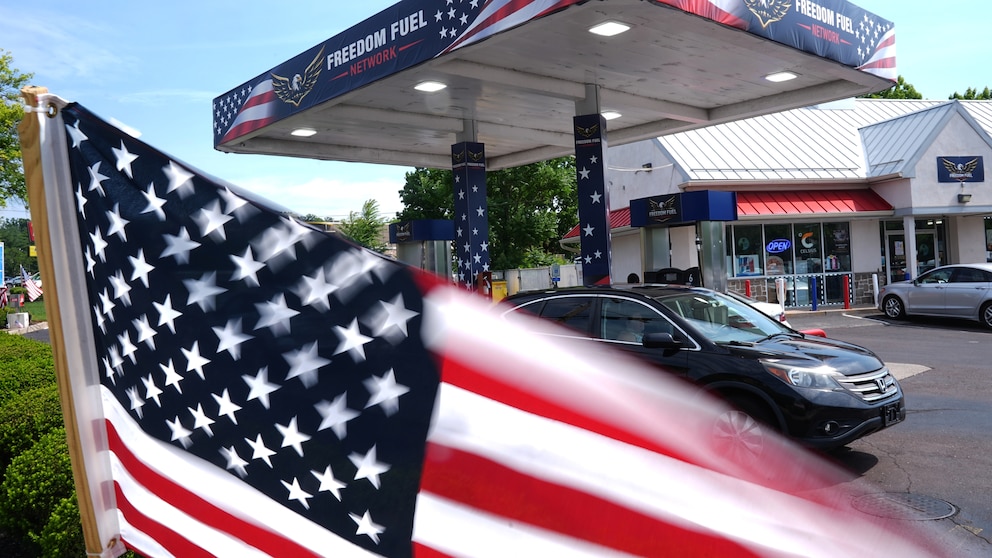
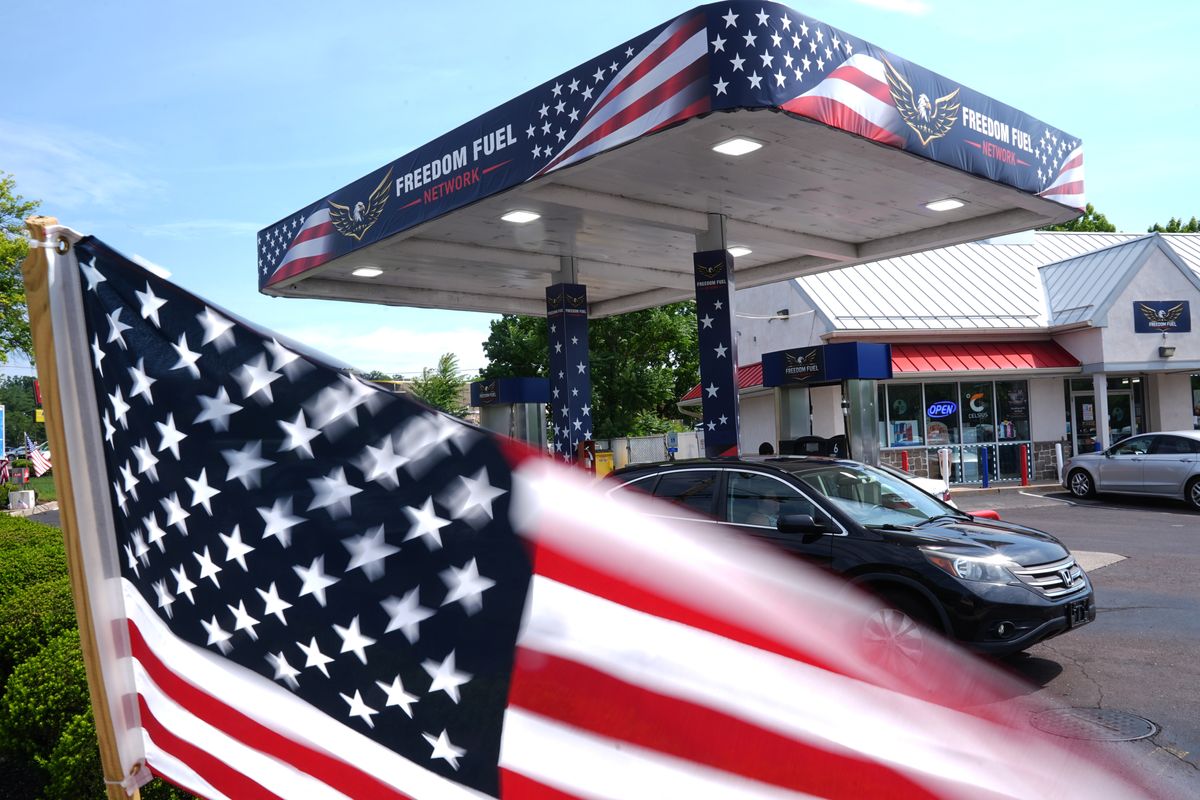
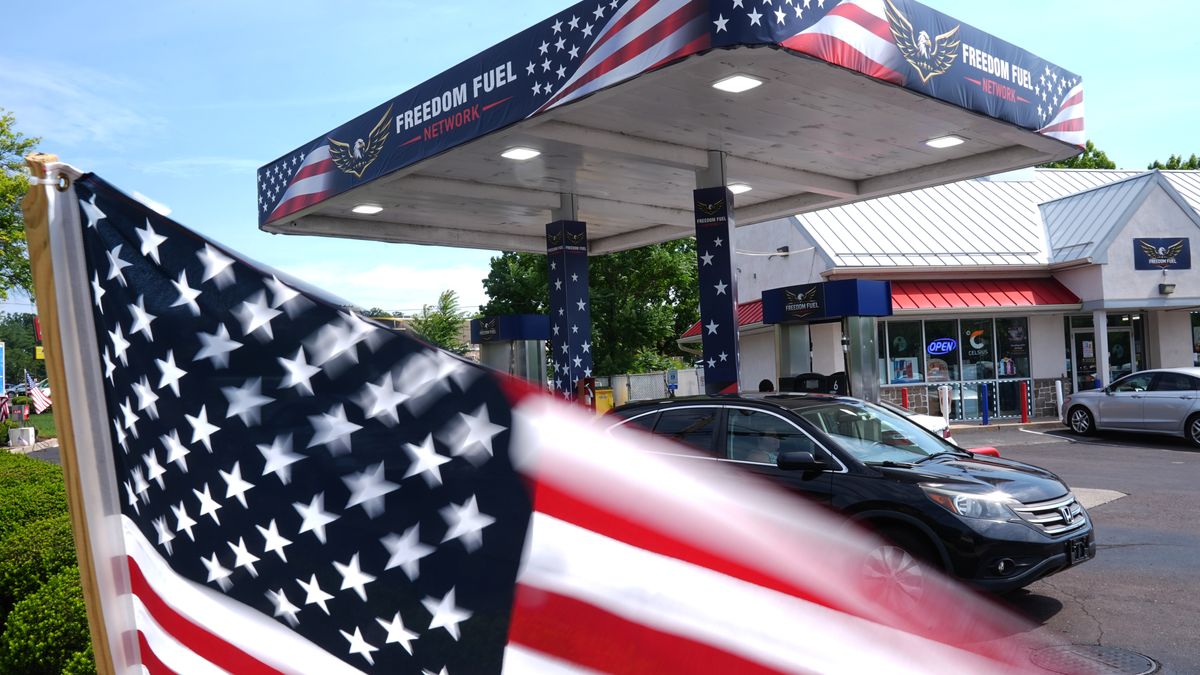
President Donald Trump and his White House have enthusiastically promoted the Freedom Fuel Network, a chain of star-spangled convenience stores selling gas at $3.47 per gallon in honor of the 47th president. But behind the patriotic branding lies a complex web of businessmen whose identities and track records have remained largely obscured—until now.
Records indicate the Philadelphia-area network, which launched last month with 25 locations across Pennsylvania and southern New Jersey, is run by a disparate collection of figures: Randy Brown, a senior special teams coach for the Baltimore Ravens who previously served three terms as mayor of Evesham Township; Yoni Gontownik, a former investment director at Mercuria, a Swiss-owned commodities trading firm who has hosted fundraisers for Republican lawmakers; and two New Jersey brothers, Shamikh and Syed Kazmi, who have faced numerous civil lawsuits and misconduct accusations.
Brown and Gontownik signed the Delaware corporate formation documents for Freedom Fuel Network LLC on June 23, just one week before Trump promoted the venture on social media. A Republican who has described himself as a “proud Trump supporter,” Brown previously explored runs for governor in 2016 and Congress in 2021. He has served as a Ravens special teams coach for 18 seasons while maintaining a title insurance company in New Jersey.
Gontownik, for his part, has been active with NORPAC, a pro-Israel political action committee, and has hosted fundraisers for Republican members of Congress. He and his wife live in northern New Jersey.
The role of the Kazmi brothers looms larger than initially apparent. Public records show that 14 of the network’s 25 stations are controlled by companies linked to Shamikh and Syed Kazmi. Shamikh leases eight stations directly from Blue Owl Capital, an investment firm, while the brothers are linked to at least six others through business records. However, the brothers have been reluctant to engage with media inquiries, directing requests for comment to the Freedom Fuel Network’s website, which contains no contact information, phone number, or mailing address.
The Kazmis’ involvement is complicated by a troubling legal history. In February of this year, a federal judge ordered the brothers to pay substantial civil damages for unlawfully taking more than 230,000 gallons of fuel. According to court filings, in August 2021, after a fuel supplier cut them off for refusing to sign a new contract, the brothers exploited a security lapse to gain access to the supplier’s depot, and tanker trucks absconded with more than 230,000 gallons over a ten-day period. A judge ruled against the brothers, but the fuel supplier has yet to receive payment.
The misconduct accusations extend beyond the fuel theft case. Syed Kazmi was hit with a $380,000 judgment two years ago in a suit brought by 7-Eleven, which accused him of “dishonest, unethical, immoral” conduct while operating a franchise in Lawrenceville, New Jersey. The 7-Eleven location was flagged for unsanitary conditions including trash and a rodent infestation, and the company said “tens of thousands of dollars” of cigarettes ordered on credit had gone missing.
More recently, a federal judge held a company operated by Shamikh Kazmi in contempt in 2022 in a trademark case brought by BP America. Though BP had severed ties with Kazmi’s Diwan Petrol two years prior to the litigation, the corporation’s signage had not been removed from a gas station despite a court order. The judge authorized U.S. Marshals to accompany BP workers to remove the signage.
How the stations initially captured Trump’s attention remains a mystery. The president celebrated the network’s gas prices just before the busy July 4th travel period as Americans were grappling with higher oil prices sparked by the war with Iran. “I am pleased to announce that a VERY smart Retailer, located throughout the Northeast, is stepping up,” Trump wrote on his Truth Social platform on July 1. “America has never been stronger than it is now, and Gas Prices will soon be back to the Record Low Prices Americans enjoyed at the pump before our very successful ‘excursion’ in Iran.”
The White House followed up with a post on X and produced a video showing customers waving cash and thanking Trump for reducing prices, with stations festooned with American flags and golden eagle logos. One of the stations featured—located in Dresher, Pennsylvania—is owned by a subsidiary of Blue Owl Capital. Trump has owned up to $25 million worth of Blue Owl stock, though his most recent financial disclosure indicates he has sold almost all of that stake.
The White House denied Trump had any personal connection to the venture but acknowledged having discussions with individuals who set up the network. “The Administration is not involved in the company, nor has the Administration given the company any funding. There is no other entity or person subsidizing the lower gasoline costs,” the White House stated.
Yet industry experts have expressed deep skepticism about the business model. The $3.47 price is dramatically below average retail prices—about 50 cents cheaper than Pennsylvania’s average of $3.98 and New Jersey’s average of $3.91 at the time of launch. Wholesale prices suggest stations are losing money on every gallon sold. Based on wholesale data from early July, participating stations would lose at least 17 cents per gallon, meaning a station selling 68,000 gallons monthly would lose at least $11,500 in that period alone.
“Stations selling at this price, it’s not sustainable,” Patrick De Haan, GasBuddy’s head of petroleum analysis, told the Philadelphia Inquirer, noting rising crude oil prices after tensions with Iran. Industry analysts noted that losses have likely grown since July 3 as oil prices spiked further.
Despite the White House’s assertion that no entity is subsidizing the prices, the financial mathematics simply do not work for independent retailers. Experts have suggested the stations may offset some losses through convenience store sales or that the low gas prices are a temporary promotional splurge designed to attract customers before prices normalize.
That normalization appears to be underway. Social media posts and gas-price tracking websites show that Freedom Fuel prices have begun creeping upward. A station in Bensalem, Pennsylvania, for example, was selling regular gasoline for $3.82 a gallon on Thursday—35 cents above the initial advertised price. Some locations have reported prices as high as $4.49, with a New Jersey location climbing to $3.89 before dropping back down.
A spokesman for the National Association of Convenience Stores said such dramatic promotional pricing typically lasts “a matter of hours or a matter of days.” The Freedom Fuel Network has credited Trump’s endorsement for the “explosive growth” of their business, posting a statement to their website asserting that they are “proudly lowering its prices to benefit our community” despite what they called “misinformation and baseless speculation circulating” about the venture.
How Freedom Fuel is subsidizing—or sustaining—the low prices remains unclear. Blue Owl Capital stated it leases the stores to independent contractors and is “not involved in the tenant’s operations or business decisions.” The Kazmi brothers have not responded to inquiries about their operational role or the venture’s financing, leaving critical questions about the network’s structure and financial backing unanswered.