

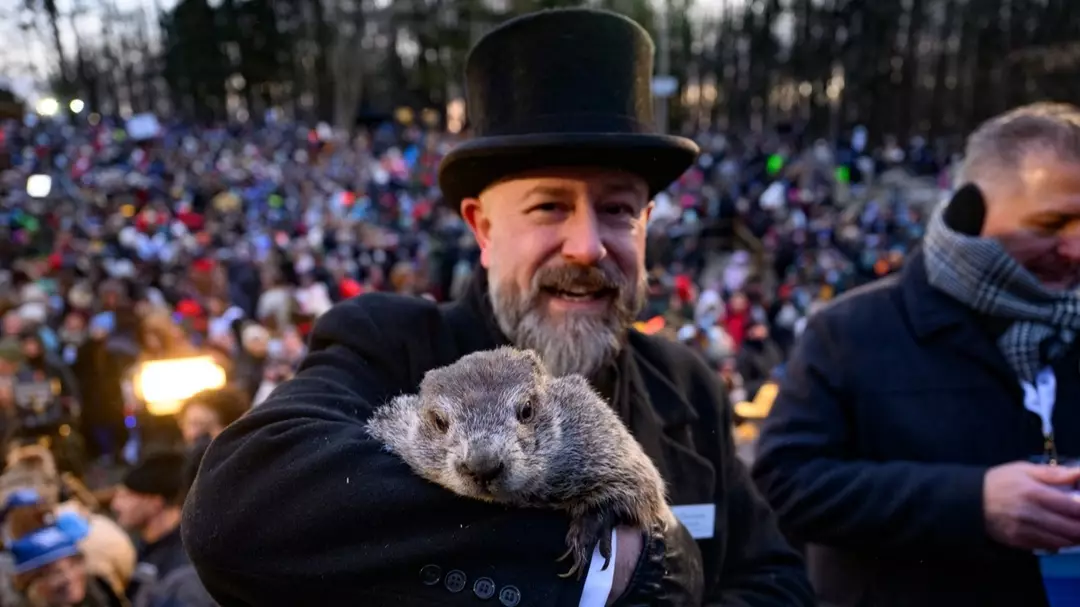
Every year in February, crowds of people flock to rural Pennsylvania, braving the cold to witness a group of formally dressed men predict the weather using a groundhog.
While it might sound unusual, this event is known as Groundhog Day, a tradition that has persisted through centuries of superstition, migration, and human determination.
Though modern Groundhog Day is associated with large gatherings and media coverage, its history is more peculiar than many realize.
Back before the groundhog became famous, the date was linked to Candlemas, a Christian holiday celebrated on February 2. It was believed that the weather on Candlemas could forecast the remainder of winter, encapsulated in an old English folk rhyme:
If Candlemas be fair and bright,
Come, Winter, have another flight;
If Candlemas brings clouds and rain,
Go Winter, and come not again.
Initially, animals were not part of the tradition. It was only when the custom reached Germany that a hedgehog was used as the predictor. If the hedgehog saw its shadow, it meant winter would linger. German settlers brought this practice to the United States, and due to a lack of hedgehogs, they substituted with a groundhog.
In the late 1800s, Punxsutawney, Pennsylvania became central to the tradition. The first mention of Groundhog Day in the local press occurred in 1886. By the following year, people were gathering at Gobbler’s Knob, sparking a legend. Over time, the event evolved from serious weather forecasting to celebrating its whimsical nature.
As of 2026, the tradition is still going strong.
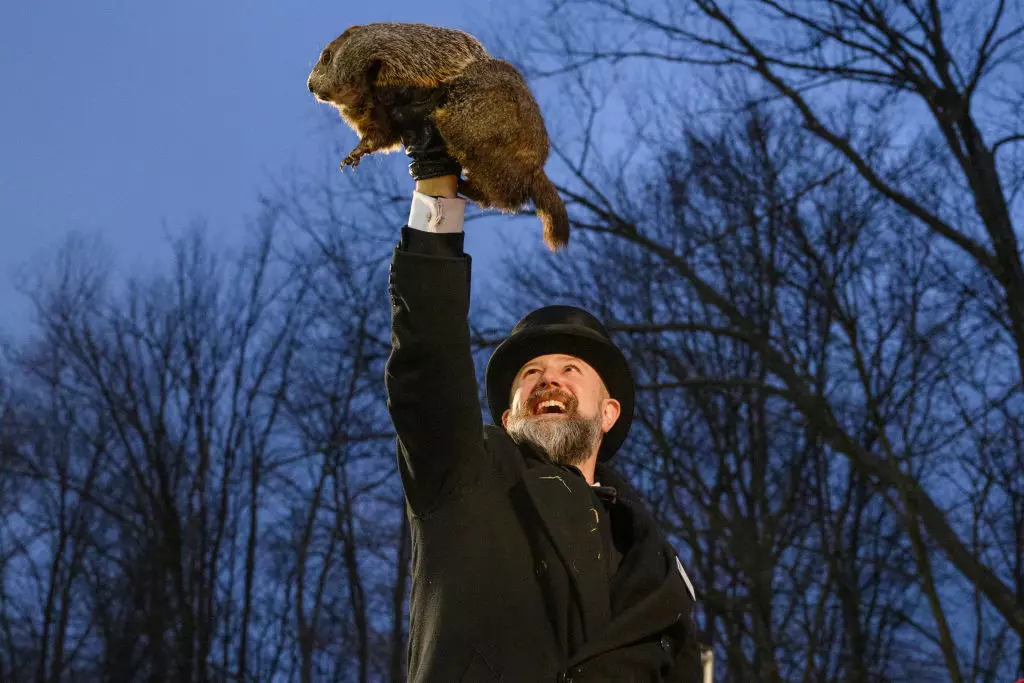
Positioned midway between the winter solstice and the spring equinox, Punxsutawney Phil makes his annual appearance. According to tradition, seeing his shadow means six more weeks of winter, while not seeing it heralds an early spring.
This year, Phil followed his usual pattern. Confirmed by Fox 5, he saw his shadow, indicating six additional weeks of winter—unsurprising to anyone familiar with early February weather.
Despite its dubious accuracy, Groundhog Day has gained popularity beyond Pennsylvania. Variations of the tradition occur across the United States and Canada, including playful versions like Potomac Phil in Washington DC.