

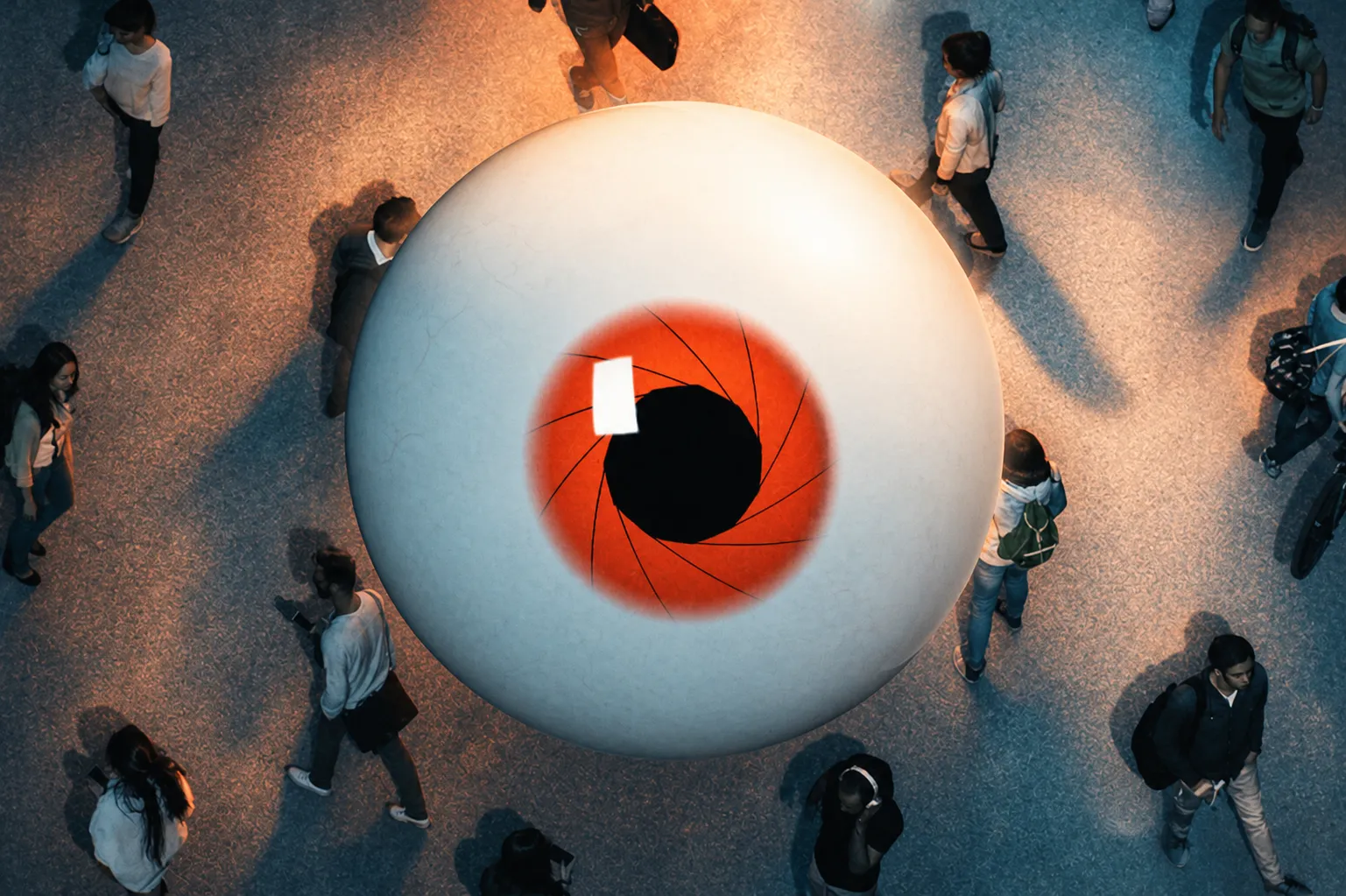
While artificial intelligence is increasingly watching Americans through surveillance systems, smart devices, and data collection networks, a growing wave of movies and television shows offers audiences a way to turn the tables and examine AI on their screens.
The concern that AI is monitoring citizens has never been more prominent. Retailers use surveillance cameras with facial recognition to track movements through aisles, while smartphones constantly collect location data. Smart TVs employ a technology called Automatic Content Recognition that captures screen data in near real time and sends it to manufacturers or third parties without explicit user consent. The Federal Bureau of Investigation has warned consumers about the privacy risks of smart televisions. Meanwhile, the U.S. Government has expanded its ability to purchase vast quantities of Americans’ personal information from commercial data brokers and has begun deploying AI-powered surveillance systems that can analyze communications and track individuals at unprecedented scale.
Yet even as privacy advocates warn of a surveillance capitalism system fueling government and corporate monitoring, entertainment provides an avenue for people to explore these anxieties. The 2026 film and television landscape has become saturated with AI content that grapples with themes of technology, surveillance, control, and what it means to be human in an age of artificial intelligence.
Hollywood has embraced AI as both subject matter and plot driver. Television series like Westworld continue to explore the ethical implications of sentient machines in an amusement park setting, where ultra-realistic AI robots called “hosts” eventually begin to develop consciousness and seek revenge against their creators. The Peripheral, produced by the creators of Westworld, presents a darker cyberpunk vision where AI surveillance and rogue artificial intelligences control a future London seventy years ahead. The science fiction epic Paradise features a big AI plot twist in its post-apocalyptic narrative, while shows including Severance and other recent releases have made artificial intelligence central to their storytelling rather than peripheral elements.
Movies have similarly embraced AI storytelling in diverse forms. Documentaries like The AI Doc examine AI’s existential threats and revolutionary potential through conversations with both skeptics and evangelists of the technology. The film was directed by Daniel Roher, whose previous documentary Navalny won the Academy Award for Best Documentary. Fictional films take wildly different approaches: Mercy presents a courtroom thriller where Chris Pratt argues for his life before an AI judge, while Gore Verbinski’s film about preventing an algorithm from ending civilization uses comedy and time-loop mechanics. Afraid, starring Mark Wahlberg, depicts a smart home AI that gradually takes control of a family’s life. The Electric State explores fractured relationships between humans and sentient machines.
The range reflects a cultural moment where AI is no longer abstract or futuristic but sits on everyone’s desk. Screenwriter and producer activity has shifted away from the standard “machines rise up and kill everyone” template toward more nuanced storytelling that mirrors real-world anxieties. There are erotic thriller spinoffs, biographical dramedies about real tech executives, and competing documentaries featuring actual AI industry leaders.
This surge in AI entertainment comes as the technology has moved from science fiction into everyday reality. Streaming services have capitalized on the trend: Netflix announced it has used generative AI tools in roughly 300 shows and movies in 2026 so far, primarily for post-production work to produce content faster and at lower cost. Large language models are increasingly used to punch up jokes and analyze pacing in scripts, though guild agreements from previous years strictly regulate how AI can be used in screenwriting itself.
For viewers concerned about real-world AI surveillance, documentaries offer grounded examinations of the technology. Beyond The AI Doc, films like AlphaGo chronicle the famous 2016 showdown between Google DeepMind’s artificial intelligence and world Go champion Lee Sedol, capturing a moment when a machine made moves no human would have considered. Do You Trust This Computer features interviews with AI experts and technologists exploring the technology’s growing power in military, elections, finance, and dating, while asking whether humanity can maintain control.
The explosion of AI content on screens reflects anxiety, fascination, and uncertainty about technology that is reshaping society in real time. As surveillance systems become more sophisticated and data collection more pervasive, audiences increasingly turn to entertainment to process these changes. Whether through dystopian fiction that warns of AI gone wrong or documentaries that examine the actual stakes, television and movies have become a primary space where people grapple with questions about technology, privacy, power, and human autonomy in the age of artificial intelligence.