

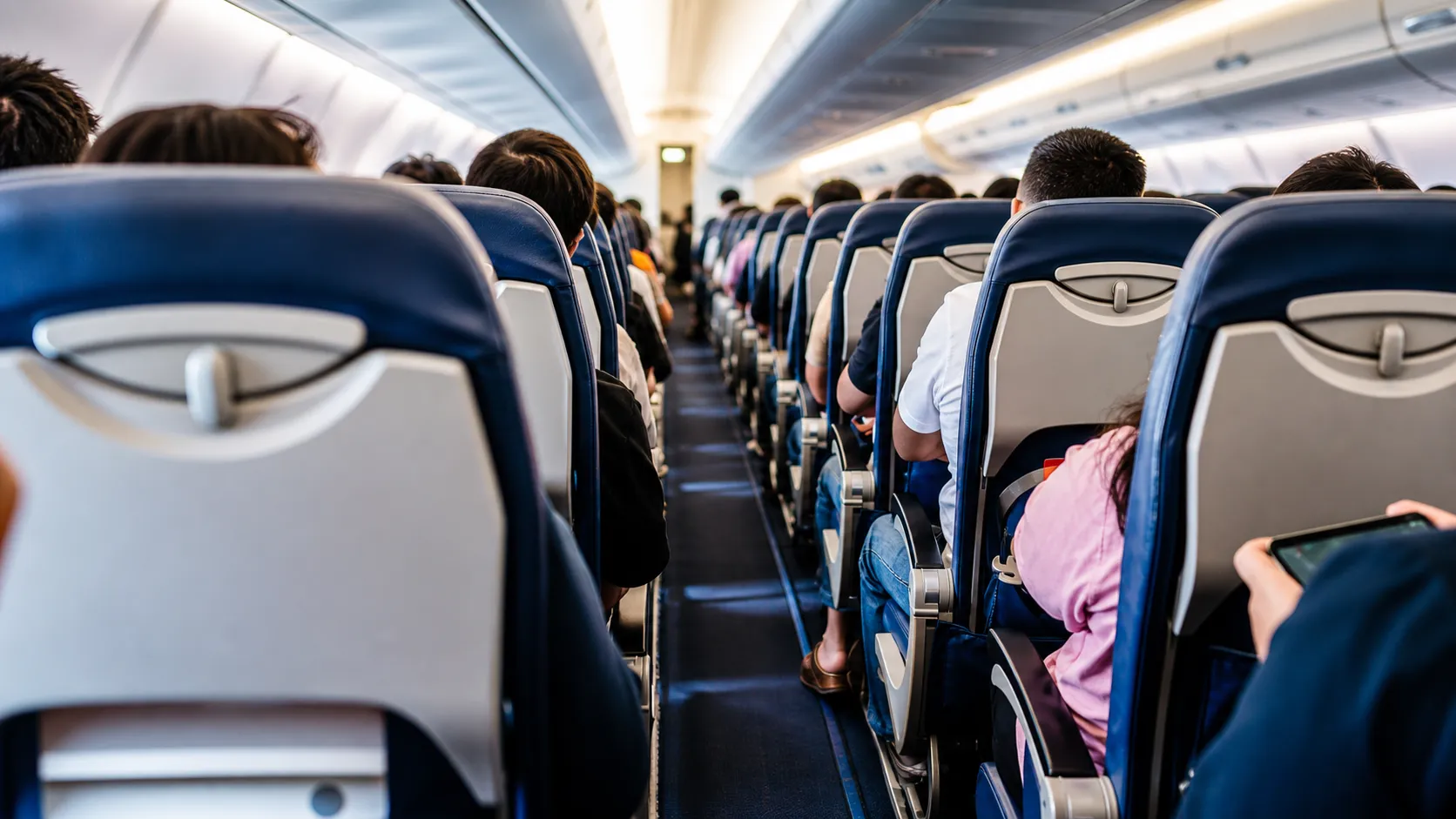
A travel specialist has revealed the plane seat he considers the worst possible choice, and it is one passengers may want to steer clear of on their next trip.
Rob Adcock, a UK-based travel content creator who works closely with Skyscanner, has taken countless flights and has built a following on TikTok as the person many know for sharing useful travel hacks.
Through his videos, Rob highlights bargain travel deals, while also warning viewers about common airport and flying mistakes that could make a journey more stressful.
One of the big mistakes, according to Rob, is ending up in what he describes as the worst seat on the aircraft.
He explained that this particular spot makes it difficult to get comfortable, and passengers sitting there are often among the last to leave the plane. That can be especially stressful for anyone with a short connection, or simply annoying for travellers eager to begin their holiday.

The seat in question is 19E, a middle seat located around the centre of the cabin.
Rob said: “The worst seat is 19E. A middle seat towards the middle of the plane. Urgh. Worst of every world. You always end up next to the person who constantly wants to get out. And if you need to get out, you’ve got to move the person next to you.
“You can’t get comfy, and if you’re next to two randoms, I’ve always found they don’t appreciate it if you fall asleep, dribbling on their shoulder.”
Expanding on why he dislikes 19E so much, Rob continued: “You’re usually the last to get off too. Because a lot of budget airlines don’t use air bridges and use buses instead, it means they can use both doors to get on and off.
“All that means is you’re too far away from the front and the back to get any kind of benefit. The airlines know this and that’s why they’re either free or, 9 times out of 10, if you use random seat allocation, that’s what you’re getting.”
There is, however, one important caveat: 19E is not automatically the worst seat on every plane. Seat letters and row numbers vary by airline and aircraft type, so passengers should always check the seat map before assuming they know what they are getting.
On many short-haul aircraft used by budget airlines, including common Airbus A320 and Boeing 737-style layouts, economy seating is arranged in a 3-3 pattern, usually with A, B and C on one side of the aisle and D, E and F on the other. In that set-up, E is typically a middle seat, which explains why Rob singles it out.
On larger long-haul aircraft, though, E can be part of a centre block, while row 19 may be in a completely different part of the cabin, or even in a premium section depending on the airline. For that reason, travellers should use the airline’s own seating chart, rather than relying only on a row number.
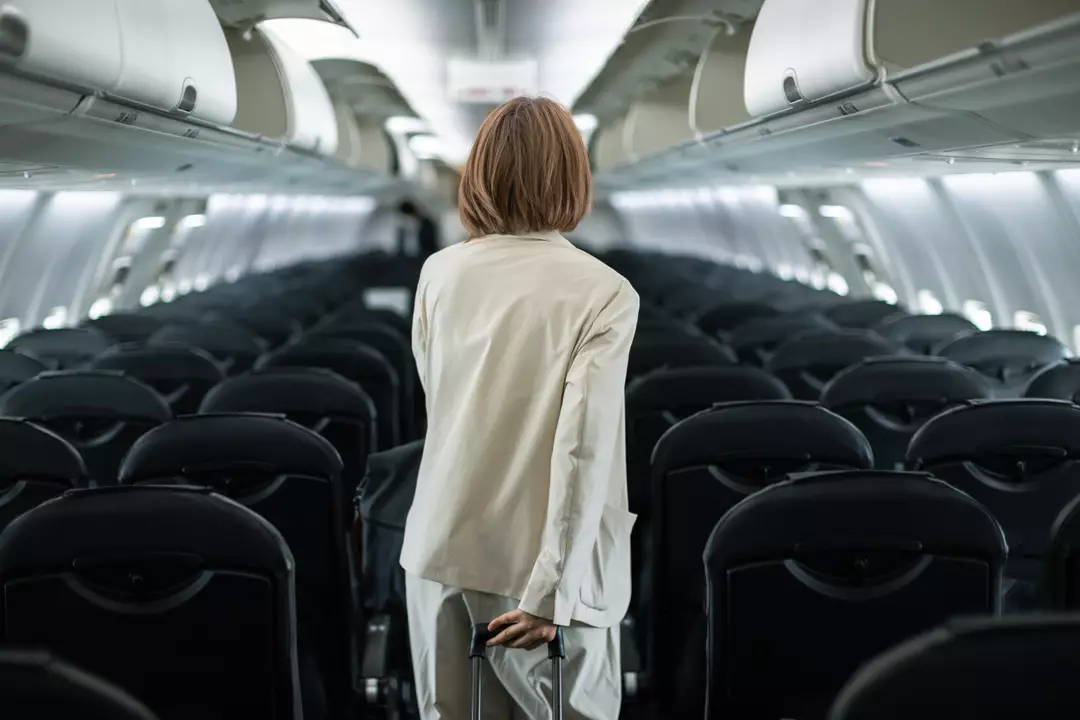
Middle seats are often unpopular because they lack the main advantages of both alternatives. Window seats offer a wall to lean on and control over the blind, while aisle seats make it easier to stand up, stretch or reach the overhead locker. The middle passenger is usually left negotiating armrest space with two strangers.
Still, the best and worst seats can depend on what matters most to the individual traveller. Anyone with a tight connection may prefer a seat near the front, while someone who wants to sleep may be happier at the window. Taller passengers often look for exit rows or extra-legroom seats, although these may come with restrictions and added fees.
Other seats worth treating with caution include the very last row, which can be close to toilets and galleys and may have limited recline; seats near the galley, where noise and foot traffic can be higher; and rows close to the wings or engines, where some passengers notice more noise or vibration.
For passengers who do not want to pay to choose a seat, the risk is that airlines may allocate whatever remains at check-in. That can often mean a middle seat, especially on busy flights where couples, families and frequent flyers have already selected the more desirable spots.
A practical way to avoid disappointment is to check the aircraft type and seat map as soon as the booking is made, then check again before departure in case the airline swaps the plane. If getting off quickly matters, a seat close to the front is usually more useful than one in the middle of the cabin. If comfort is the priority, avoiding middle seats such as B and E on many narrow-body planes is a sensible place to start.
The warning could be particularly useful for football fans travelling to the US, Canada and Mexico for the World Cup, with airports in all three countries expected to deal with heavy passenger numbers over the coming weeks.
The 2026 FIFA World Cup runs from 11 June to 19 July and is the largest edition of the tournament so far, with 48 teams playing 104 matches across 16 host cities in the United States, Canada and Mexico.
That means many supporters will be moving between countries, cities and time zones during the tournament, sometimes with baggage, immigration checks and onward transport to navigate before they even reach their accommodation.
UK travellers heading to matches have also been advised to check the entry rules for each country they plan to visit or transit through, as requirements for the US, Canada and Mexico are different. Fans crossing borders during the tournament should allow extra time and keep travel documents, ticket details and accommodation information easily accessible.
Jacob Wedderburn-Day, travel expert and co-founder of Stasher, has also advised supporters to avoid planning journeys with a tight connection or arriving on the same day as a match.
“If fans are flying into a major hub, they should try to arrive the day before, keep the rest of the itinerary light, and assume immigration, baggage reclaim, taxis and public transport will all take longer than usual,” he added.