

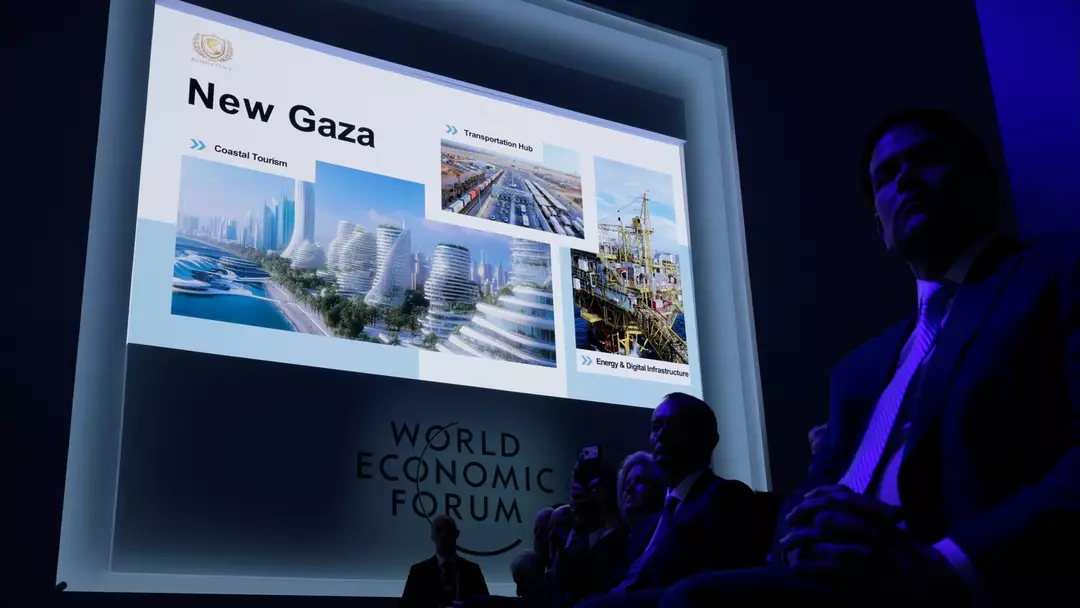
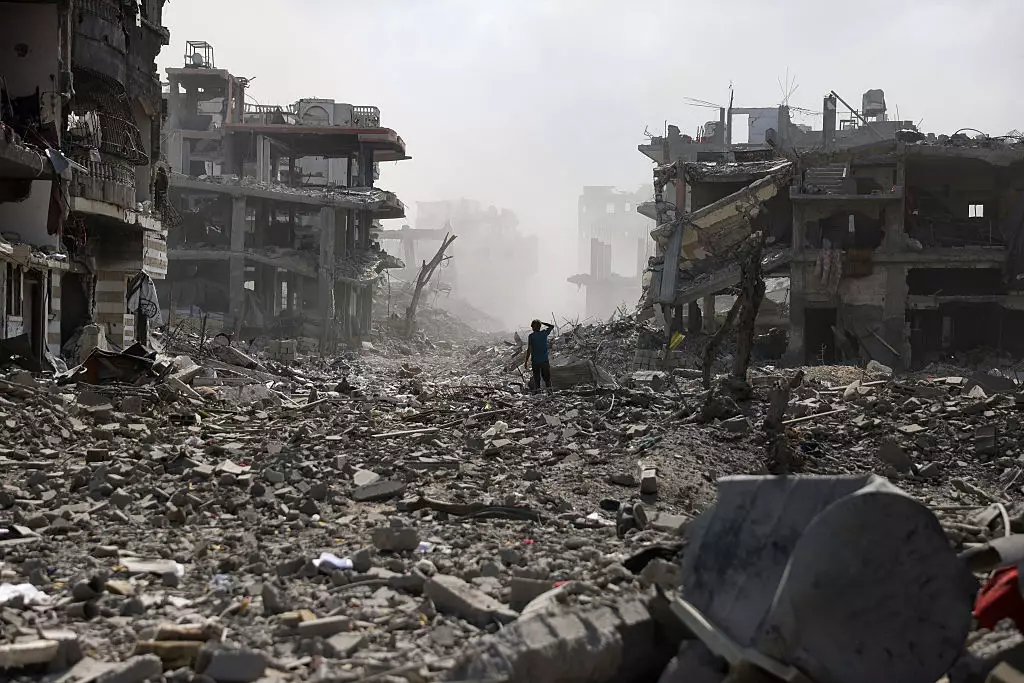
With much of Gaza currently in ruins, the Trump administration has unveiled a new development plan to transform the devastated city with waterfront skyscrapers.
Jared Kushner, Donald Trump’s son-in-law and real estate developer, has disclosed the White House’s future plans for Gaza.
During the Board of Peace signing event in Switzerland on Thursday (January 22), Kushner announced that with substantial investment, the region will undergo a complete transformation.
This initiative will reportedly focus on rebuilding Gaza after the conflict involving Israel and Hamas in the area.
The estimated cost of this plan is $25 billion, with an ambitious timeline for completion within the next two to three years.
One aspect of the plan involves the deployment of an international security force and the disarmament of Hamas.
Reports suggest that Hamas has conditionally agreed to relinquish its rockets and artillery to a Palestinian-managed Gaza administration.
This represents a significant shift from Trump’s earlier proposal to relocate Palestinians from Gaza to neighboring Arab nations.
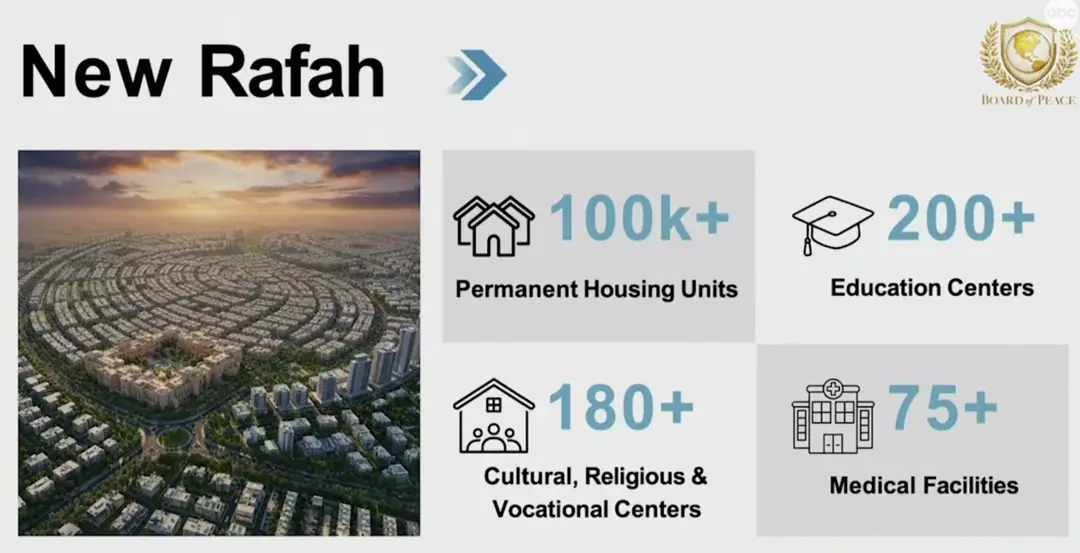
In his presentation, Kushner showcased slides featuring concept art of the area’s development into various zones.
He stated, “We’ve developed ways to redevelop Gaza. Gaza, as President Trump’s been saying, has amazing potential, and this is for the people of Gaza.
“Initially, we considered creating a free zone and a Hamas zone. Ultimately, we decided to plan for catastrophic success. Hamas signed a deal, demilitarized. That is what we are going to enforce.”
For New Rafah, Kushner mentioned plans for more than 100,000 permanent housing units, 200 educational centers, 180 cultural, religious, and vocational centers, and 75 medical facilities.
It was estimated last year that nearly 90 percent of homes in Gaza had been destroyed, and healthcare and sanitation systems had collapsed.
Kushner also outlined that the Board of Peace will draw from successful strategies implemented by countries worldwide to execute this plan.
He remarked, “We have a lot of data on what can be, but we think this really gives the Gazan people an opportunity to live their aspirations.
“But it all starts with security and it all starts on governance.
“In closing, I would like to emphasize that the Board of Peace is studying best practices globally. We are examining which countries excel in education and healthcare.
“This is not proprietary information; the Board of Peace will make it public, and we aim to encourage countries to adopt these best practices.”