

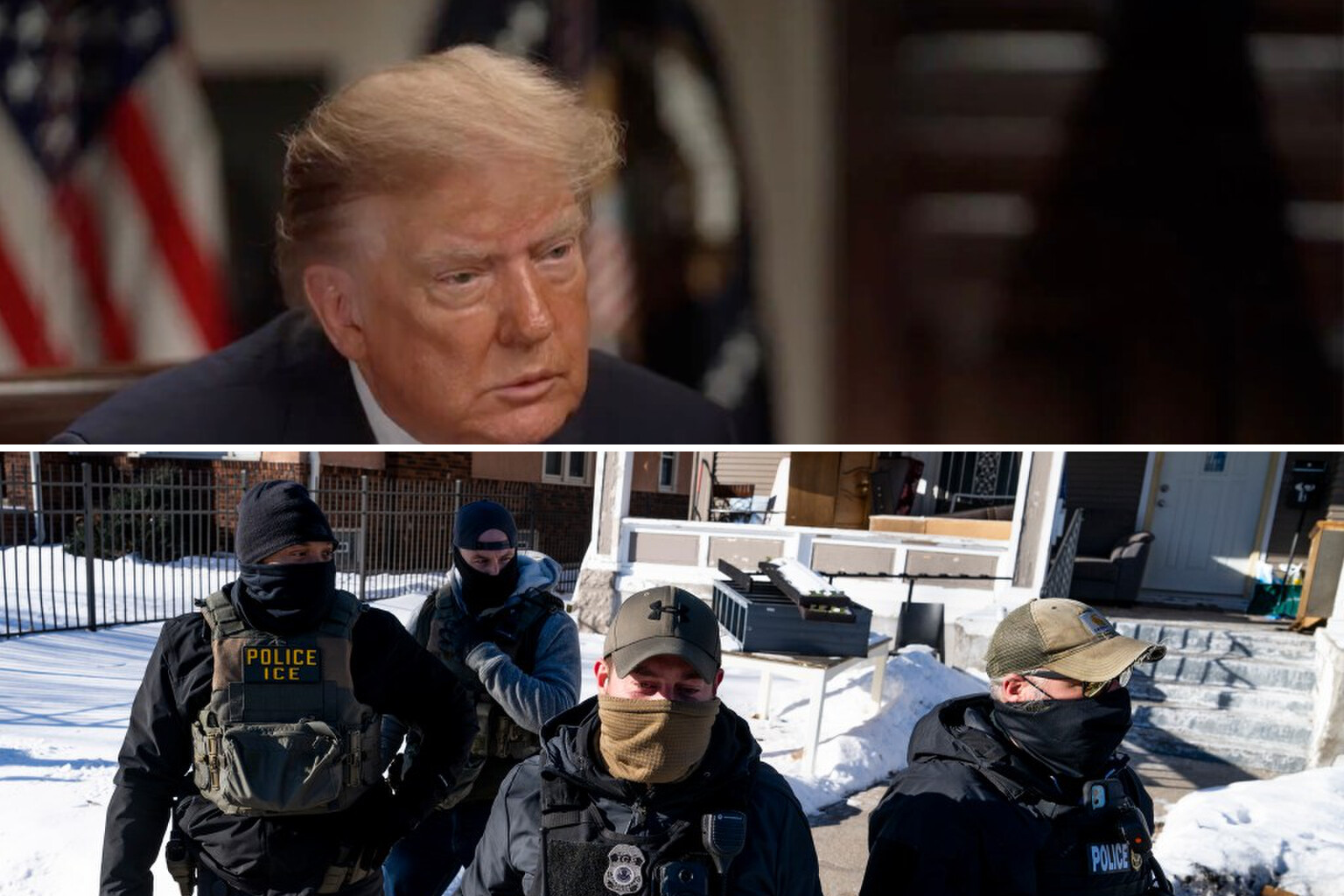
President Trump admitted his hardline immigration policy went too far after the GOP’s sweeping losses in the midterm elections last week.
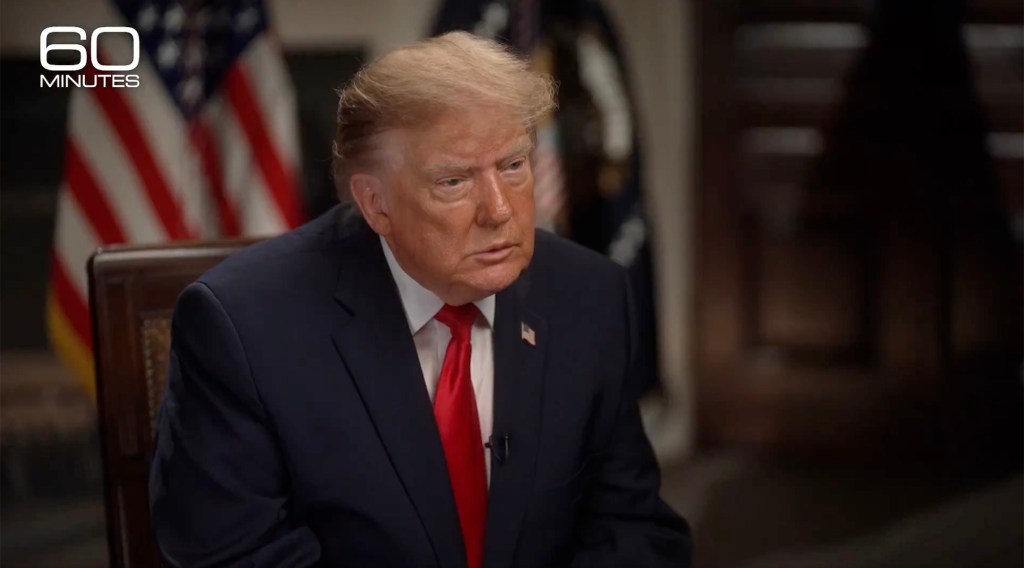
Trump, who sat for a “60 Minutes” interview Sunday, said his administration’s rapid deportations turned off some Americans following Republicans losing the Hispanic vote last Tuesday. The president gave himself “an A+” on closing the southern border during the CBS program, but struck a notably softer tone when assessing the broader crackdown.
“I think it was too tough,” the president said of his deportation policy.
“For getting people out, I get very high marks for getting the bad ones out,” he continued. “But I get hurt because we also took people that had good jobs, that– that created one violation, or breaking of the law, and that was that they came into the country illegally.”
Latino voters who swung to the right in 2024 reversed course in Tuesday’s elections, shifting dramatically to the left. In battleground states with large Latino populations, like Texas, Democrats won governorships and Senate seats. Overall, Democrats won control of both the House and Senate — and Hispanic voters, who turned out for Trump in the 2024 election, played a significant role in the historic sweep.
Just one in three Hispanic voters said they cast their ballot for a Republican in their respective US House race on Tuesday, while roughly four in ten voted for Trump two years ago, according to The AP Voter Poll of over 100,000 midterm voters. The data pointed to a sharp erosion of the gains Trump had made with the demographic.
Political commentator Samantha Karlin told The Post last week that the president’s immigration crackdown may have led Latinos to vote against the GOP.
“There’s a profound difference between supporting border security and watching people who look like you, your family, and your neighbors being targeted by aggressive immigration enforcement,” she said.
Karlin added that living with the fear that you or someone you love could be detained, regardless of legal status, creates “tremendous insecurity.”
Trump’s self-grading on border security remained unqualified. “Nobody — in the last 17 months, just came out, zero people came in through our southern border, as opposed to 25 million people — 25 million people. They came in through caravans,” he said during the CBS program.
The president’s remarks marked a significant rhetorical shift from the posture he maintained throughout his administration’s enforcement surge, which had been championed by hardline advisers. The election results appeared to have prompted recalculation even as the policy itself had been implemented with maximal aggression.

The GOP’s losses extended across multiple competitive states where Latino turnout proved decisive. The reversal of 2024’s rightward drift among Hispanic voters represented one of the most consequential demographic developments of the cycle, erasing what had been a signature achievement of Trump’s previous electoral coalition-building.
Trump’s concession that “good” workers had been swept up in deportations contrasted with the administration’s longstanding public messaging, which had emphasized indiscriminate enforcement without distinction of individual circumstances. The interview offered the first explicit acknowledgment from the president that this approach carried political costs.
The president faces mounting pressure to recalibrate ahead of the next election cycle, with party strategists already debating how to repair relations with a constituency that had shown itself capable of rapid political realignment.