

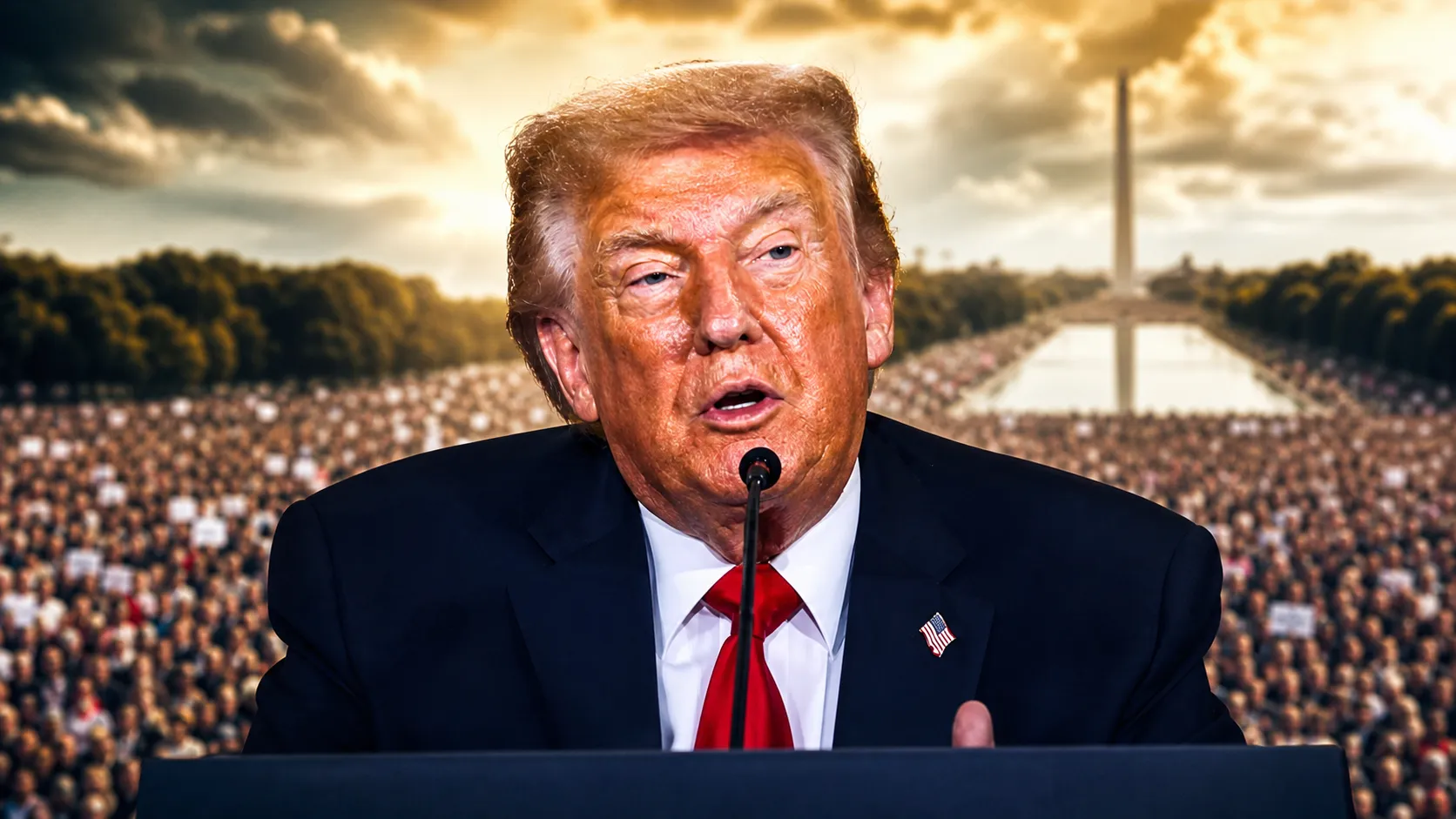
Donald Trump has said a speech he delivered near the Lincoln Memorial attracted a bigger audience than Martin Luther King Jr.’s famous ‘I Have a Dream’ speech, despite that event being remembered as one of the largest and most significant gatherings in US civil rights history.
He made the comparison on Wednesday, June 10, during an Oval Office event centered on signing the Secure America Act, legislation that gives his immigration and deportation agenda nearly $70 billion in additional funding through the rest of his term, with money directed toward Immigration and Customs Enforcement, Customs and Border Protection and related enforcement operations.
During the ceremony, Trump shifted away from the bill itself and began talking about the Lincoln Memorial Reflecting Pool, a topic he has repeatedly returned to in recent weeks.
“That’s where Martin Luther King made his great speech and they say he had a million people,” Trump, 79, said from the Resolute Desk, surrounded by congressional leaders including House Speaker Mike Johnson and Senate Majority Whip John Barrasso.
“I made a speech there for July 4th a few years ago, and [it] was packed. They said I had 25,000 people, they said he had a million people.”
Trump then argued that photos from the event appeared to support his view.
“But when you look at the picture, I said ‘well, wait, the people are even tighter at mine. I had more people than him,'” Trump continued.
“But they said I had 25,000 and he had a million. But I’m not going to argue with Martin Luther King.”
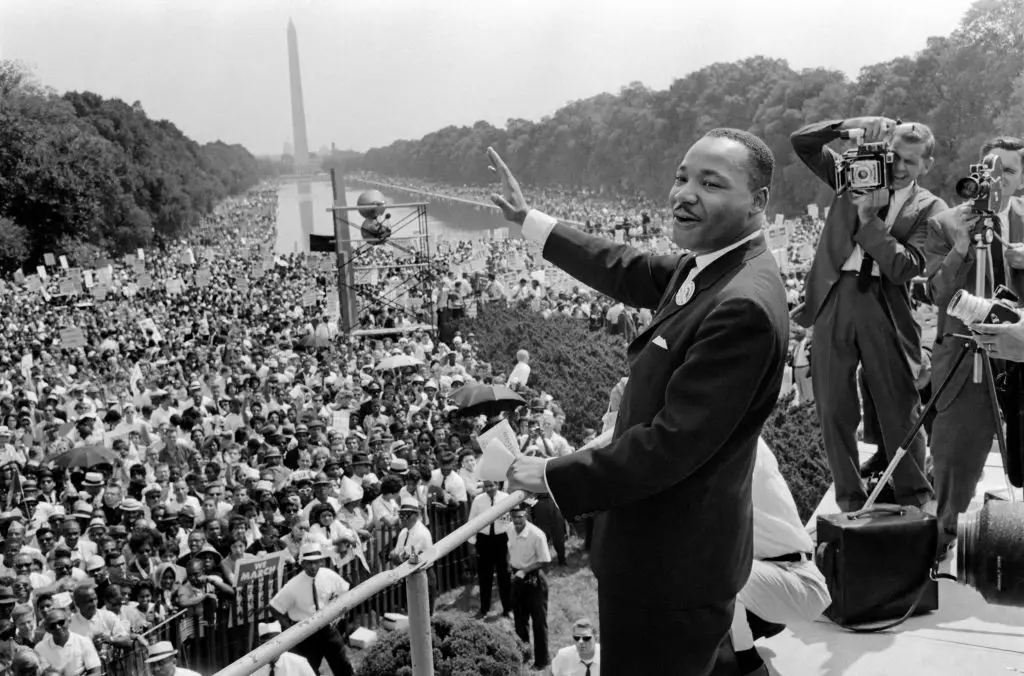
Historical estimates do not support Trump’s comparison. The Smithsonian Institution, the National Park Service and other major historical sources put attendance at the March on Washington for Jobs and Freedom on August 28, 1963 at about 250,000 people, not one million. The demonstration brought protesters from across the country to the National Mall and remains one of the largest and most consequential civil rights gatherings in American history.
“I am happy to join with you today in what will go down in history as the greatest demonstration for freedom in the history of our nation,” King said at the opening of his remarks that day. The speech is widely credited with helping galvanise public support for civil rights legislation, including the Civil Rights Act of 1964 and the Voting Rights Act of 1965.
Trump’s own July 4, 2019 appearance, branded as “Salute to America,” was promoted by the White House as “one of the biggest gatherings in the history of Washington, D.C.” It marked the first time a sitting US president had addressed a major Independence Day celebration on the National Mall since Harry Truman spoke during the nation’s 175th anniversary observance in 1951.
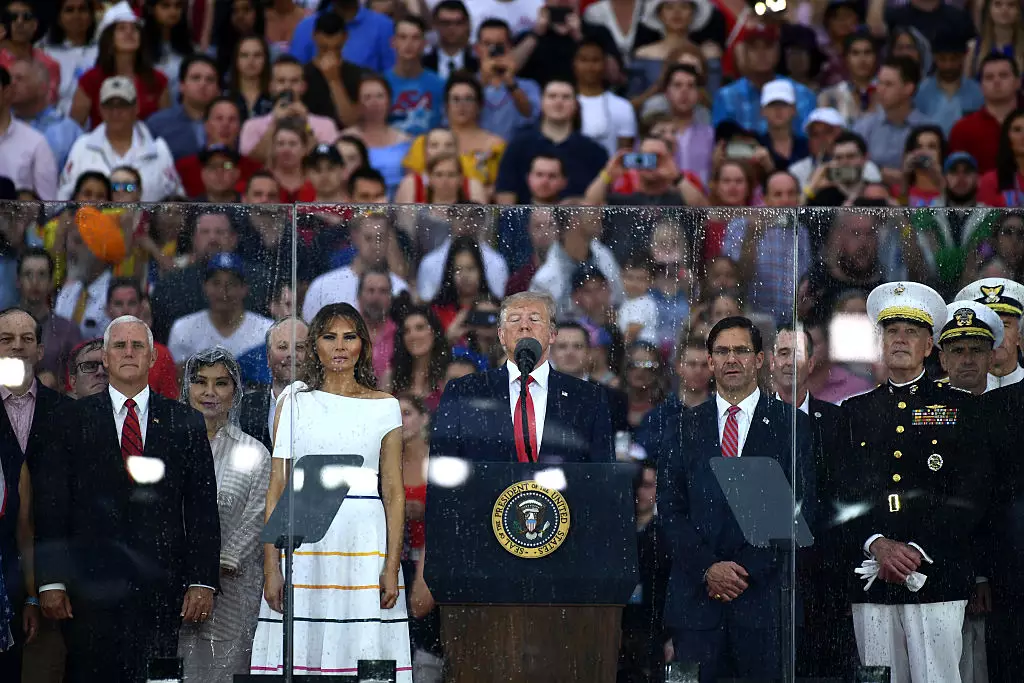
No official attendance figure was issued by the National Park Service for that 2019 event, making any direct numerical comparison difficult to verify. Contemporary reporting at the time noted that no formal government estimate was released.
Even so, Trump has continued to maintain in the years since that his crowd was larger, reviving the claim again during the June 10 signing ceremony.
Aside from that exchange, Wednesday’s event largely featured Republican leaders praising the Secure America Act, which the White House says fully funds Trump’s border-security and deportation agenda through the remainder of his administration. Democrats opposed the measure, arguing it pours tens of billions of dollars into detention and enforcement without broader immigration reform.
The Lincoln Memorial Reflecting Pool has also continued to surface as an unexpected focus in Trump’s recent public comments. In early June, water began refilling the pool after a renovation project ordered by the administration, which included repainting the basin what Trump described as “American flag blue.”
The renewed attention to the site has added another layer to Trump’s repeated references to the location, which occupies a singular place in US history because of King’s 1963 address and the broader legacy of the March on Washington.