

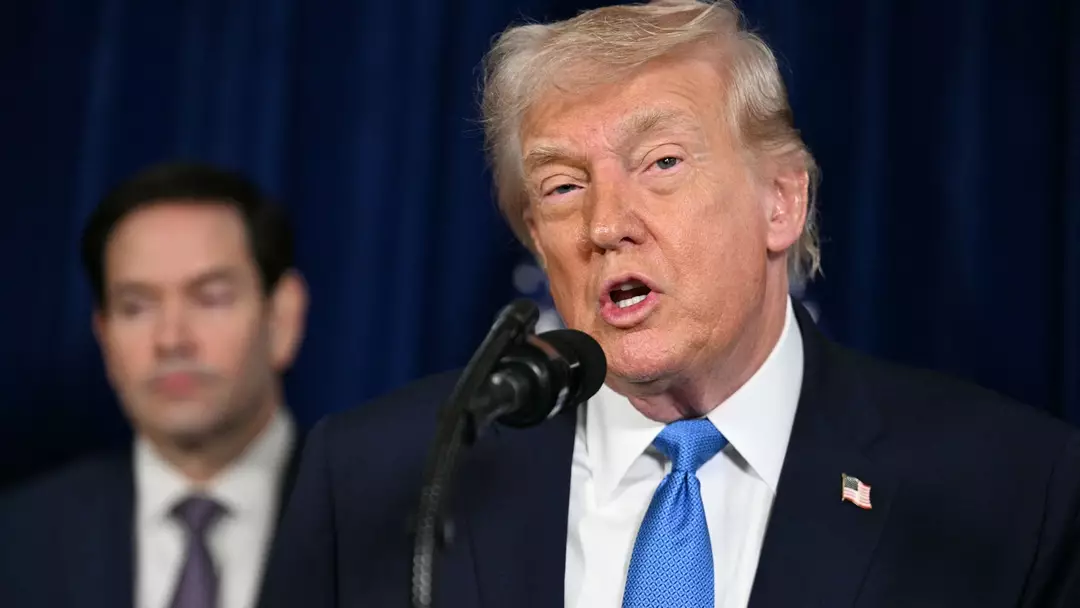
Donald Trump has issued a warning to Venezuela’s acting president, Delcy Rodríguez, suggesting she may face consequences ‘bigger than Maduro’ if she fails to comply with US interests. This follows a significant military intervention over the weekend.
Rodríguez, the former vice president, was inaugurated on Sunday after the country’s Supreme Court appointed her to fill the leadership gap left by President Maduro’s abduction. Maduro and his wife were seized by Delta Force operatives and taken to New York to face charges related to drugs and weapons.
At a press conference following the attack, Trump declared that the US would be ‘running’ Venezuela but provided no further details on the mechanics of this control. With Maduro’s close ally now in power, Trump emphasized that this influence would be maintained through military strength.
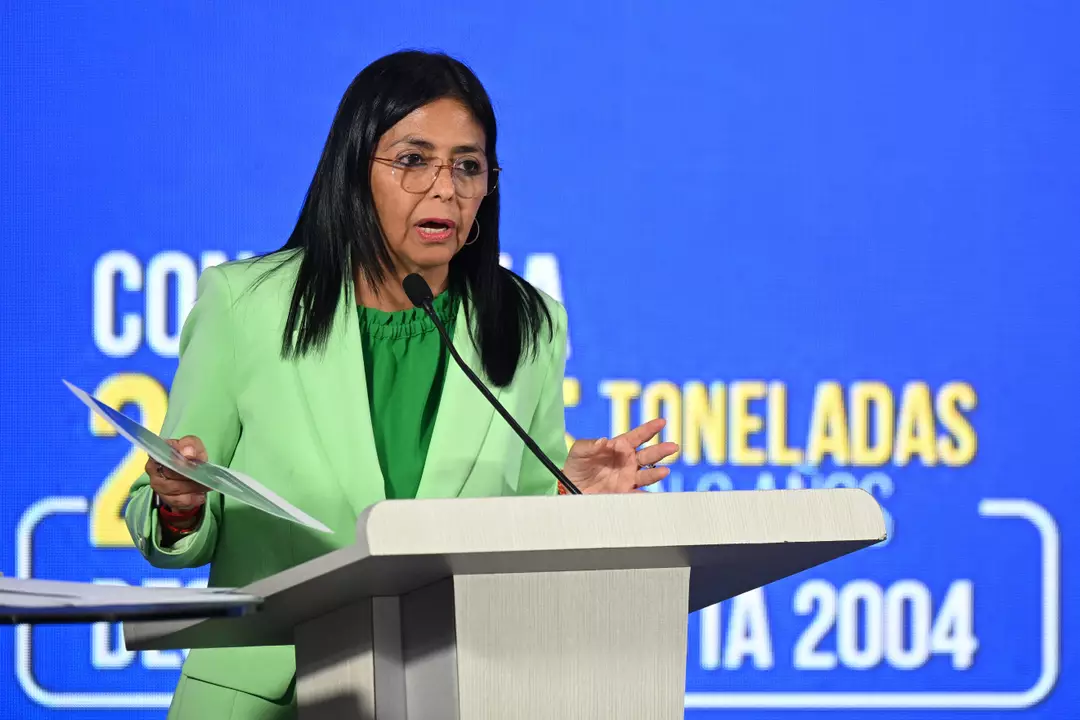
Following her swearing-in, Trump told The Atlantic that Rodríguez could face ‘a very big price’ should she not ‘do what’s right’ and yield to his demands to hand over Venezuela’s nationalized oil sector to American businesses, following its expropriation over two decades ago.
However, Rodríguez has shown no signs of compliance, firmly demanding the return of Maduro, whom she still recognizes as the country’s legitimate leader.
Maduro remains detained in New York, where he and his spouse are facing four charges linked to drug-related offenses, including ‘narco-terrorism’ conspiracy, cocaine importation conspiracy, possession of machine guns and destructive devices, and conspiracy to possess machine guns and destructive devices.
Acting President Rodríguez has asserted that Venezuela refuses to become ‘a colony of an empire,’ while Trump has labeled the intervention part of his ‘Donroe Doctrine,’ echoing the 19th-century Monroe Doctrine that asserted US influence over the American continent.
In her initial cabinet meeting, Rodríguez pushed back against this American stance, declaring, “We invite the US government to collaborate with us on an agenda of co-operation orientated towards shared development within the framework of international law.”
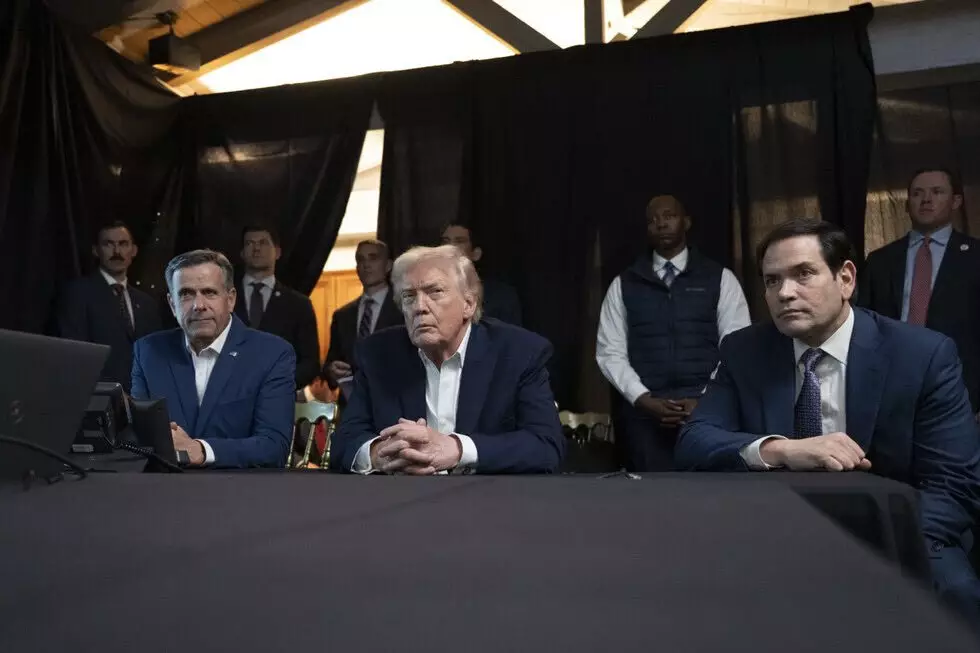
This contrasts sharply with the assertive stance presented during Saturday’s press briefing, where both Trump and Secretary of State Rubio claimed that the Venezuelan government had been subdued.
Regarding Rodríguez, Trump remarked, “She’s essentially willing to do what we think is necessary to make Venezuela great again.”
However, the rhetoric from Caracas has been far from friendly, with the new president condemning the intervention as ‘an atrocity that violates international law’ and committing the nation’s armed forces to defend its natural resources, following Trump’s claims on Venezuela’s oil.
Rubio mentioned on ABC that public declarations might differ from private negotiations, explaining, “There’s a lot of different reasons why people go on TV and say certain things in these countries, especially 15 hours or 12 hours after the person who used to be in charge of the regime is now in handcuffs and on his way to New York.”
It remains uncertain whether the US’s military involvement in Venezuela will conclude with Maduro’s arrest, as Trump suggested the possibility of further action when questioned by reporters on Saturday.
He did not dismiss the option of deploying ground forces in the aftermath of the intervention and even suggested that rebuilding Venezuela post-occupation was ‘not a bad thing in Venezuela’s case’.