

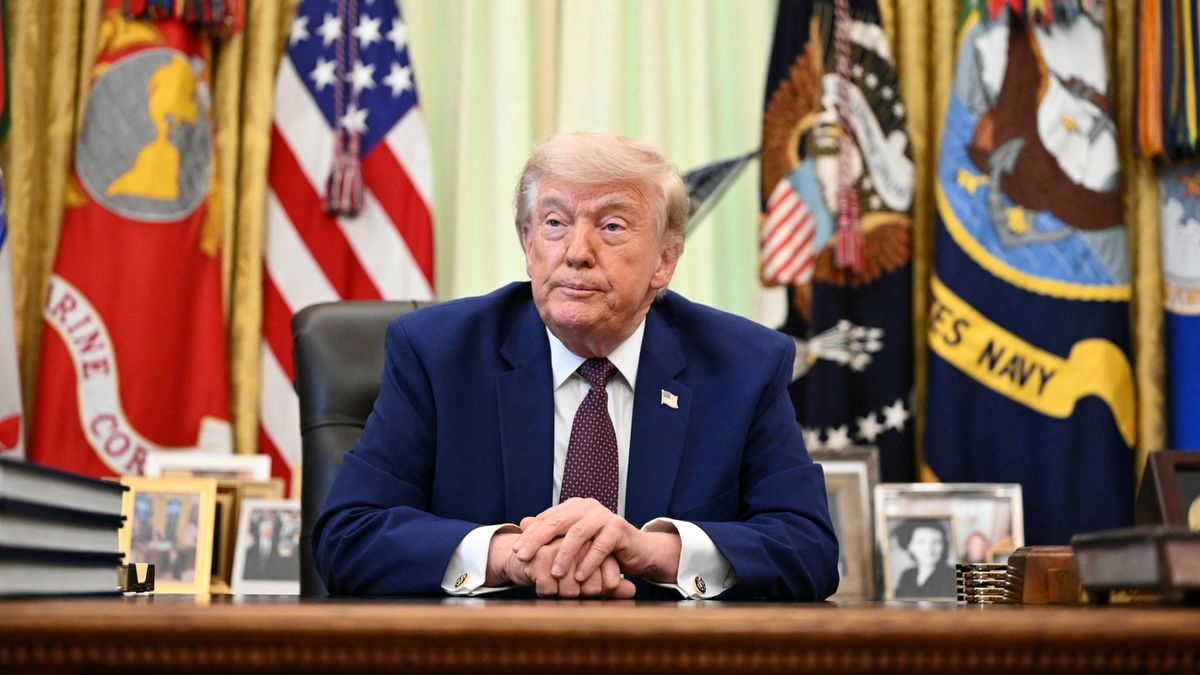
Donald Trump has offered what might be the most unusual definition of a ceasefire ever put on record by a sitting US president.
When reporters pressed him on what a ceasefire in the Iran war would actually mean in practice, the president gave a response that left many questioning how he was using the term.
“How do you define ceasefire?” he was asked.
“Pretty much the way it is. It’s a different part of the world.
“You know, I’d say in that part of the world, ceasefire is when you’re shooting in a more moderate manner.”
In other words, rather than describing a full halt to hostilities, Trump appeared to frame a ceasefire as something closer to a scaling down of firepower. The remarks landed at a moment when scrutiny over the conflict — and over the president’s authority to wage it — was intensifying in Washington.
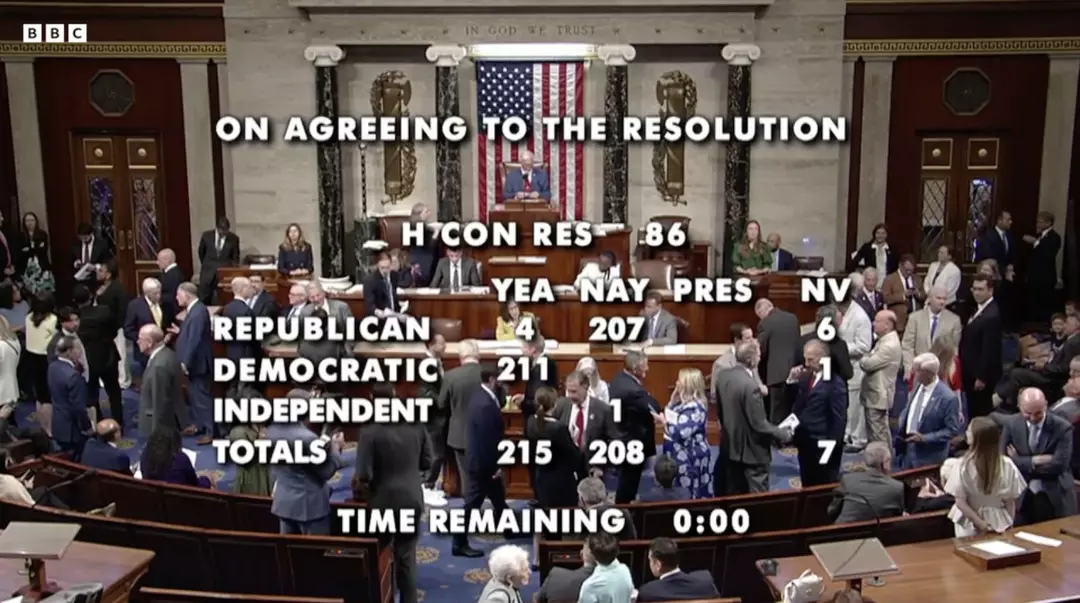
On Wednesday, the US House of Representatives approved a war powers resolution by a 215–208 vote. The measure would require Trump to pull American forces back from the conflict unless he obtains formal authorization from Congress to continue.
It marked the fourth attempt by the House to rein in Trump’s war-making powers since the fighting began.
Trump reacted angrily online. Posting on Truth Social, he wrote: “Yesterday, in a meaningless vote, the House voted, 4 bad Republicans and all of the Dumocrats, to limit my War Powers, right in the middle of my final negotiations to end the War with the Islamic Republic of Iran. Who would do such an unpatriotic thing.”
He followed up: “The Democrats are fueled by Trump Derangement Syndrome. They would rather have our Country fail than give me another, of many, victories. The four Republicans- they’re GRANDSTANDERS! They should be ashamed of themselves.”
The Republicans who joined Democrats in backing the resolution were Thomas Massie, Brian Fitzpatrick, Tom Barrett, and Warren Davidson. Barrett, a Michigan Republican, said he voted according to his conscience and understood there could be consequences from Trump for doing so.

The legal impact of the House vote is far from straightforward. The White House has argued the measure is unconstitutional and largely symbolic. For it to create binding pressure, the Senate would need to pass the same text — and even then, the administration could still contest it in court.
If senators make changes, the proposal becomes a joint resolution that would require Trump’s signature. He would be expected to veto it, and Congress is unlikely to have enough votes to override that veto.
Still, experts say the vote matters. Michael Glennon, a constitutional law professor at Tufts University, said it carries real political weight.
“A majority of one House of Congress have gone on record, in an actual vote, that the US armed forces need to be withdrawn from hostilities in the Persian Gulf,” he said. “Congress is in effect saying: now, we really, really, really, really think this is unlawful.”
The controversy also comes as Trump has already moved beyond the 60-day time limit set out in the War Powers Resolution, the federal law designed to prevent presidents from keeping US forces deployed in hostilities without congressional approval past that period. His administration has maintained the restriction itself is unconstitutional.

Outside Congress, polling suggests the public mood is turning. The outlet/Siena survey in May found that 64% of registered voters said Trump was wrong to go to war with Iran, while 34% said he made the correct decision.
Among independent voters — often a key swing bloc — opposition was even higher at 73%.
The vote also reflects wider unease within the Republican Party. It follows a separate internal clash in which a conservative rebellion in Congress reportedly pushed the administration to abandon plans for a $1.8 billion fund intended to support political allies.
Meanwhile, peace negotiations are said to be continuing. Whether any agreement leads to a complete halt in violence — or merely a shift to the “more moderate manner” Trump described — remains unclear.