

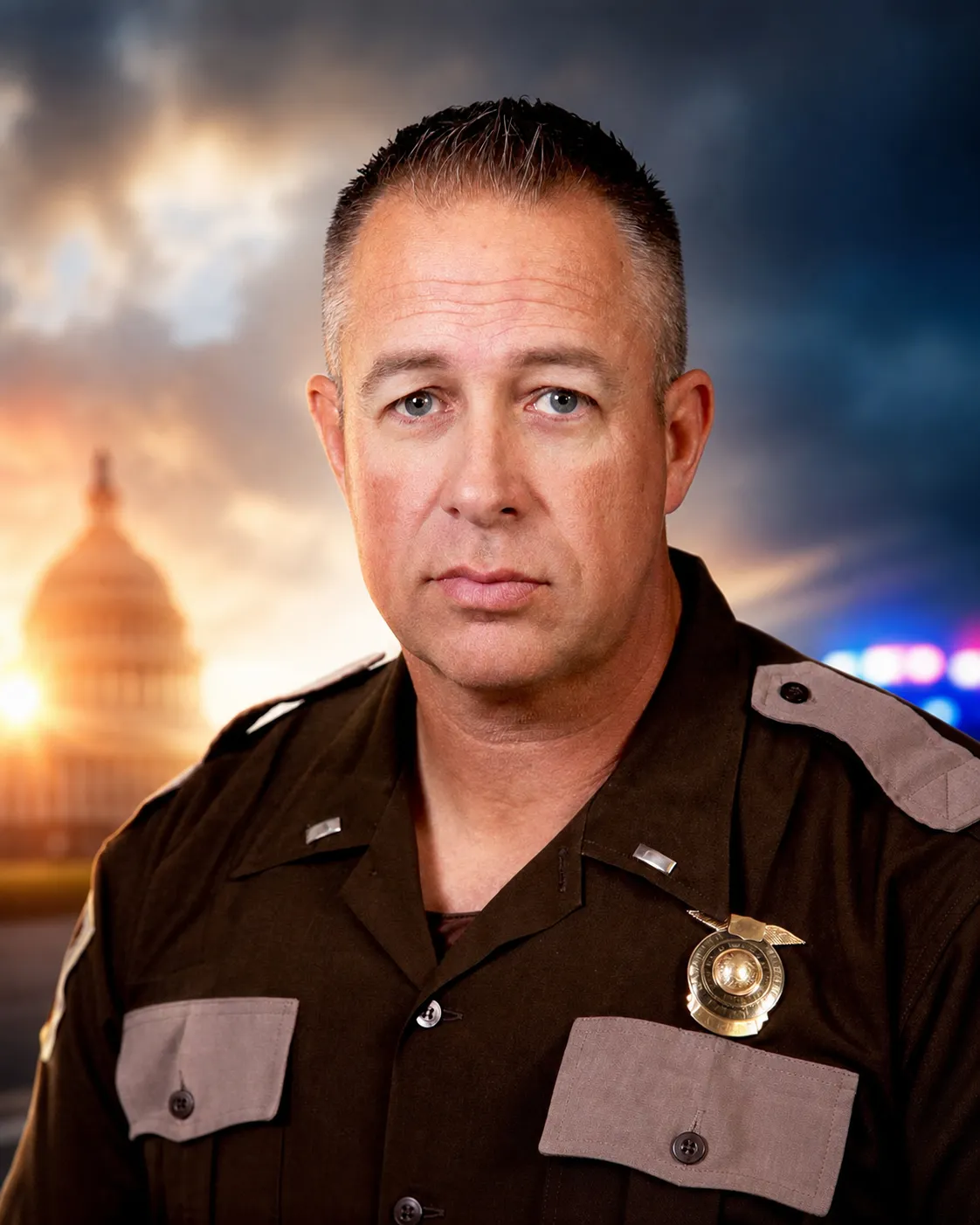
President Donald Trump announced Saturday that he is nominating Lance Schroyer, a former Oklahoma state trooper with over 29 years of law enforcement experience, to serve as the next director of U.S. Immigration and Customs Enforcement. The announcement comes as Trump’s administration continues to prioritize immigration enforcement, with ICE serving as a central agency in implementing the administration’s mass deportation agenda.
Schroyer, who is currently serving as a senior adviser to Homeland Security Secretary Markwayne Mullin, will replace David Venturella, the acting ICE director who has led the agency since June 1. The nomination is significant in that if confirmed by the Senate, Schroyer would become the first Senate-confirmed ICE director since 2017, ending an 11-year period during which the agency has operated under a succession of acting leaders.
In announcing the nomination via Truth Social, Trump praised Schroyer’s background and experience. “I am very pleased to announce that I have nominated Lance Schroyer to be our next ICE Director,” Trump wrote, highlighting Schroyer’s status as a former Marine and calling him “a PATRIOT with real operational experience, and proven leader with DECADES of experience locking up the worst of the worst.” Trump emphasized Schroyer’s work with the 287(g) Law Enforcement partnerships, a federal program that allows state and local law enforcement agencies to partner with ICE to enforce immigration laws.

Schroyer’s law enforcement career began in Oklahoma in 1997 and includes service with the Tulsa Police Department before becoming an Oklahoma Highway Patrol trooper in December 2000. He later rose to the rank of major in the Oklahoma Department of Public Safety, where he oversaw the Emergency Services Unit. In that role, he directed specialized units responsible for disaster response, civil disturbance, immigration enforcement, dignitary protection, and threat assessment. According to the Department of Homeland Security, Schroyer specializes in interagency collaboration, complex tactical planning, and constitutional safeguards in policy implementation.
His connection to Mullin appears to have been instrumental in his selection. Both men are from Oklahoma, and sources familiar with the nomination said that Mullin had been pushing for Schroyer to lead ICE for some time. Earlier this month, Mullin brought Schroyer onstage at a National Sheriffs’ Association event, introducing him as “a good friend of mine” and noting that the Department of Homeland Security had recently hired him.
Mullin quickly praised Schroyer’s nomination following Trump’s announcement. “President Trump made a great pick, and I’m confident Lance’s strong leadership and firsthand experience will empower the men and women of ICE to deport criminal illegal aliens, secure the homeland, and protect the American people,” Mullin said. He highlighted Schroyer’s 29-year law enforcement career and his direct experience running large-scale immigration enforcement operations in Oklahoma under the 287(g) program.
Both Trump and Mullin urged the Senate to move swiftly on the nomination. Trump called for confirmation to happen “IMMEDIATELY” and told lawmakers not to delay. Mullin similarly emphasized the need for quick action, noting that it has been 11 years since the Department of Homeland Security last had a Senate-confirmed ICE director.

Schroyer’s nomination comes at a time when ICE has faced significant scrutiny over its enforcement tactics. The agency has been central to Trump’s second-term immigration crackdown, with expanded workplace raids and interior enforcement operations. Earlier this year, ICE operations in Minneapolis resulted in the fatal shootings of two U.S. Citizens, Renee Good and Alex Pretti, in January, prompting nationwide protests and congressional criticism. The federal watchdog for the Department of Homeland Security recently announced new reviews examining increased deaths among ICE detainees and whether ICE facilities are following proper use-of-force standards.
Despite his extensive law enforcement background, Schroyer is notably a newcomer to leading a large federal agency. David Venturella, the current acting director, is a veteran of the federal immigration system, having worked in the field since the 1980s and previously serving as an executive at the private prison firm GEO Group. Todd Lyons, who preceded Venturella, stepped down as acting ICE director at the end of May after facing intense scrutiny over the agency’s ramped-up arrests and over the fatal shootings of the two Minnesota civilians.
Former senior ICE officials have offered varying assessments of Schroyer’s nomination. Claire Trickler-McNulty, a former senior ICE official, noted that while prior confirmed ICE directors have often been attorneys, some state and local law enforcement officials have also held the position. She suggested that Mullin likely had significant influence over the pick, saying that “given the attention on ICE, he wants to feel like he has somebody he can trust in there.”
John Torres, another former senior ICE official, said Schroyer will face “an uphill climb toward Senate confirmation” but acknowledged that his state and local law enforcement background, rather than federal experience, might actually help his candidacy. Without a background in previous federal administrations, Torres noted, Schroyer “won’t have any of that baggage, where they’re going to turn around and say, oh, well, he worked for this administration or that.”
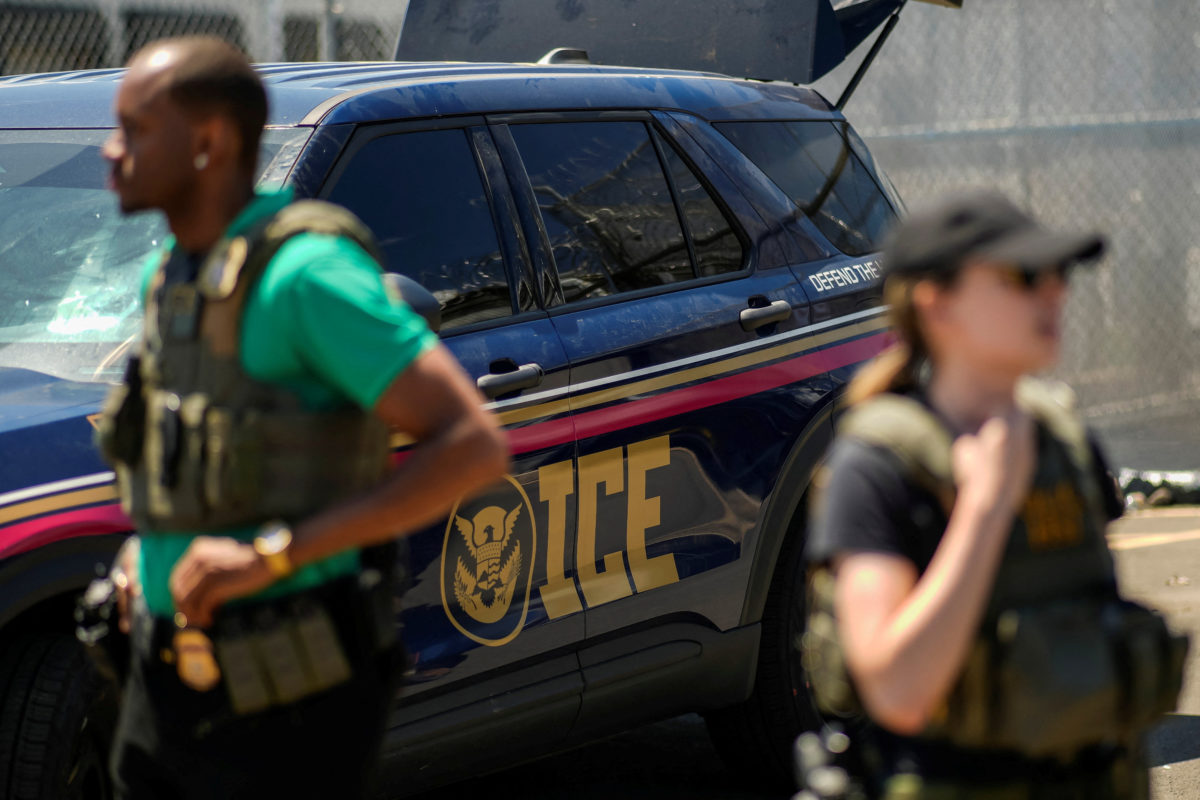
Schroyer’s selection reflects how the Trump administration is structuring immigration enforcement leadership. While Tom Homan continues in his role as White House border czar overseeing broader deportation strategy, Schroyer would manage the day-to-day operations of ICE as a Senate-confirmed agency head if approved by lawmakers. This divided structure keeps immigration enforcement under the direction of administration officials with varying operational focuses.
The nomination will now move to the Senate, where lawmakers will be expected to scrutinize Schroyer’s qualifications, professional record, and policy positions. If confirmed, he would oversee a workforce of approximately 22,000 people and a multibillion-dollar budget, leading the agency at the center of one of the Trump administration’s most controversial policy initiatives.