

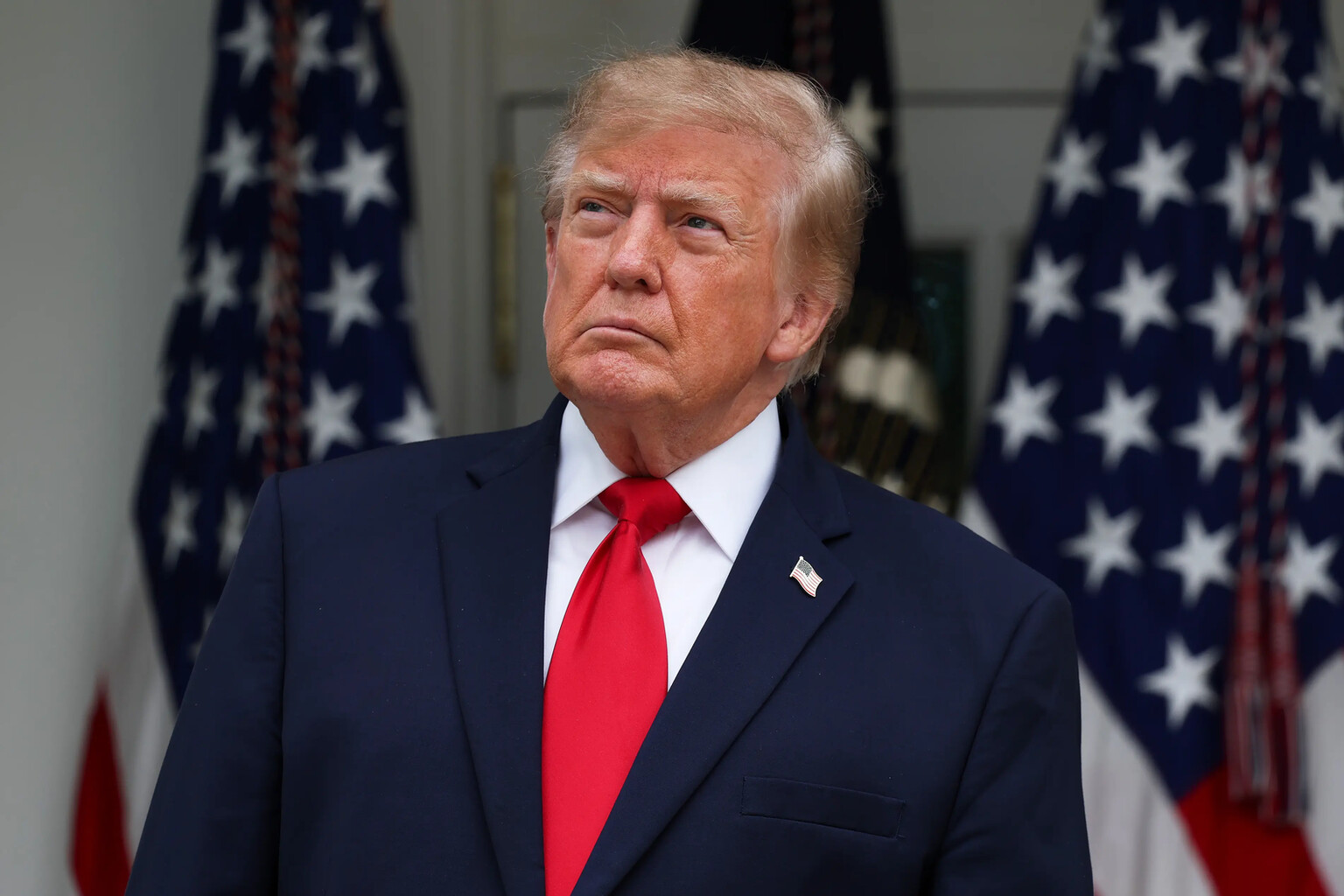
Donald Trump has rejected multiple polls showing his approval rating near historic lows, insisting his true support sits around 60 percent.
The 80-year-old president dismissed the surveys as “fake news” during a recent interview with The Washington Examiner’s Byron York. When pressed about figures showing him in the high 30s, Trump fired back: “The job approval, they said it’s 37, 38? I’m not at 38,” He continued: “I don’t believe I could be beaten by anybody. I think that if I needed it, which I don’t, I think 60.”
Trump pointed to his dominance within the Republican Party as evidence his overall numbers should be higher. He highlighted analysis from CNN chief data analyst Harry Enten showing near-unanimous backing among MAGA Republicans. “I think I’d be in the 60s now. Now, in the Republican Party, I’m way up. Show him the 99 percent. Have you seen it?” he said.
That 99 percent figure refers to Trump’s reported share of the MAGA Republican vote in the 2024 election. His approval rating among that same faction hit 98 percent in September, according to Enten’s analysis.
Yet the broader polling landscape presents a starkly different picture. RealClearPolitics’ aggregation currently places Trump’s job approval at 38.8 percent, with 60.4 percent disapproving. An Ipsos survey conducted October 16-19 found just 34 percent of Americans approved of his presidential performance, while 65 percent disapproved. The Pew Research Center registered an identical 34 percent approval figure, with disapproval climbing to 68 percent. The outlet published its own 34 percent approval rating this week, reportedly its lowest midterm presidential rating since Harry Truman’s 33 percent in 1946.
Enten’s own data contained mixed signals for the White House. While MAGA Republican loyalty remained virtually absolute, Trump’s net approval on inflation had cratered from +8 points in 2024 to -45 ahead of November’s midterm elections. Gas prices have also reached record highs, adding economic pressure to the political headwinds.
Trump’s habit of rejecting unfavorable polling has deep roots. He spent years attacking survey methodology and individual pollsters during his first term, often claiming hidden support that failed to materialize in actual results. The pattern reemerged as multiple independent outfits converged on similar weak numbers this cycle.
The president has alternatively embraced data that flatters his standing with the GOP base, treating intraparty dominance as a proxy for national popularity. His 99 percent MAGA vote share and 98 percent approval among that subgroup have become regular talking points, even as they represent a self-selected fraction of the electorate rather than the full voting public.
The midterm elections loom next month with Trump’s numbers trailing those of prior presidents at comparable points. Historical patterns suggest first-term parties typically face losses, and the convergence of weak approval, economic anxiety, and intense opposition energy has Republicans bracing for potential defeats in competitive races.
Trump’s personal response has been to construct an alternative narrative of hidden majority support, one that relies on anecdotal enthusiasm and base consolidation rather than the consistent findings of professional polling operations. Whether that framework can sustain Republican morale through election day remains an open question as voting approaches.
Trump is scheduled to hold a campaign rally in Pennsylvania this week.