

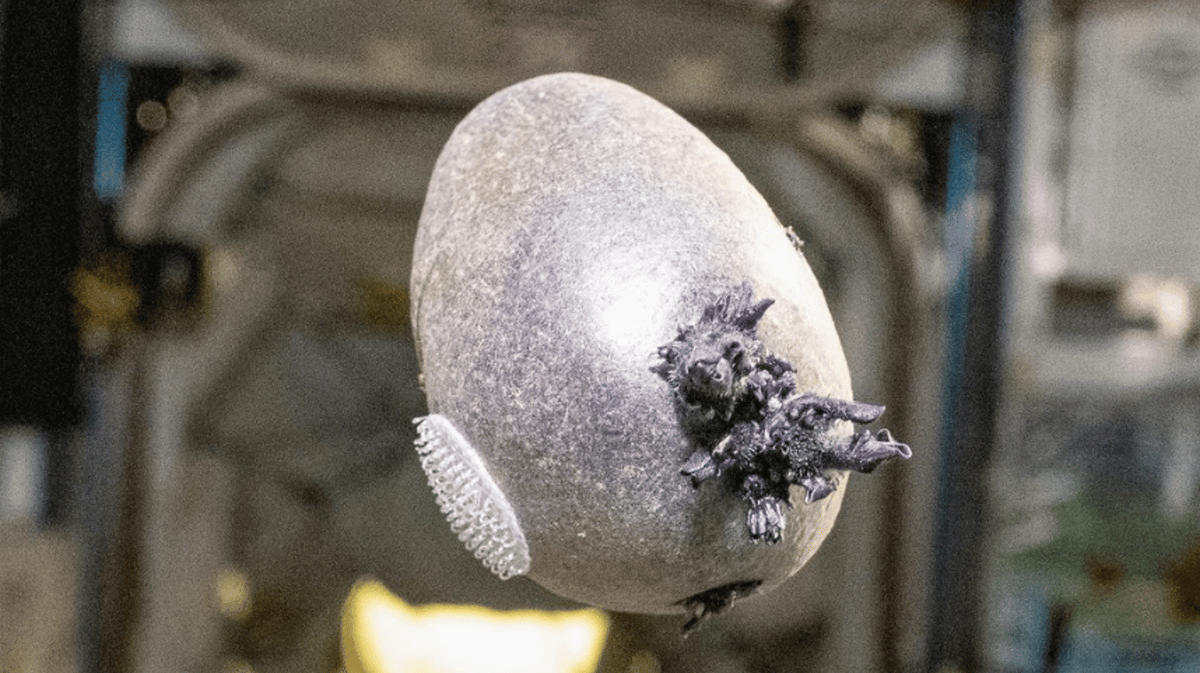
A photo of a strange, tentacled-looking object has been making the rounds online, with some people likening it to something from the horror classic Aliens. So what are we actually looking at?
The image was posted to X by NASA astronaut Don Pettit, and it’s the kind of unsettling snapshot that can make you do a double-take. Still, the explanation is much more ordinary than its eerie appearance suggests.
Nicknamed Spudnik-1, the grey, knobbly item looks oddly otherworldly, with sprout-like tendrils reaching out from its surface.
Plenty of users admitted the photo threw them off. One commenter wrote: “I genuinely thought this was some kind of egg hatching.”
Another added: “Somehow the Velcro makes it look alien. Time to bring back quarantines.”
Despite the sci-fi vibes, the object is simply a potato that was grown aboard the International Space Station (ISS).
So why was a potato being cultivated in orbit in the first place? Pettit is known for taking a hands-on interest in growing plants.
“This is an early purple potato, complete with a spot of hook Velcro to anchor it in my improvised grow-light terrarium,” he explained. “I flew potatoes on Expedition 72 for my space garden, an activity I did in my off-duty time.”
He noted that potatoes aren’t actually an ideal crop by space-farming standards, because the amount of edible nutrition they provide is relatively low compared with the total plant mass produced, including the roots.
He also highlighted their pop-culture significance, pointing out how prominently potatoes featured in The Martian—both the book and the 2015 Matt Damon film adaptation.
NASA has been testing how to grow plants in space for years, not as a gimmick, but because it could become vital for future exploration.
Researchers say access to fresh fruit and vegetables will be increasingly important on long missions, especially since vitamins in stored, pre-packaged foods can break down over time, making balanced nutrition harder to maintain.
But raising crops in microgravity isn’t straightforward. Water doesn’t behave as it does on Earth; it can cling to surfaces and form pockets around roots, so plants must be grown in systems engineered to deliver the right mix of air, nutrients, and moisture.
To manage those issues, NASA has created controlled “space garden” setups that use LED grow lights and pillow-like pods, enabling astronauts to raise produce such as lettuce, kale, and even flowers on the ISS.
There’s also a mental health angle. Astronauts have said that tending plants can lift morale and provide a reassuring connection to Earth during long stretches away from home.