

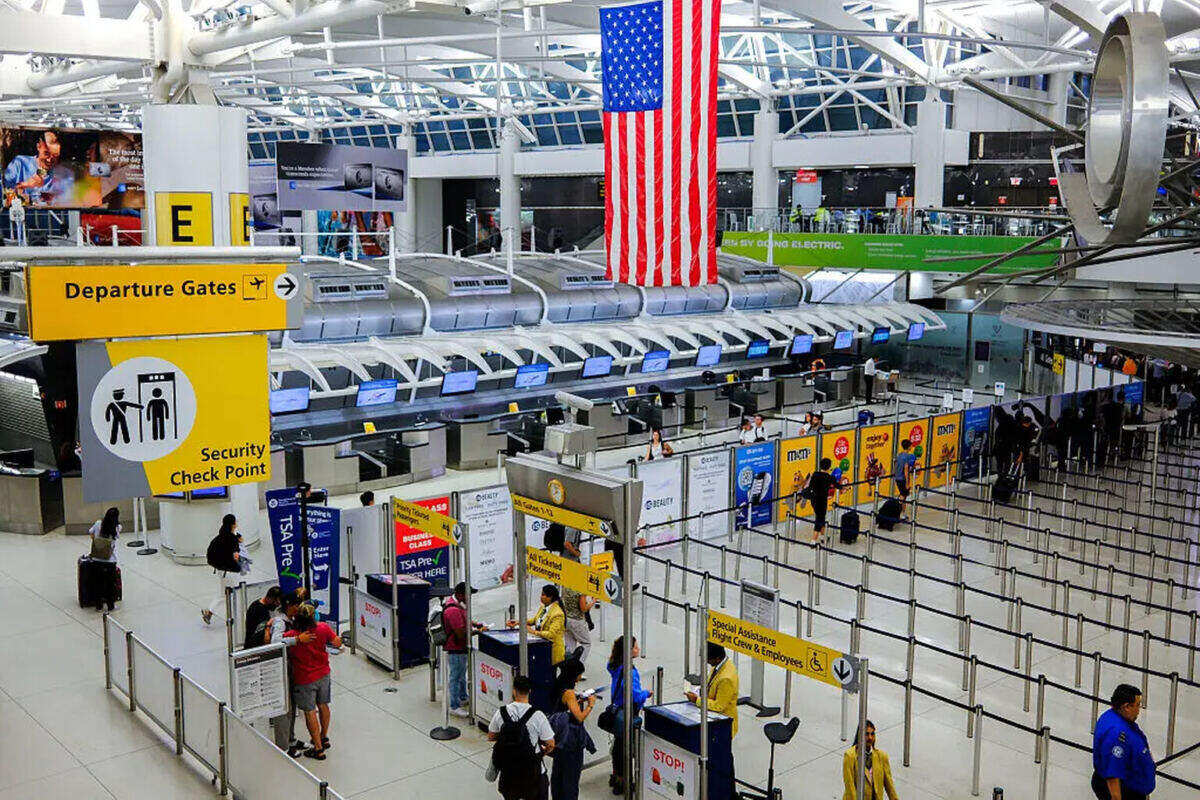
The TSA is rolling out a program that will let select travelers escort non-ticketed guests past security checkpoints for the first time since the September 11 attacks.
David Pekoske, the TSA administrator, has not publicly commented on the launch, but the agency detailed the plan on its website last week. The initiative, called Gateside by TSA PreCheck, targets what the agency calls its “most trusted travelers” and marks the first broad return of gate access for visitors without boarding passes in nearly 25 years.
Before 9/11, airports operated with far looser security protocols. Friends and family routinely walked departing passengers to their gates, and arrivals were greeted directly off the plane. The practice was eliminated worldwide after hijackers exploited weak checkpoint controls to board four planes on September 11, 2001.

The new program comes with strict eligibility requirements. Applicants must already hold membership in a trusted traveler program and possess a Known Traveler Number, which requires a completed background check and fingerprinting. Department of Defense employees and federal civilians can substitute their DOD ID numbers. Enrollment in Gateside itself is free but must be requested at least three days before the planned airport visit, with approval required before arrival.
Approved participants will enter through standard TSA PreCheck lanes using accepted identification. The gate pass remains valid for one calendar day only, though multiple re-entries are permitted during that window.
“As an exclusive benefit for our most trusted travelers, this new program makes it easier to return to the gate for welcomes and send-offs, meet friends during a layover, and enjoy dining and shopping along the way, bringing back the moments that once defined air travel,” the TSA wrote on its website.
The agency has limited the initial rollout to 13 airports. Los Angeles International, Dallas-Fort Worth International, Harry Reid International in Las Vegas, and Salt Lake City International are among the locations where Gateside will first be available. The TSA indicated it intends to expand to additional airports in coming months, though no specific timeline or target list was provided.
The program’s structure reflects the layered security approach the agency has developed since 2001. Known Traveler Numbers already grant access to expedited screening lanes, with biometric verification replacing more intrusive document checks. Gateside extends those privileges to accompanying guests without requiring them to undergo separate vetting.
For families with elderly relatives, parents of unaccompanied minors, or couples managing long-distance relationships, the practical impact could be substantial. The TSA’s promotional framing emphasizes emotional reunion scenarios—welcomes, send-offs, and layover meetups—rather than operational efficiency.
The 9/11 attacks fundamentally reshaped airport architecture and passenger flow. Security checkpoints moved to terminal entrances, sterile zones expanded, and the concept of “airside” versus “landside” space hardened into enforceable boundaries. The Gateside program represents a calibrated relaxation of that boundary, not its elimination.
Whether the initiative signals broader loosening of post-9/11 security norms remains unclear. The TSA has not indicated plans to extend gate access beyond vetted travelers or to reduce existing checkpoint procedures. The agency continues to face periodic scrutiny over screening effectiveness, with government auditors repeatedly identifying gaps in detection capabilities for weapons and explosives.
The 13 launch airports span multiple regions and carrier hubs, suggesting the TSA is stress-testing the program across varied operational environments before wider deployment. Dallas-Fort Worth and Los Angeles rank among the nation’s busiest facilities by passenger volume, while Salt Lake City represents a smaller hub with distinct traffic patterns.