


Two twins discovered they are only half-sisters, even though they arrived just minutes apart.
Most people assume twins automatically share the same two parents. But for Michelle and Lavinia Osbourne—born mere minutes apart—that certainty was overturned when they learned they do not have the same father.
The revelation came after Michelle completed an at-home DNA test, which led to the discovery that the sisters, despite sharing the same pregnancy, have different biological dads.
The phenomenon is known as heteropaternal superfecundation, an exceptionally uncommon situation that depends on several rare events occurring in the same cycle.
It begins when a person releases more than one egg during ovulation.
For heteropaternal superfecundation to occur, those eggs must then be fertilised by sperm from different partners, and both resulting embryos must successfully implant and develop through pregnancy.
Only around 20 cases have been identified globally, and Michelle and Lavinia are the only confirmed instance in the UK.
Lavinia said the news hit her hard, especially because she and Michelle had relied on each other through a turbulent childhood that included being moved through multiple foster homes.
“She was the one thing that belonged to me, the one thing that I was certain about, the one thing that I was sure of. And then she wasn’t,” Lavinia said.
Michelle, however, said her own reaction was different, describing the discovery as strange but ultimately clarifying.
“I wasn’t surprised. I’m still in amazement that this can actually happen – it’s super weird, super odd, super rare – but it makes sense.”
The twins were born in Nottingham, UK, in 1976. Their mother was 19 at the time and, according to Michelle, had experienced a very difficult upbringing.
Michelle said: “She had suffered abuse at the hands of [her] stepfather,” adding that her mom had been ‘in and out of foster care and children’s homes throughout her childhood.’
For a period, the sisters lived with the mother of their own mother’s best friend—someone they came to call “grandma”—while their mother moved to London to study at university.
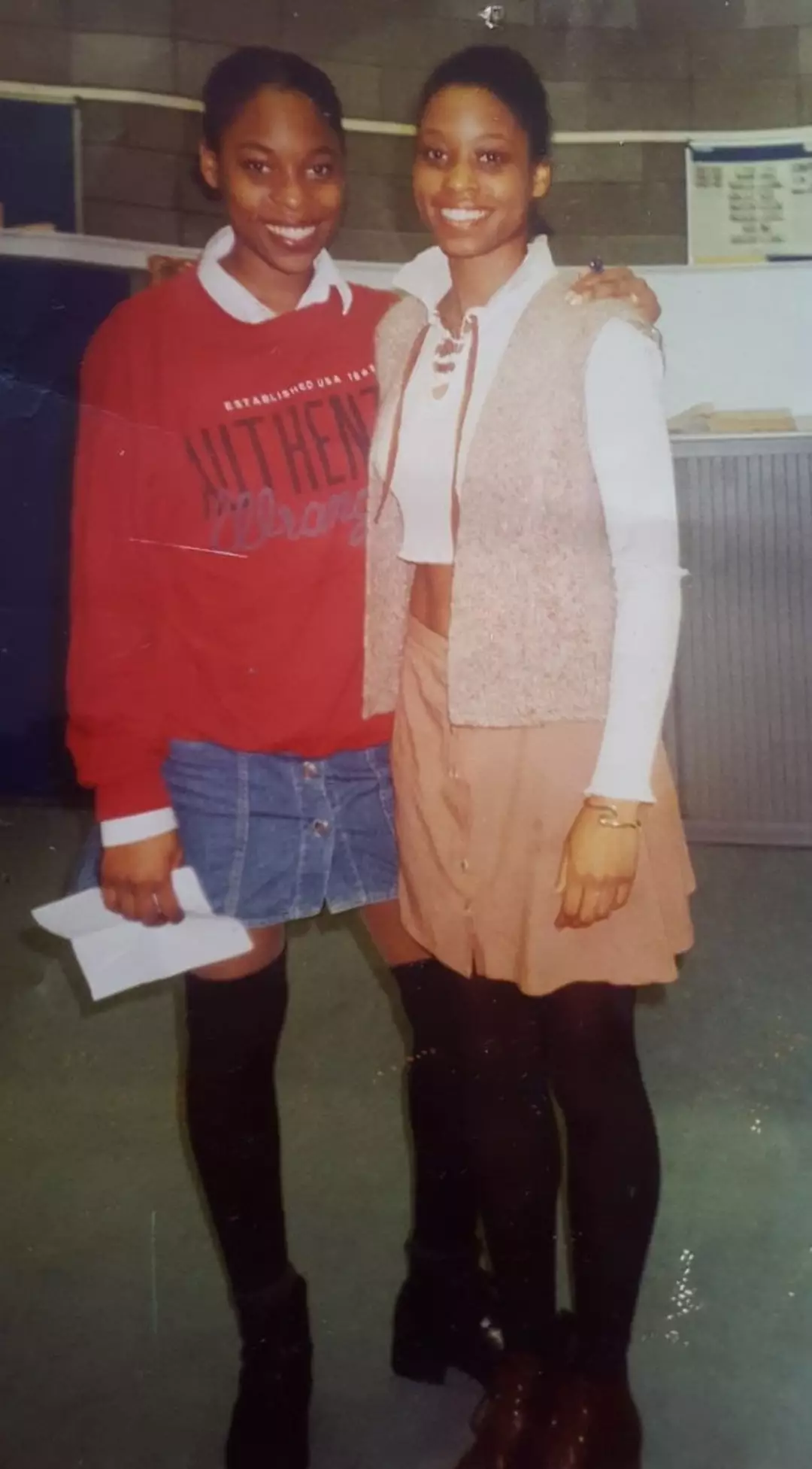
Even when they later reconnected with their mother, the sisters said the relationship remained difficult.
“Physically and emotionally, she was always out of reach,” Lavinia said.
Over time, Michelle became determined to learn more about her father, while Lavinia said she preferred not to pursue answers.
When the DNA results confirmed they did not share a father, Lavinia said she struggled to process it and initially felt resentment about being pulled into something she hadn’t wanted to confront.
“I was angry with Michelle for having me go through this, because I just didn’t want this reality,” she said.
Despite the emotional shock, both women say their bond has endured.
Michelle said: “She’s my twin sister. Nothing takes away from that.”
“We’re miracles. We’re always going to have a closeness that can’t be broken,” said Lavinia.