

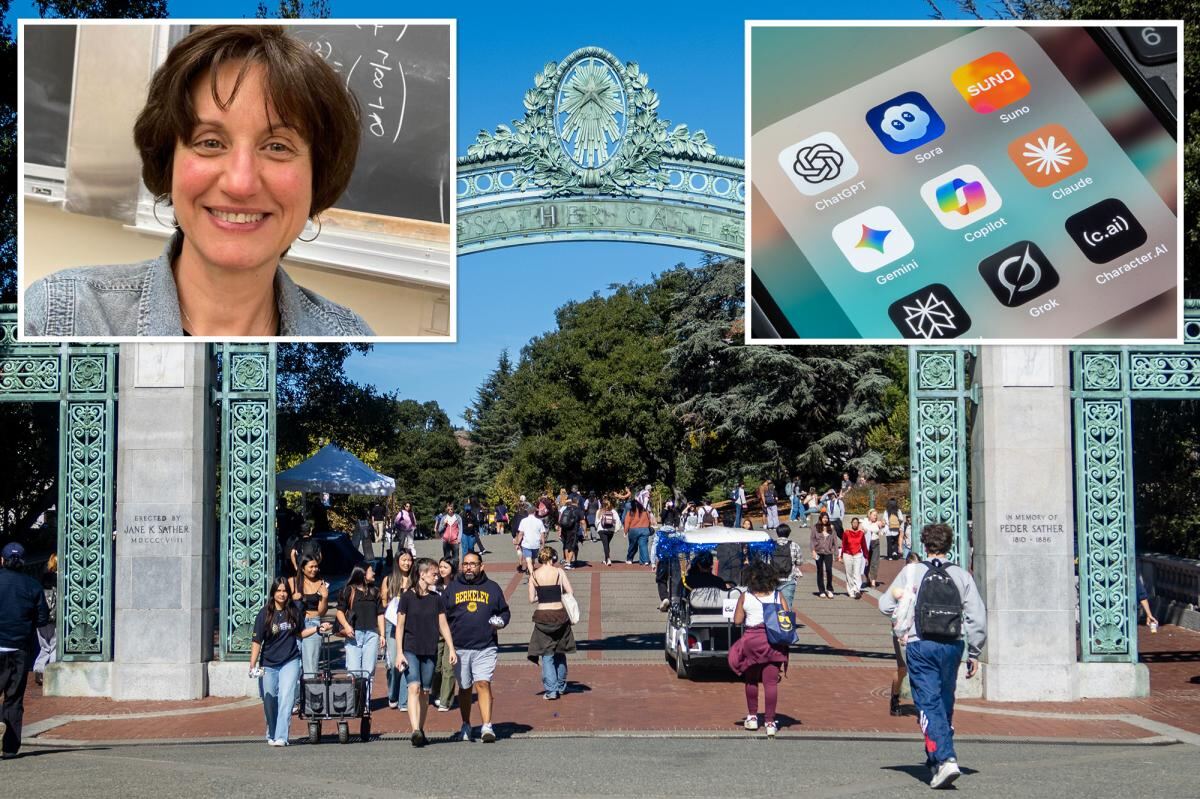
A UC Berkeley math professor who wrote a viral op-ed attacking student preparedness has admitted she used artificial intelligence to help craft the piece.
Zvezdelina Stankova, a teaching professor of mathematics at UC Berkeley, told the student newspaper The Daily Californian that AI assisted in editing her widely circulated article, which argued that UC admissions standards have collapsed since standardized testing was eliminated. The op-ed, published earlier this month, claimed she was forced to teach middle-school-level fractions and basic algebra to college students in her calculus lectures.
Stankova described an intensive collaborative process behind the article. “The faculty team and a number of journalists worked intensively on my draft over a period of three weeks with multiple drafts, meetings,” she said in her statement to the paper.
She defended the final product as fundamentally human-created. “There were several hundred person-hours of intensive human work and deliberation, of which about 80 hours are my own,” she continued.

The AI detector Pangram flagged Stankova’s piece as 33% AI-generated or AI-assisted writing, according to The Daily Californian’s reporting. The open letters calling for restoration of the SAT and ACT in UC admissions, which Stankova helped organize and signed, also apparently used AI in their editing process according to a joint statement from participating professors.
Stankova’s op-ed painted a stark picture of classroom conditions since UC went test-blind. She wrote that by the second week of each semester, she could already identify which students were “five to eight years behind in mathematics,” with office hours devoted to fractions and linear equations rather than integrals.

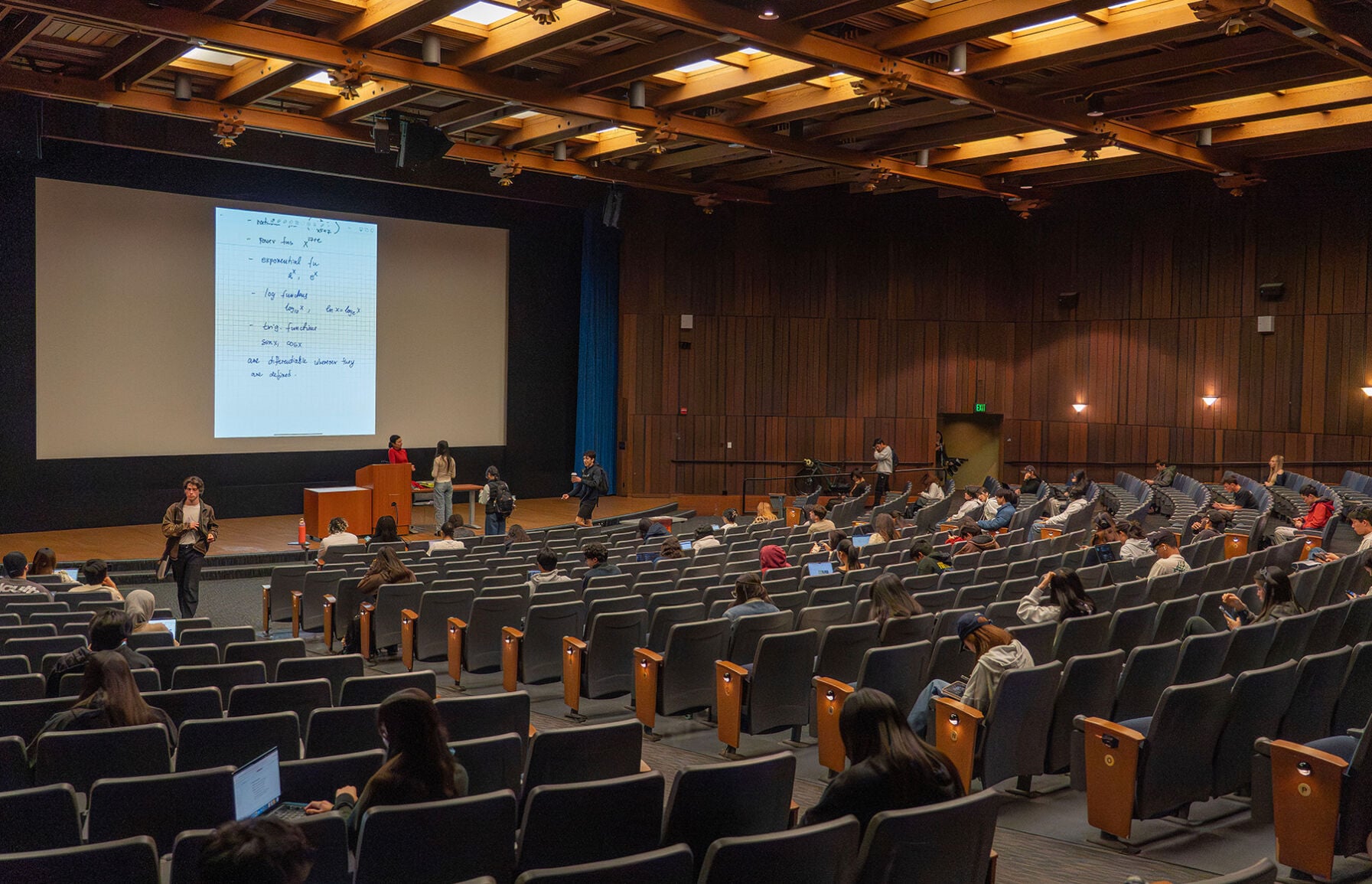
The professor cited dramatic shifts in diagnostic exam results. Before 2020, she reported, 71% of roughly 2,200 Calculus I students tested as ready or nearly ready for the course, with just 0.14% scoring below basic algebra. After test-blind admissions took effect, she wrote, the share of prepared students fell to 51% and dropped further to 44% by 2023. Most strikingly, she noted that 17% of students answered none of the eight diagnostic topics correctly, and the single most common score was zero.
UC Berkeley professor Hannes Bajohr told The Daily Californian that Stankova’s AI use raised ethical concerns given the op-ed’s personal framing. “At the moment, this seems like deception. Or it seems like something that is at least dishonest to a certain reason,” he said. “Because it is the person that makes that statement in their capacity as an individual that underwrites what they have written.”
Bajohr added that norms around AI usage in writing may change dramatically in the future.


The controversy carries particular weight because Stankova was one of thousands of faculty members across all 10 UC campuses who signed open letters earlier this year urging restoration of standardized testing. More than two-thirds of UC’s mathematics faculty joined the call, along with five Nobel laureates including Jennifer Doudna, the Berkeley scientist known for pioneering CRISPR gene editing. Doudna wrote to UC Regents this summer that “the test-blind policy was a well-intentioned experiment, but the reality in our classrooms shows that it has failed.”
The SAT and ACT were made optional in 2020 due to pandemic disruptions and equity concerns, with a subsequent court ruling requiring UC to become completely test-blind through 2025. MIT, Stanford, Harvard, and Yale all suspended testing requirements during the pandemic but have since reinstated them, while UC has moved in the opposite direction with an Academic Senate review not concluding until June 2027.
Stankova’s op-ed described teaching “two different classes in one lecture hall: one for students who were prepared for college calculus and one for students who needed remedial mathematics that nobody had scheduled.” She illustrated the perceived admissions dysfunction with two anonymized Bay Area students — one admitted to a top UC engineering program despite weak math skills, another rejected despite earning A’s in college-level STEM courses through concurrent enrollment.
Stankova’s use of AI to polish her argument has drawn extra scrutiny because professors themselves have been working to root out student misuse of the technology in academic work. The UC system’s test-blind policy remains in effect through at least 2025, with no new admissions policy able to take effect before fall 2028 on the current review timeline.
The Academic Senate’s review of test-blind admissions is scheduled to conclude in June 2027.