

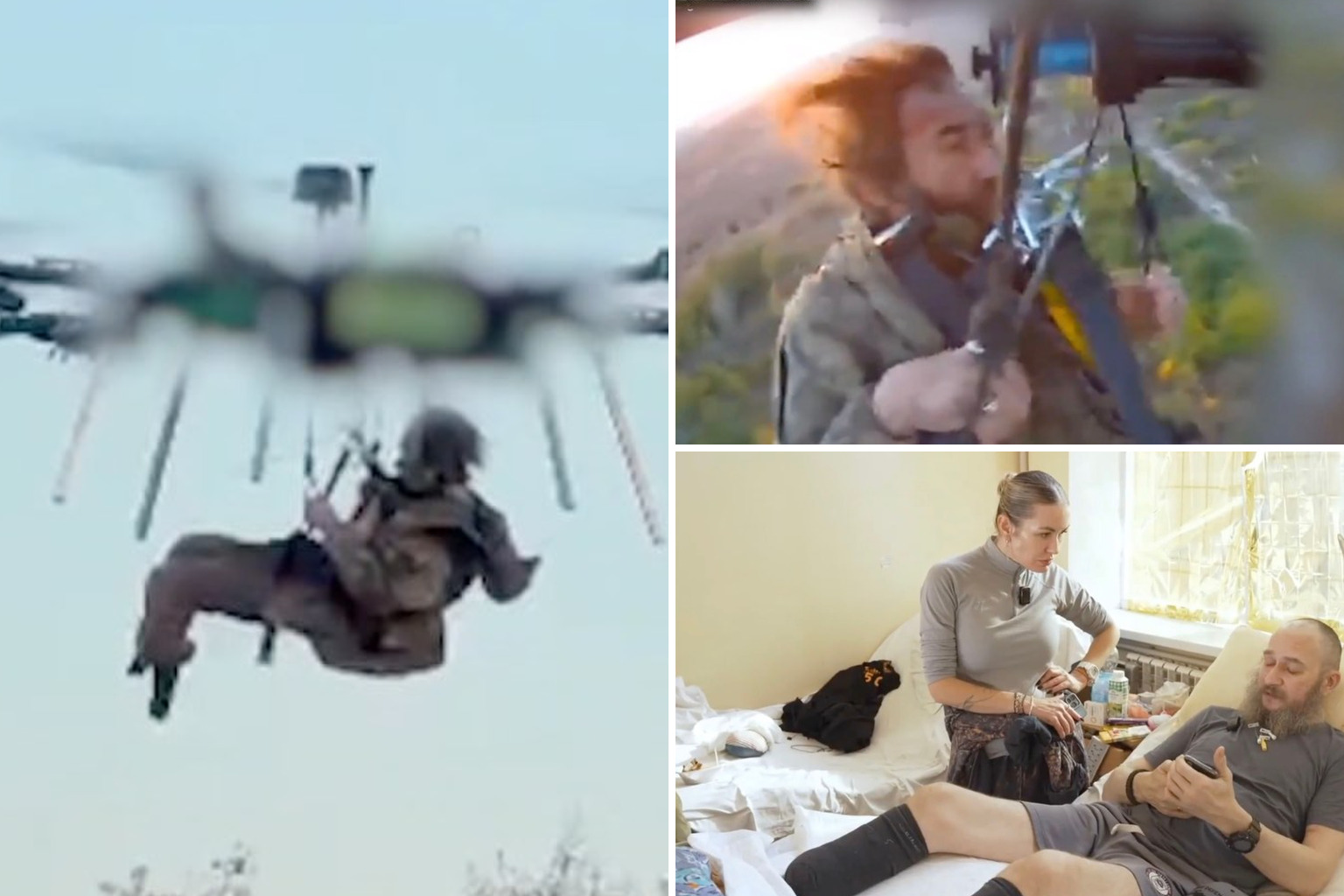
Konstantin Vlasenko has spoken out about the self-amputation that kept him alive during eight months trapped behind Russian lines.
Vlasenko, 49, a soldier with Ukraine’s 30th Separate Mechanized Brigade, was finally rescued earlier this month by a heavy-lift hexacopter drone that airlifted him from near Kup’yansk in eastern Kharkiv under heavy Russian fire. He had been stranded since June of last year, initially alongside a fellow soldier identified only as Baski. The pair had taken shelter in a ruined school, but a Russian drone strike on Feb. 16 killed Baski on his 50th birthday and seriously wounded Vlasenko’s leg.
“I didn’t save him, and he died on his 50th birthday,” Vlasenko said of Baski in an interview with Ukrainian outlet Censor.
With his colleague dead and his own injury preventing escape, Vlasenko crawled into an old cast-iron furnace to hide from relentless Russian attacks. Ukrainian forces could not reach him on the ground, but they sustained him by dropping food, water and medical supplies from drones. His wife even managed to include a Stephen King novel in one survival package.
The conditions took a devastating toll on his body. His left foot rotted from frostbite until it fell off entirely. His right lower leg deteriorated so severely that waiting was no longer an option.
“I put it on a brick, took a knife,” Vlasenko said. “Tears were flowing, I had to cut it off. I cut it off. And the left leg, the one with the wound, had already rotted away.”
He continued, describing how the damage progressed: “the bone came out of the skin, and the leg was hanging.”
Russian forces attempted to break his resolve, dropping a loudspeaker near his position urging him to surrender and promising freedom through prisoner exchange. Vlasenko responded with the same defiant phrase that became a national rallying cry early in the war.
“Russian warship, go f–k yourself,” he fired back, invoking the Snake Island defenders’ famous rebuke.
For months in his cramped shelter, Vlasenko listened to radio transmissions from Ukrainian comrades he could not see. “It was happiness for me that I wasn’t alone, that I could hear someone,” he shared. “it was very lonely.”
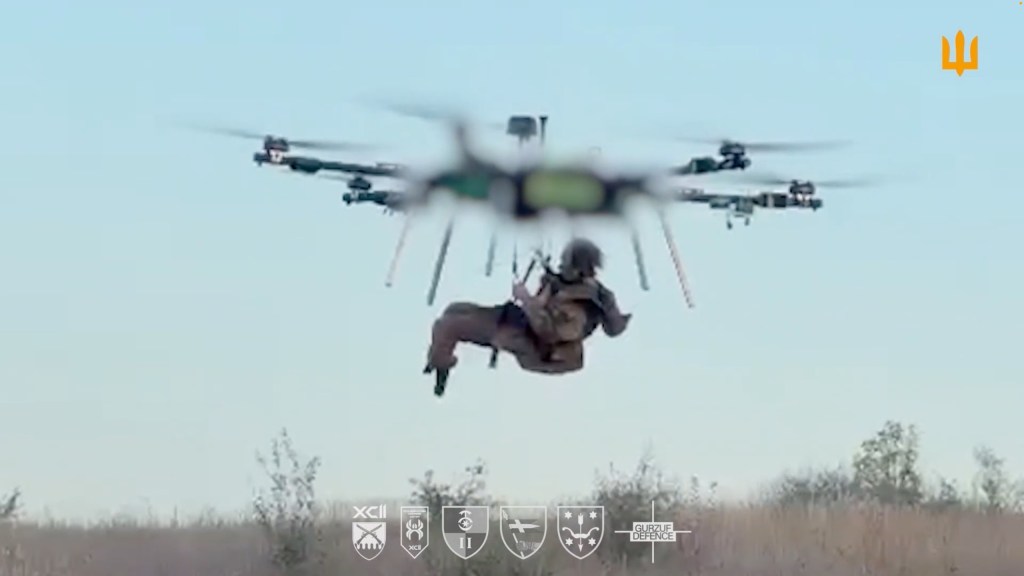
The rescue mission that finally extracted him relied on a hexacopter originally built as a bomber by Gurzuf Defense, modified by the Ukrainian Army to carry human weight. Earlier this month, under active Russian fire, the drone lifted Vlasenko more than 300 feet into the air and transported him 11 miles to safety, according to Ukrainian outlet Oboronka.
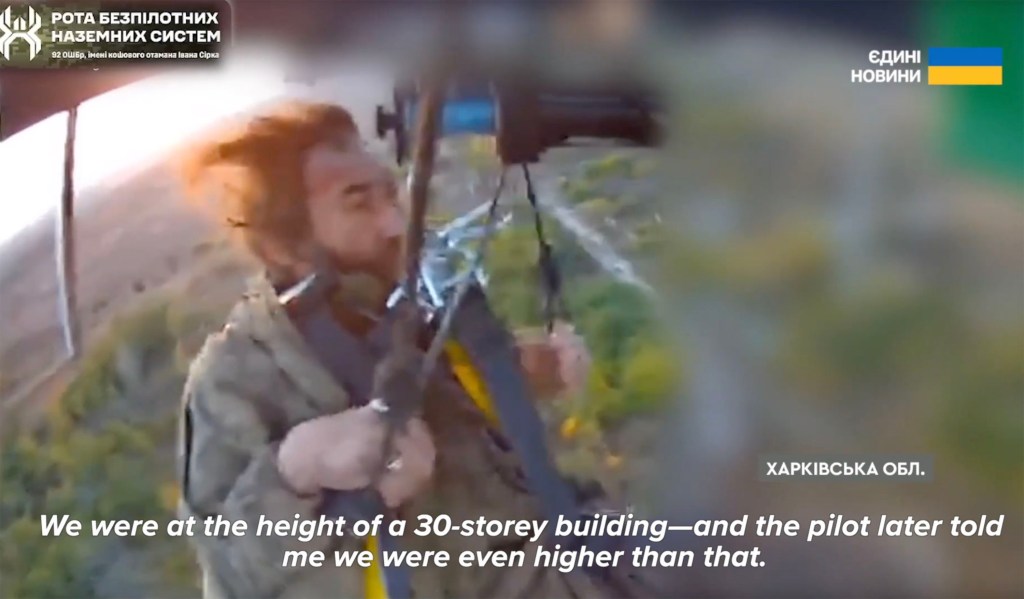
The operation required Vlasenko to secure himself to the aircraft after receiving a cell phone with instructions. Despite advanced gangrene and frostbite damage, he managed to attach himself while Ukrainian attack drones escorted the flight for protection.
“When we were flying over the river, I was afraid that they would shoot me down, that I would fall into the water. I can’t swim,” Vlasenko said.
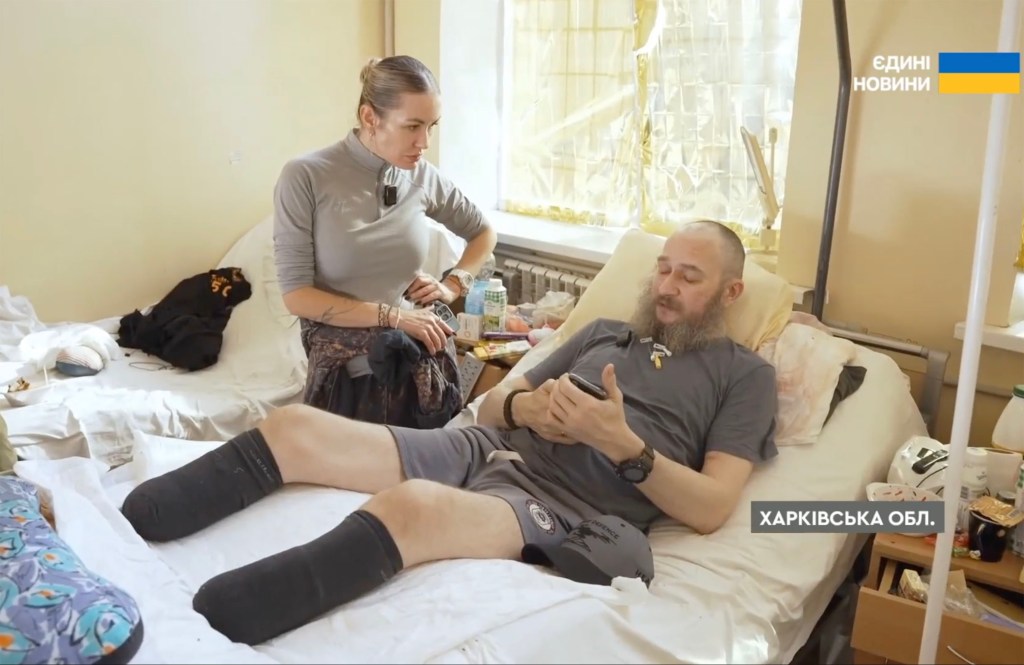
His rescue ended an ordeal that spanned roughly 16 months total, including the initial period with Baski before the drone strike left him alone. Vlasenko is now recovering in a Kharkiv hospital, where he faces extensive rehabilitation and eventual fitting with prosthetic limbs.
“There are no words. I want to thank everyone,” Vlasenko said, adding that he still cannot “believe” the mission succeeded.
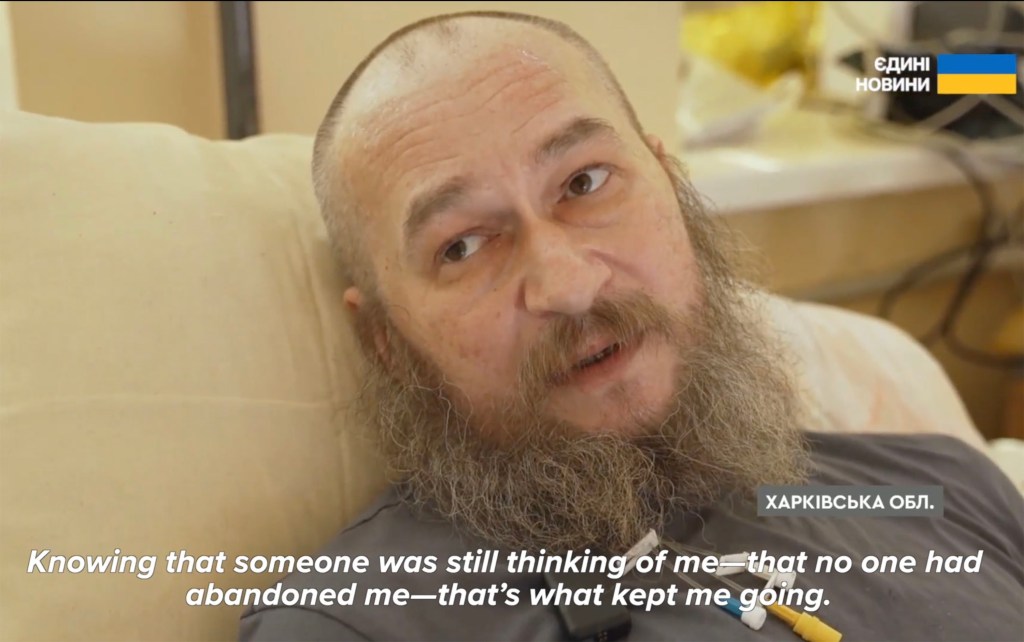
Vlasenko faces months of rehabilitation in Kharkiv before prosthetic limb attachment.