


An abrosexual woman recounted how a friend reacted skeptically when she revealed her sexuality to her.
While many are familiar with terms like gay, lesbian, bisexual, or asexual, newer labels such as nebulasexual and graysexual remain relatively unknown.
Coming out is always a brave act, but it becomes more challenging when others don’t understand your sexual identity.
Emma Flint, who identifies as abrosexual, shared with Metro that her friend’s reaction to her coming out was dismissive.
Her friend responded via text: “When did you decide this? Is this even a label – I’ve never heard of it. I support you, obviously, but this doesn’t sound real.”
This dismissive reaction led Flint to end the friendship. She stated, “Here I was, sharing my identity with someone I trusted, only for them to scoff at my words.”

The term abrosexual gained popularity on Tumblr in 2015 and refers to individuals whose sexual attraction can change over time, sometimes feeling straight one day and bisexual the next.
An abrosexual person can identify with any sexuality at any given time, with their gender attraction shifting over periods.
For example, they might identify as lesbian one day and bisexual the following day.
The prefix ‘abro’ originates from ancient Greek, meaning ‘graceful’ or ‘delicate,’ highlighting the nuanced nature of abrosexual experiences.
The abrosexual community also has its own pride flag:

In a piece by Gay Times, an anonymous abrosexual individual expressed: “For me, sometimes I feel asexual/demisexual, other times heterosexual, other times very bisexual, and other times extremely gay.
“Relationship-wise it means I’m not always attracted to my partner, but I still feel romantic or at least very warm best friend feelings.
“Certain circumstances can trigger back certain attractions sometimes, but mostly it’s unpredictable. It’s not like that for all abrosexuals though! Everyone’s experiences are unique.”
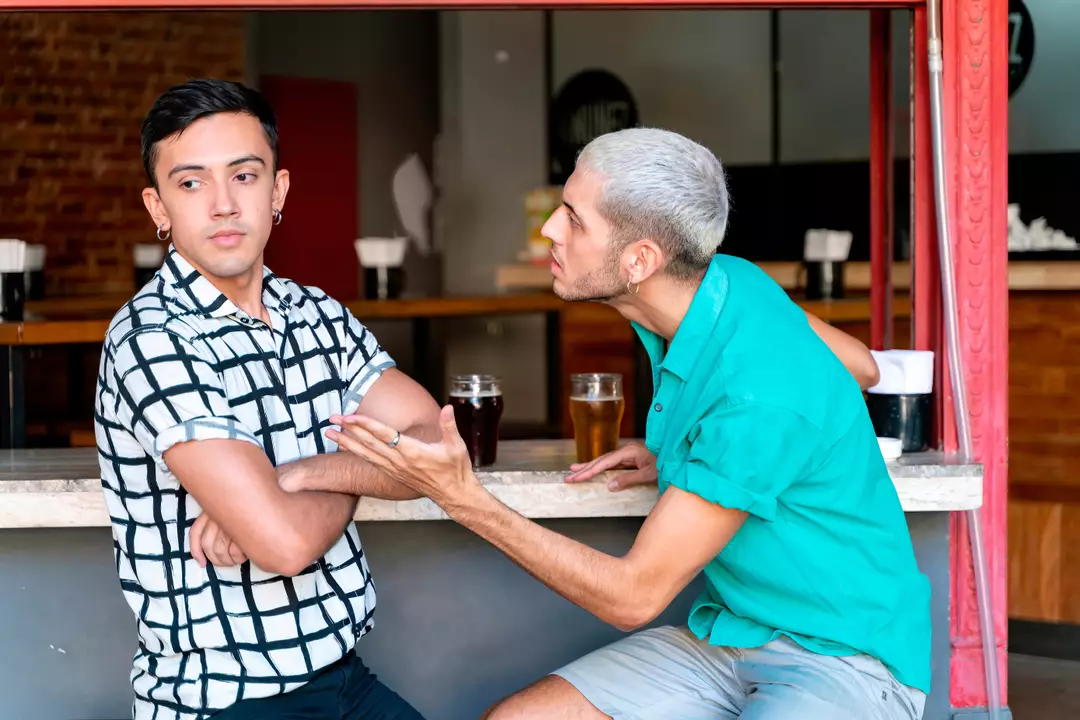
Flint often finds herself repeatedly explaining her abrosexuality.
“When I tell people that I’m abrosexual, I’m often greeted by a blank expression, followed by a question of what the term means,” Flint shared.
“And questions are fine, as long as they’re respectful. I’m not expecting everyone to know what it means – hell, I didn’t until two years ago – but you should always listen with respect.”
In light of this, Douglas Haldeman, PhD, a chair of the doctoral program in clinical psychology at John F. Kennedy University in Pleasant Hill, California, offered advice on how to come out as abrosexual.
He suggested to WebMD: “Explain to them – to the best of your ability and in plain language – how you are defining yourself now.
“It may look something like, ‘You knew me as gay, and now I just have something to add to that.’”