

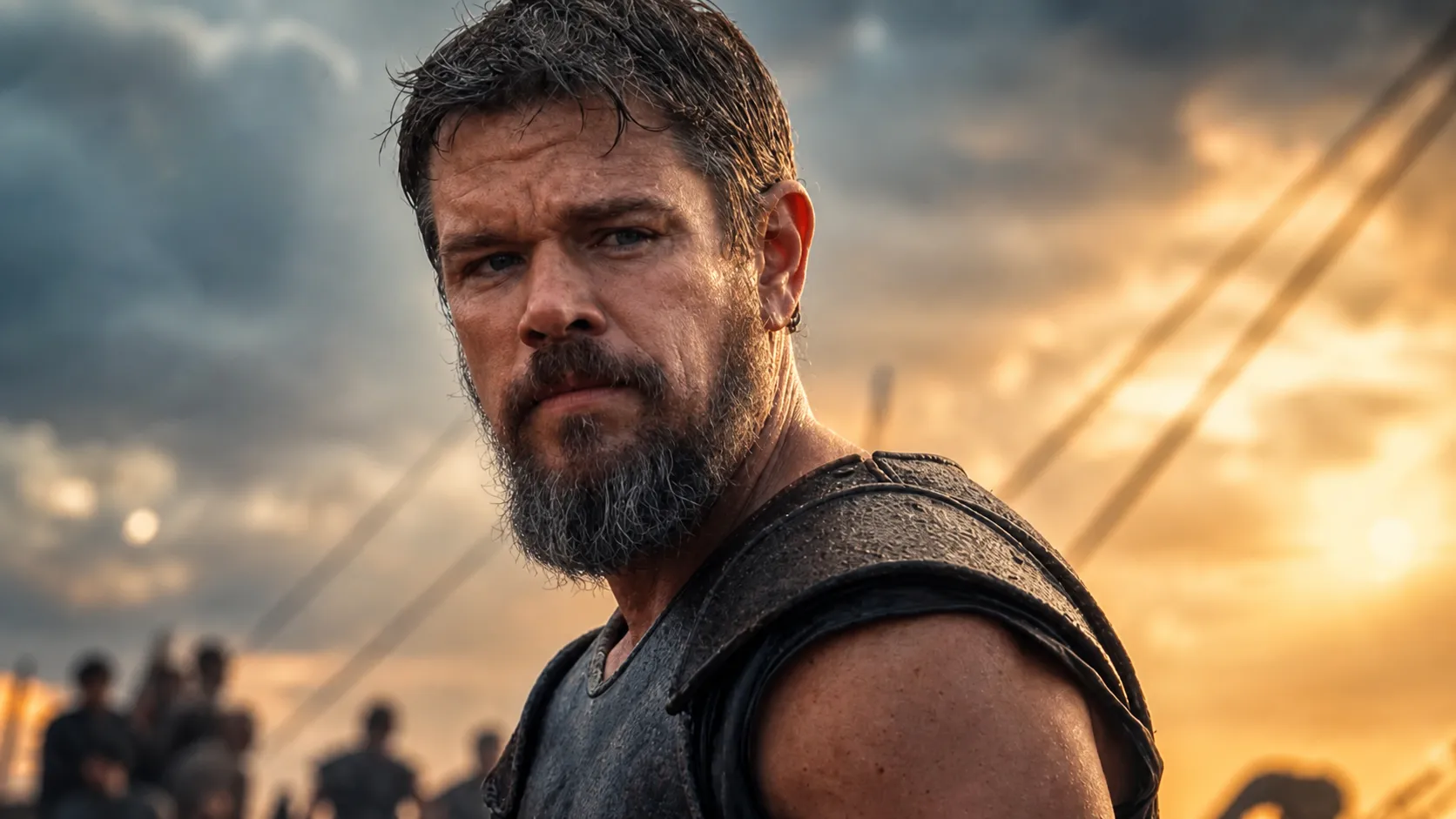
Christopher Nolan, known for preferring practical effects over CGI, used replica Viking ships while making The Odyssey, with the vessels forming part of the Greek hero’s fleet.
Now, one of the groups that supplied a boat for the production says it was returned in damaged condition and that the repair bill was never paid.
Although The Odyssey is set in Ancient Greece, the production opted to use Viking ships — a creative decision that stood out even as the film opened to more than $264 million worldwide in its first weekend.
The film, which premiered in July 2026, was shot largely on location and heavily promoted for its practical approach, with Universal and Nolan leaning on real ships, real water and large-scale physical sets rather than green-screen spectacle.
Nolan said the choice came down to realism and safety at sea. He wanted wooden ships made with old-world techniques, but sturdy enough to handle rough Mediterranean waters.
He told the LA Times:
“We needed something wooden-hulled, built with ancient technology that could be out there in open ocean water, in giant swells.
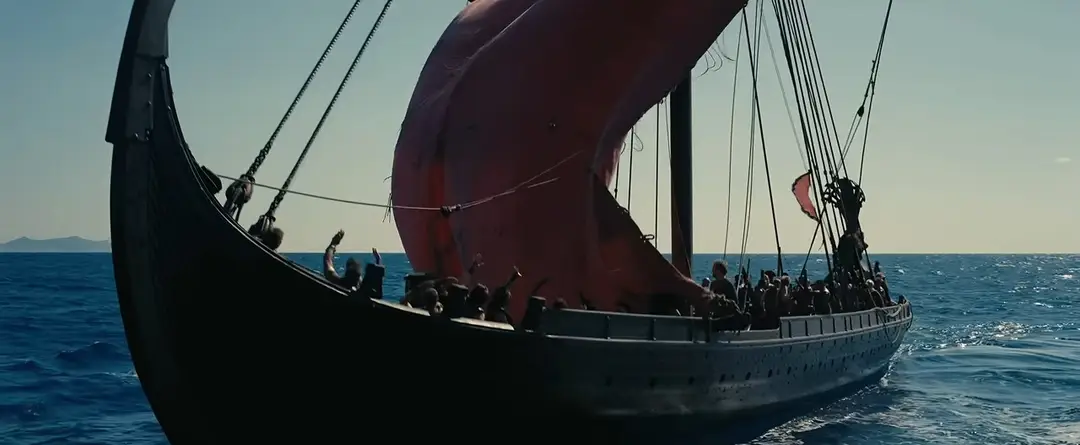
“We think of the Mediterranean as it is in summer holiday calm, but I’m here to tell you it’s not like that the rest of the year.”
The vessel used for Odysseus himself was the 35-metre Norwegian replica Draken Harald Hårfagre, currently recognized as the largest Viking ship still sailing.
But another ship seen in the fleet has become the centre of a dispute. That boat, the Glad av Gillberga, is a reconstructed Viking-era vessel owned by Vikingaleden, a non-profit group based in Värmland, Sweden.
The association says the studio failed to pay for repairs after the ship was damaged during filming, though the studio says its records show everything owed has already been settled.
For six months, the Glad av Gillberga was used as an escort vessel during location shooting around Greek and Italian islands. According to the association, it came back with major structural problems, including a cracked hull, as reported by Expressen.
The Guardian reported that instead of sending over a large repair invoice, volunteers from Vikingaleden spent months restoring the vessel themselves without charging for labour. The organisation says it only billed for materials, with total costs amounting to about $6,000.
Vikingaleden says the contract made clear that any damage caused during production would be covered, but claims the invoice was still outstanding more than a year later.
Peter Olausson, chair of the Vikingaleden association, didn’t hold back when speaking about the situation, telling the Guardian:
“We are only charging for the material cost, not the labour. The agreement was that we would fix it and get financially reimbursed. Of course Universal can afford this $6,000. We feel forgotten.”
Universal Pictures later pushed back on that account and said its paperwork indicates all necessary payments were made.
A spokesperson for the studio said:
“Our records show that all invoices relating to the Glad av Gillberga were paid in full, including repairs. The Studio and the production have contacted the Association to clear up any misunderstanding.”

Written: Sometime between 725 BC and 675 BC, making it more than 2,500 years old
Based on a true story? Largely no — cyclopes are not real — and historians remain divided on whether the Trojan War happened at all
Who wrote The Odyssey? Homer, though historians still debate whether Homer was one person or a collective of poets
How long is the movie? 2hrs, 52mins — probably worth planning a toilet trip in advance
Where was the movie filmed? The Hellenic Film Commission said Nolan and the production team shot scenes across the Peloponnese, including Nestor’s Cave, Voidokilia Beach and Almyrolaka Beach on Pylos; Methoni Castle in the southwestern port town of the same name; and Acrocorinth, the monolith above ancient Corinth.
Vogue also reported filming in Morocco, with scenes captured in Marrakech, Tahanaoute, El Haouz, Essaouira and Ouarzazate. The cast and crew were also seen on the Sicilian island of Favignana, while Iceland was used for the underworld sequences.
The production also continued north into Scotland, shooting along the Moray Firth Coast as well as at Findlater Castle and Culbin Forest.
The Odyssey in IMAX 70mm vs normal cinema screens: The film’s website usefully compares the trailer in six separate formats, each with a different aspect ratio. That includes the difference between IMAX 70mm — of which there are only 25 screens in the US — and standard 35mm presentation.
The Odyssey is in cinemas now.