

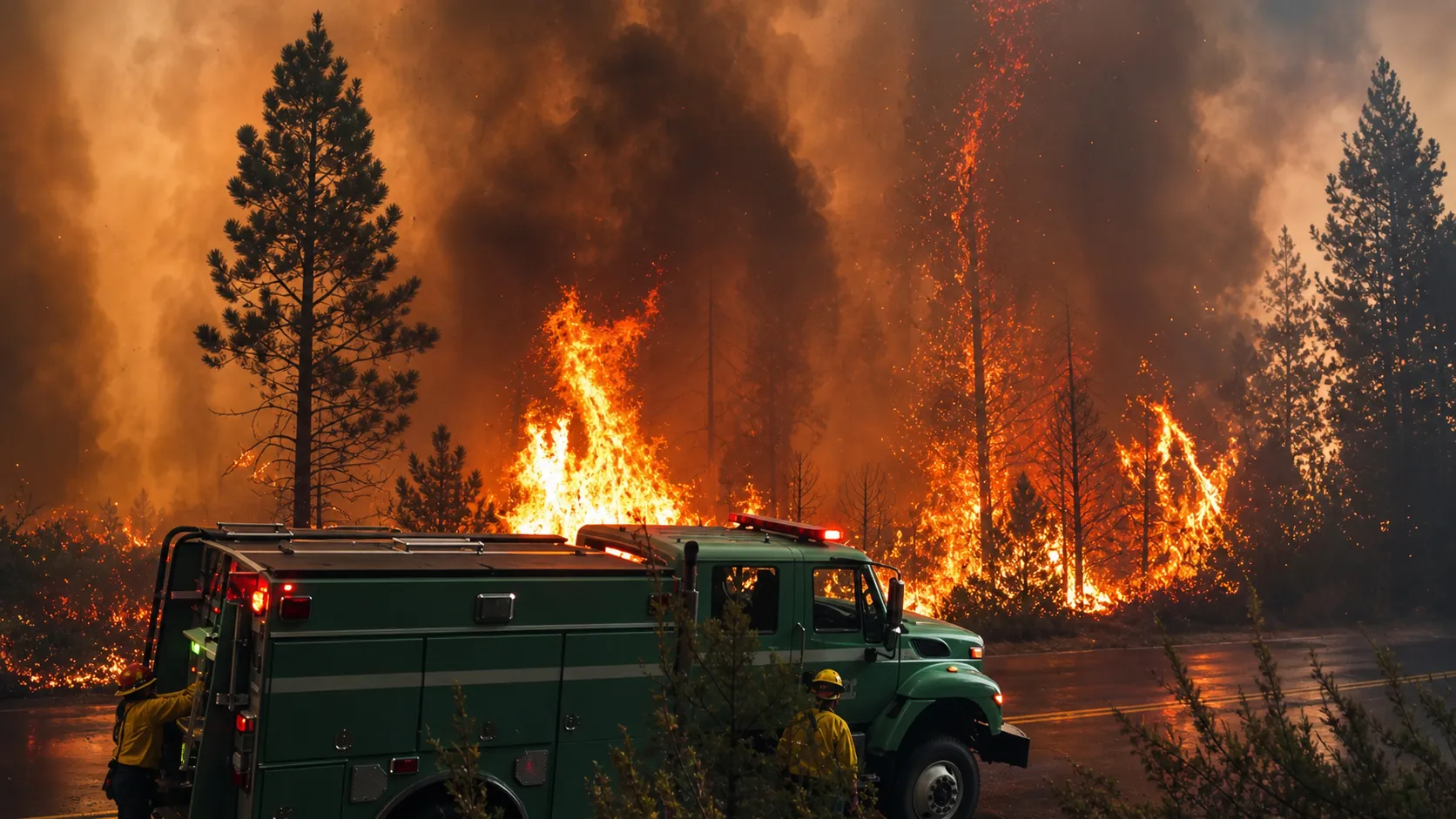
It has already been a deadly year for firefighters, with authorities strategically deploying resources to attack wildfires quickly before they spiral out of control. Fire managers are working to stay ahead of a relentless fire season that has stretched staffing and resources to their limits, requiring constant coordination across multiple states and federal agencies.
The challenges fire managers face this year are severe. They are dealing with persistent drought worsened by record-low snowpack levels and consecutive days of hot, dry and windy weather. Hundreds of homes have burned across the West, three firefighters were killed battling flames in Colorado, and a helicopter assisting with a Colorado fire crashed into a reservoir, killing the pilot. More than 2,000 fires have been confirmed since the beginning of July alone, and by late June, national coordinators elevated the preparedness level to four on a five-tier scale after a surge of wildfire activity forced them to begin funneling more crews to the hottest spots.
The strategy fire managers employ involves anticipating where fires will occur and positioning resources in advance. They place thousands of firefighters, hundreds of engines, batteries of bulldozers and fleets of helicopters and air tankers in areas where they are expected to make the biggest difference. These outlooks form the basis for determining how and where to mobilize resources, which are shifted as the fire season moves from region to region.
The task of coordinating these efforts falls to 16 incident management teams that are overseeing nearly 17,000 people spread across more than a dozen states. In response to the explosion of fire activity across the West, highly skilled and experienced teams have traveled from Alaska and California to help with fires in the Great Basin region and other areas. The nation has 10 geographic area coordination centers that handle the overall mobilization of firefighters and other resources.
However, the resource-sharing system presents a difficult balancing act. In a busy year, states must weigh whether to free up resources to help elsewhere or pressure federal officials to keep crews in reserve in case of increased local risk. This creates what experts describe as a delicate balance where everyone must share resources while avoiding overextension. When firefighters are in the field longer to help multiple areas, the result is more overtime and greater opportunities for burnout among exhausted crews.
Beyond the immediate pressures of deployment, fire managers face deeper structural challenges. Each fire season reignites debate over public investment in a permanent wildland firefighting workforce and what agencies can do to retain experienced personnel. Experts stress that experience is critical when dealing with extreme conditions. Even with adequate resources, there is little firefighters can do when facing multiple days of strong winds, low humidity and warm temperatures. During such extreme weather, strategic positioning of resources in advance becomes crucial, allowing crews to be available when conditions die down in the evening, though persistent red flag warnings and high winds make control nearly impossible.
The infrastructure supporting firefighting operations has also been strained. Only about 35 to 38 Complex Incident Management Teams exist nationwide, considerably fewer than existed five to ten years ago. Many of these teams share resources, with some management positions being distributed among three teams simultaneously. This creates a critical shortage that can affect decision-making quality, particularly when fire activity becomes most intense. Personnel shortages have also forced teams to share specialized members, meaning those individuals cannot be deployed to different fires at the same time.
Additional challenges come from workforce losses over the past year, with agencies losing many fire-qualified staff. Some of the people still in these roles are senior employees who, during a busy season, can reach federal pay caps that effectively eliminate financial incentives to continue working long hours under dangerous conditions. Morale challenges and administrative changes have compounded staffing difficulties.
Looking at the broader fire season, conditions remain dire. As of mid-July, more than 38,000 fires have burned over 3.4 million acres across the United States, representing roughly 130 percent of the ten-year average for the number of fires and 146 percent of the average for acres burned. Hundreds of personnel are working individual large fires, with single incidents like the Aspen Acres Fire in Colorado employing over 1,800 personnel from nearly 30 states.
Fire managers express cautious hope that they can continue juggling resources to avoid reaching the maximum preparedness level. Over the past decade, fire managers have reached the top preparedness tier an average of 25 days per year, with the longest stretch in 2021. The earliest maximum preparedness was ever designated was June 21, 2002, suggesting that this year’s acceleration represents exceptional pressure on the system.
State officials acknowledge both current progress and looming concerns. Mike Morgan, director of the Colorado Division of Fire Prevention and Control, noted that his state was receiving help from an Alaska-based incident management team. “Thank God that they have the ability to free those resources up,” he said. “So I think at the moment I would say I feel pretty good about where we’re at. But I’m very concerned about where we go.”
The question facing fire managers is whether the delicate system of resource sharing will hold as the fire season continues into the peak months of August and September. With temperatures and dry conditions expected to persist, and with workforce capacity already strained, the coming weeks will test the nation’s ability to respond to multiple large-scale fire incidents simultaneously.