

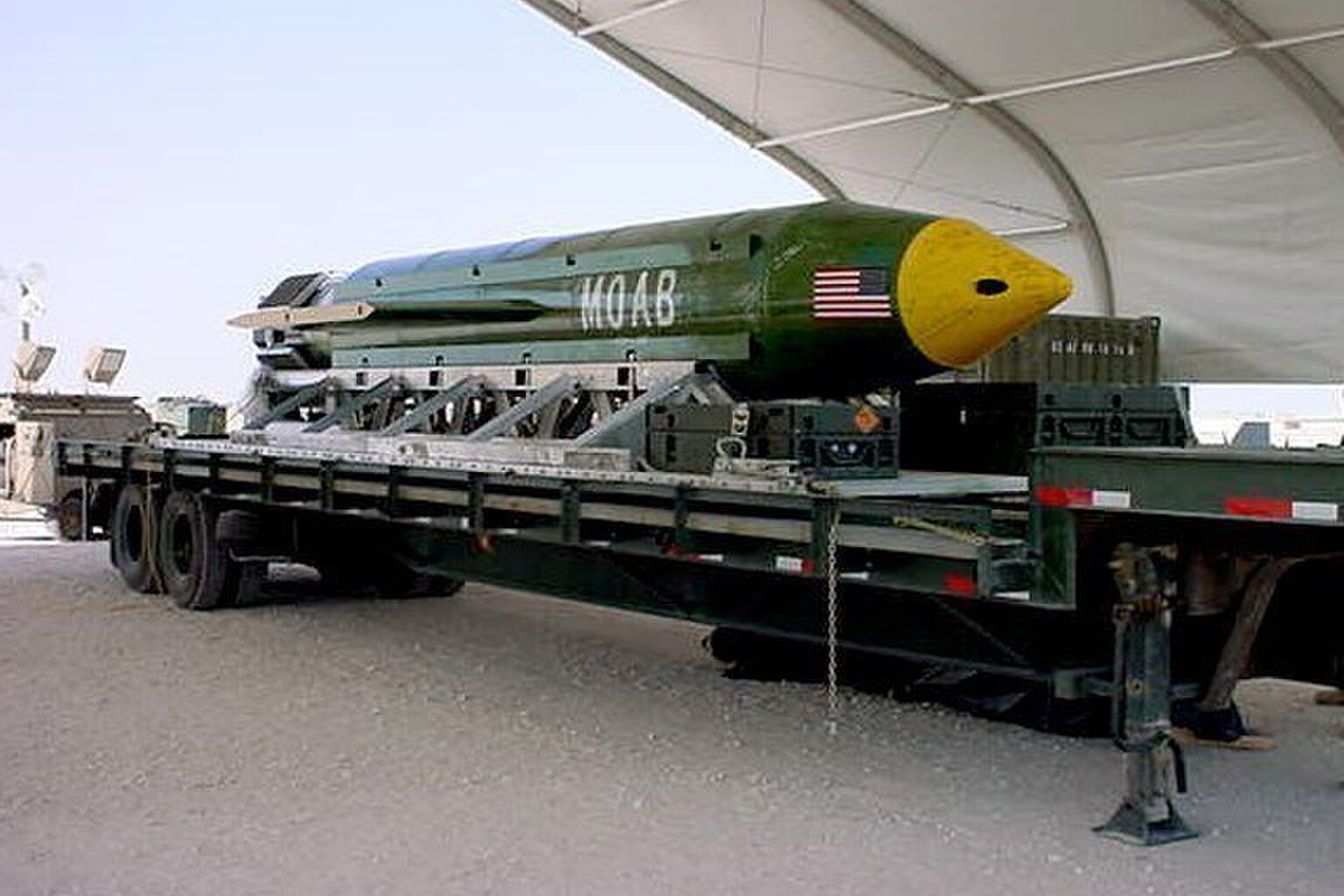
The US military has drawn up strike plans that could deploy the GBU-43/B Massive Ordnance Air Blast Bomb against Iranian targets if President Donald Trump orders renewed combat operations, according to a Thursday report citing officials familiar with the planning.
The so-called “mother of all bombs” is the largest non-nuclear weapon in the American arsenal, and its potential use against Iranian energy infrastructure and nuclear sites would represent a dramatic escalation in any future conflict, officials said.

Questions persist among military planners about whether the massive weapon would actually achieve Washington’s strategic goals, the officials said, despite its fearsome destructive capacity.
The bomb, developed for use against deeply buried targets and tunnel complexes, carries an explosive yield equivalent to 11 tons of TNT and was first used in combat in Afghanistan in 2017 against ISIS positions in Nangarhar Province.
Trump ordered airstrikes against three Iranian nuclear facilities earlier this month after Tehran rejected demands to abandon its uranium enrichment program, though those initial strikes did not involve the GBU-43/B.
The president has since indicated openness to additional military action while also suggesting the conflict could wind down, creating uncertainty about the administration’s ultimate intentions.
Iran’s nuclear program has advanced significantly in recent years, with facilities at Fordow, Natanz and Isfahan hardened against conventional attack, potentially motivating consideration of the most powerful conventional weapon available.
Military effectiveness concerns center on whether the bomb’s blast effects would sufficiently damage deeply fortified underground installations, or whether multiple strikes with more precise weapons might prove more reliable.
The planning discussions reflect ongoing tension between the administration’s stated desire to prevent Iran from obtaining nuclear weapons capability and the practical challenges of doing so through military means alone.
Trump told reporters this week that the US is weighing further sanctions against Iran alongside any military options, suggesting economic pressure remains part of the strategy.
The president’s mixed signals on the conflict’s future direction have drawn criticism from some allies, with Ukrainian President Volodymyr Zelenskiy separately expressing frustration this week over Trump’s approach to international alliances.
European powers have urged restraint and a return to diplomatic negotiations, though Tehran has shown little willingness to engage under the threat of continued military action.
The GBU-43/B weighs approximately 21,600 pounds and must be carried by specialized aircraft, limiting its deployment flexibility compared to smaller precision-guided munitions used in the June strikes.
Defense officials emphasized to CNN that strike plans exist for numerous contingencies and that the inclusion of any specific weapon does not indicate a decision to employ it.