


Idaho is set to become the first state in the US to make the firing squad its main execution method, a move that has intensified arguments over whether it is a more reliable process or a more violent one.
Beginning on 1 July 2026, executions in Idaho will default to the firing squad. While several other states permit the practice, Idaho is the only one to place it at the forefront rather than keeping it as a secondary option.
Mississippi, Oklahoma, Utah and South Carolina all allow firing squad executions, but Idaho’s law goes further by making it the standard method for carrying out death sentences.
The policy change follows repeated problems with lethal injection in the state. Since the Supreme Court restored capital punishment in Gregg v. Georgia in 1976, Idaho has completed only three executions — in 1994, 2011 and 2012 — all using lethal injection.
That system came under renewed scrutiny in February 2024, when officials failed to execute Thomas Creech, the state’s longest-serving death row prisoner, after eight unsuccessful attempts to establish an IV line.
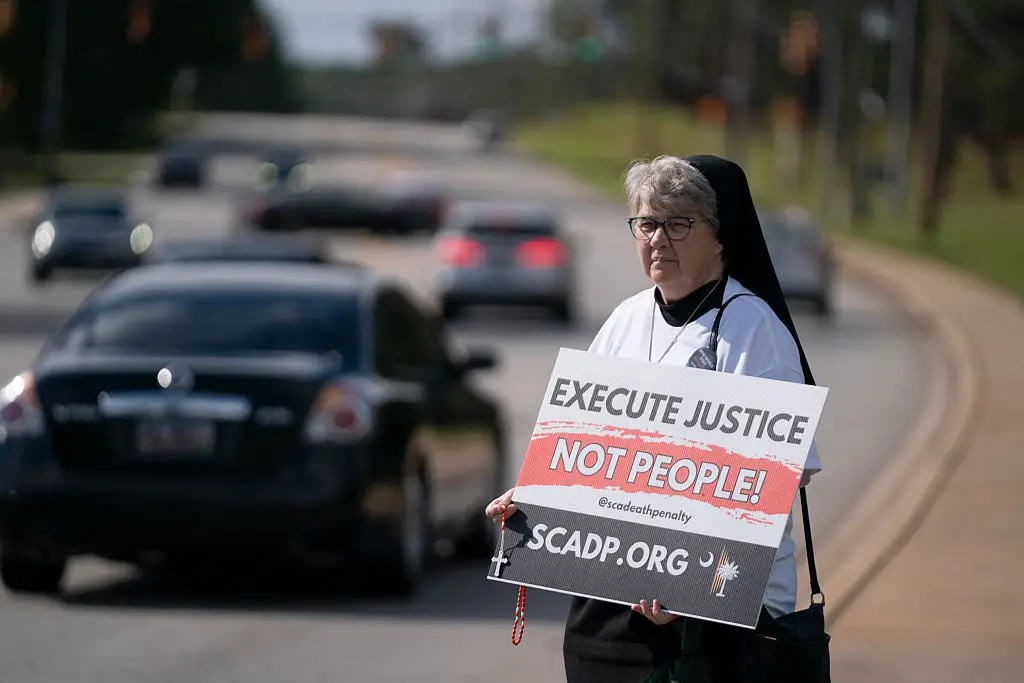
Republican Representative Bruce Skaug, a co-sponsor of the legislation, has argued that lethal injection fails too often and that the firing squad is both faster and more dependable.
“We needed something that was sure and humane, and firing squad is humane because it is sudden, it is quick and it is certain,” Skaug said.
Under Idaho’s updated procedure, executions will be carried out by a three-person firing squad rather than a remote-operated system that had earlier been discussed. Each participant will fire one live round at the same time on command.
Those selected must have held Peace Officers Standards and Training certification for a minimum of three years. They must also have no firearms-related disciplinary record within the previous year and must pass a marksmanship test requiring perfect accuracy from 21 feet.
In addition, volunteers cannot have blood or legal connections to either the condemned prisoner or the victim’s family.
Even so, death penalty opponents say the method is far from infallible. The Death Penalty Information Center says there have been only a handful of firing squad executions in the modern era, including three in South Carolina in 2025.
According to the organisation’s executive director, Robin Maher, two of those three executions “went badly.” “One of them, only two bullets were found in the prisoner.
The third bullet didn’t even hit him and neither of those bullets hit his heart,” she said. “So it tells you that the firing squad is not a fool proof method.”
The ACLU of Idaho has also condemned the switch, citing the failed Creech execution and concerns about how lethal injection drugs were handled as part of a wider pattern of problems.
“To be clear, we at the ACLU of Idaho oppose all executions; there is no method that does not impose an intolerably high risk of cruel and unusual punishment,” the organisation said in a statement.
Public backing for capital punishment has also weakened across the country. Gallup polling shows support has fallen to its lowest level in roughly 50 years, with 52 percent still in favour while opposition has steadily increased since the mid-1990s.
Maher said those changing attitudes reflect broader concern about bias, wrongful convictions and whether executions do anything meaningful to improve public safety.
Skaug, however, says support for the death penalty remains firm within Idaho, even claiming that some residents have been “too eager” to serve on a firing squad.
The change has also brought significant costs. Idaho Department of Correction documents show the second phase of work to retrofit the execution chamber at the Idaho Maximum Security Institution was estimated at $910,802 in June 2025, after earlier costs had already climbed to $750,000.
The department says the retrofit will modify the existing execution chamber to accommodate both lethal injection and firing squad executions, including a dedicated space for the firing squad and updated witness areas. It has said the project is being designed with staff safety, sound mitigation and ballistic protection in mind.
Officials have also said the system is being readied for the July 2026 deadline, with the execution unit at F-Block taken offline during construction and training for the new procedure planned ahead of the law taking effect.
Skaug said he was unhappy about the expense but believed “it needed to be done,” adding that ammunition would be easier to obtain than lethal injection drugs. He also noted that a manufacturer’s proposal to donate ammunition was declined.
Maher said many people underestimate how costly death penalty cases become once prosecutors pursue that sentence.
“As soon as the prosecutor decides to seek death, the price tag goes up,” she said, referring to the lengthy appeals process and the added security requirements involved.
Idaho currently has eight people on death row, and the state says it has carried out three executions since enacting its modern death penalty statute in 1977.