

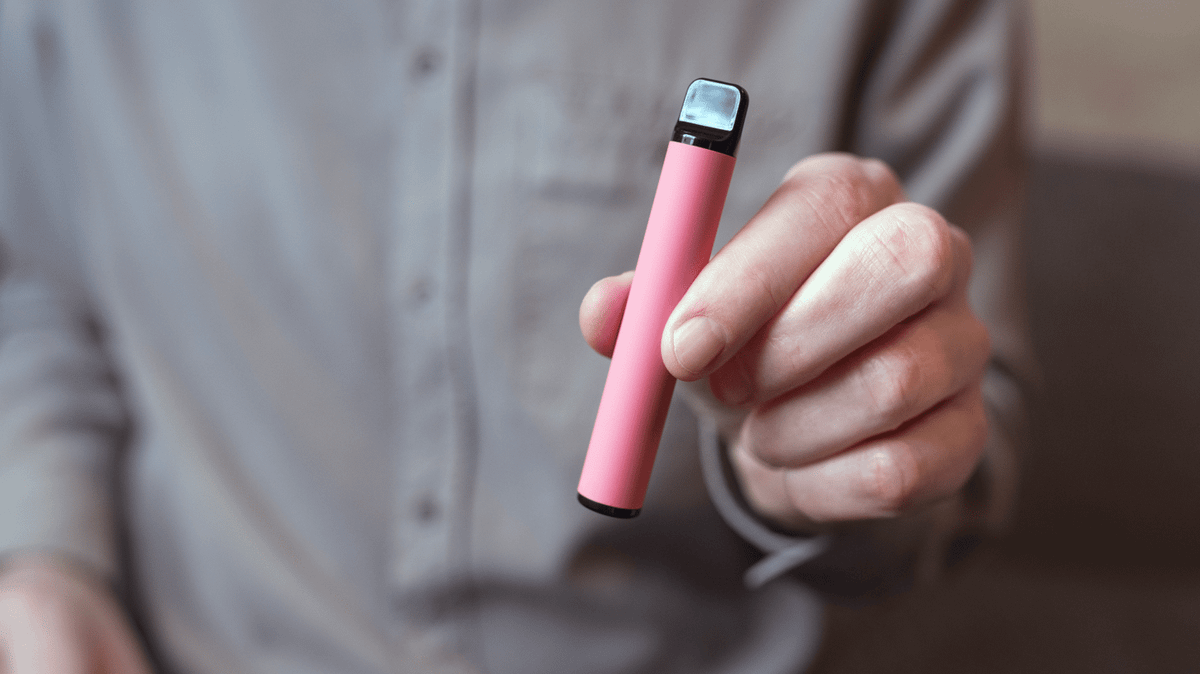
A warning has been issued about a particular type of vape after new research highlighted the potential harm it may cause.
For years, vaping was widely promoted as a less harmful substitute for cigarettes, and many smokers turned to e-cigarettes in the hope of quitting tobacco permanently.
But vaping hasn’t only been adopted by people trying to stop smoking. Large numbers of non-smokers — particularly younger adults — have also taken it up.
Because e-cigarettes are still relatively new, the full picture of their long-term health impact is not yet clear.
In a study published in the journal Frontiers in Oncology, researchers reported that regular vaping is associated with changes in activity across 3,124 genes, compared with people who neither vape nor smoke.
That matters because shifts in gene behavior can act as early indicators for serious health problems, including cancer as well as cardiovascular and respiratory disease.
After establishing that these differences existed, the researchers then tried to pinpoint what was behind them.
Professor Ahmad Besaratinia, senior author on the study said: “One major question still remains: what is driving these changes? Is it the act of vaping itself – or is it the intensity and duration of vaping, the characteristics of the products used, or some combination of these?”
The team’s analysis suggested that roughly two-thirds of the gene activity changes were linked to the type of device used and the vape flavor.
On the back of those findings, Besaratinia is calling for regulators to take a closer look at the possible health risks tied to specific flavorings.
The strongest concern centered on fruit-flavored vapes — including options like mango and watermelon — which the study associated with changes in 31 percent of the affected genes.
By comparison, “sweet” flavors were connected to 2.9 percent of impacted genes, while mint or menthol products were linked to 0.9 percent — a noticeable gap.

“These product differences explained more of the variation in gene regulation than how much or how often people vaped,” Besaratinia added.
Next, the researchers plan to build on the early results by examining the chemicals used in e-liquids.
The goal is to identify which specific compounds are most closely associated with the gene changes observed in regular users.
“Once we identify these chemicals, policymakers could instruct manufacturers to either eliminate these chemicals or reduce their level in e-cigarette products to minimise potential harm,” Professor Besaratinia added.
For the initial research, the team collected oral cell samples from 35 vapers, 24 smokers, and 24 people who did not use either product, and used those samples to support their analysis.