

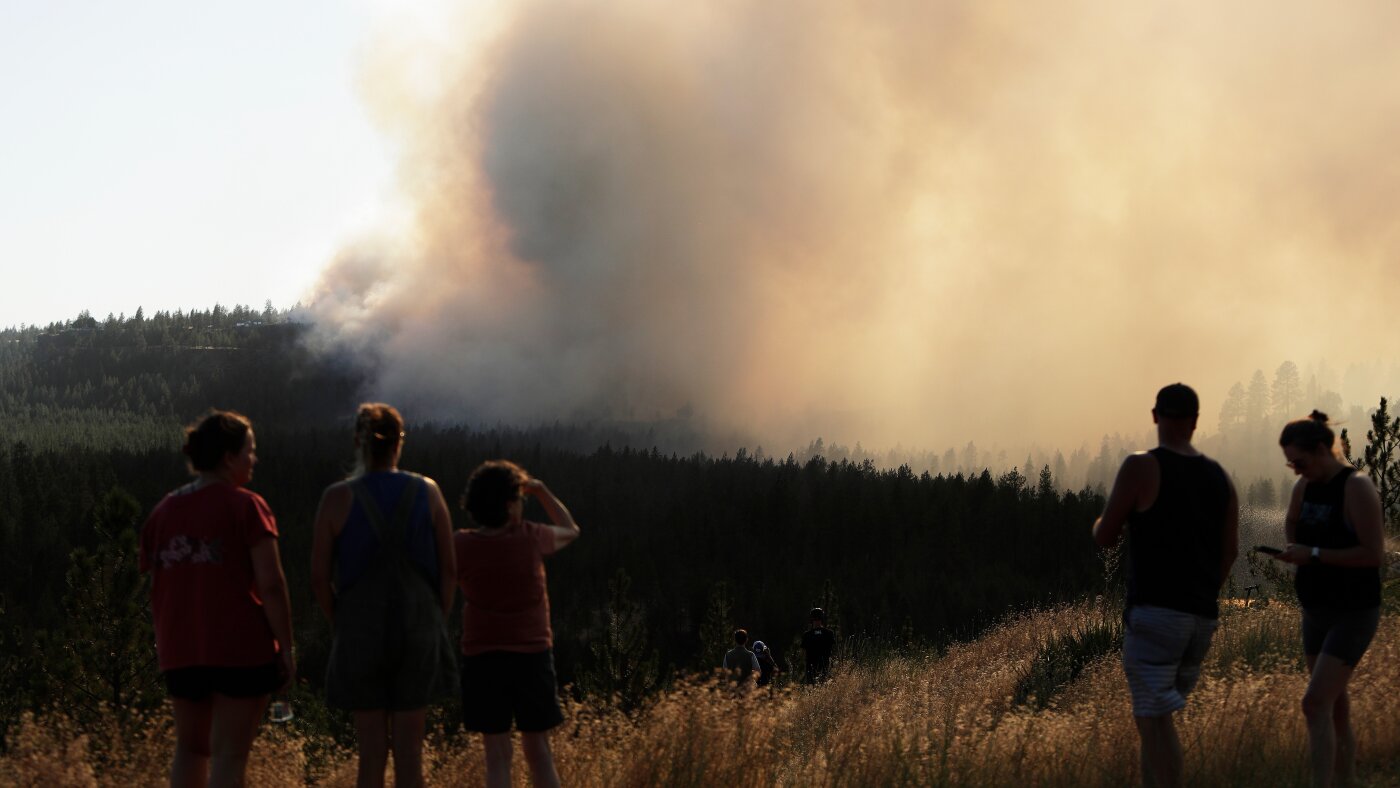
Devastating wildfires have swept through the Spokane area of Washington state, destroying more than 600 structures and forcing approximately 60,000 residents to evacuate in what local officials are calling the worst natural disaster the region has ever faced.
Three major fires—the Old Trails Fire, the Fairview Fire, and the Autumn Lane Fire—ignited on Saturday afternoon and rapidly spread across more than 7,000 acres as of Sunday, consuming everything in their paths with zero containment. The fires are now collectively known as the Spokane Complex Fire and have become the top wildfire priority in the nation.
The combination of extreme weather conditions created a perfect storm for rapid fire spread. The National Weather Service issued a rare “Particularly Dangerous Situation” fire weather alert on Saturday, a designation reserved for only the most extreme combinations of low humidity, dry fuels, and violent winds. Sustained winds of 20 to 30 miles per hour with gusts exceeding 40 mph drove the blazes into residential neighborhoods with devastating speed. The fires crossed the Spokane River and pushed through communities including the Indian Trail neighborhood, where walls of flames destroyed dozens of homes and other structures.
The scale of destruction has been extraordinary. More recent estimates suggest that approximately 700 structures have been destroyed, though authorities have not yet determined how many are homes, businesses, schools, or other buildings. The Old Trails Fire alone destroyed at least 640 structures according to Spokane County Fire District 3 officials.
No deaths or serious injuries have been reported, though officials emphasized it remains early in the response effort and damage assessment continues. Spokane Mayor Lisa Brown called the fires “the worst natural disaster our region has faced,” underscoring the unprecedented nature of the event for the state’s second-largest city.
The evacuation has been massive and unprecedented. Approximately 60,000 people within Spokane city limits have been ordered to evacuate, with over 18,800 homes under evacuation orders. The evacuation even included the Mann-Grandstaff Veterans Affairs Medical Center, where 27 patients were relocated and transferred to area hospitals and shelters under VA staff supervision.
Emergency shelters have been opened across the region to accommodate displaced residents and their animals. The Spokane Convention Center and Northwood Middle School are providing shelter space with food, cots, and other essentials. The American Red Cross opened shelters that accommodated over 400 people and their pets on the first night, and the organization has launched what it called a “massive relief effort” seeking donations and volunteers.
The thick smoke from the fires has created hazardous air quality conditions across the region. Spokane’s air quality reached dangerous levels with an Air Quality Index of 207 on Sunday, more than four times the upper limit for “good” air quality. The National Weather Service issued air quality alerts for multiple counties, warning that particulate matter could reach unhealthy or hazardous levels.
The fires were driven by conditions that officials described as historic. The area was under extreme heat and record drought, and a powerful cold front on Saturday afternoon created sustained winds across the region. The terrain and firefighting resources have also been overwhelmed, with Assistant Spokane Fire Chief Lance Dahl stating: “I will tell you in a wind-driven event there is not a fire department in the U.S. That can handle a wind-driven event this size.”
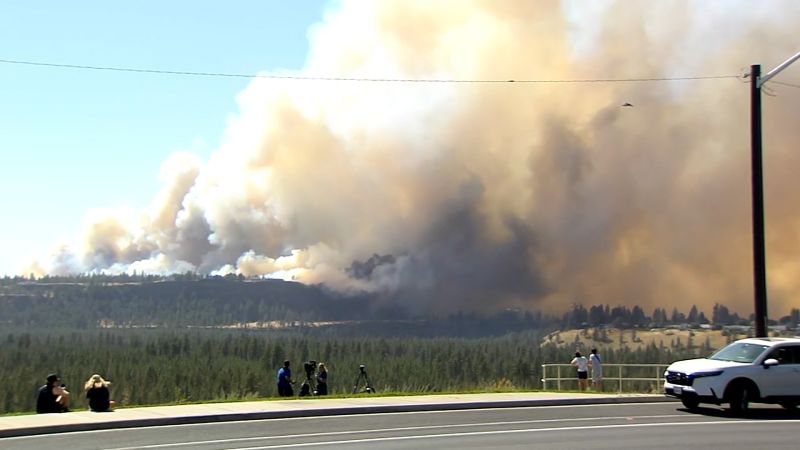
In response, firefighting resources have been mobilized from across the country and internationally. More than 900 personnel from various agencies are battling the Spokane fires, with crews arriving from approximately a dozen states as far away as Alaska and Florida, as well as from Australia. The California Interagency Incident Management Team 7, totaling more than 4,000 firefighters, has taken over management of the fire complex.
State and federal officials have coordinated a rapid emergency response. Washington Governor Bob Ferguson declared a state of emergency on Saturday and issued a statewide burn ban through September 30. He spoke directly with President Donald Trump, who expressed his support for those affected. The Federal Emergency Management Agency authorized fire management assistance grants on Sunday to help pay up to 75 percent of eligible firefighting costs.
The disaster comes as Washington state faces an extraordinary fire season. More than 1,000 fires have burned approximately 425,000 acres across Washington so far this year, the most since 2021. Fifteen major fires were burning across more than 250,000 acres statewide as of Sunday afternoon, stretching state and federal resources to their limits.
Weather forecasters warn that conditions are expected to remain dangerous. While Monday offered some relief with lighter winds, warm and dry conditions are forecast to return through the week. Temperatures are expected to rise to the mid-80s on Tuesday, the lower 90s on Wednesday, and potentially the mid-90s by Thursday, driven by a heat dome rebuilding over the Pacific Northwest. No significant rainfall is expected.
The investigation into how the fires began continues, with authorities still working to determine the causes. Utility company Avista said early assessments indicate the Old Trails Fire did not spark from its infrastructure, though some of its equipment was damaged in the flames.
The full extent of the disaster remains unclear as crews continue assessment efforts in affected areas. Officials have requested assistance from FEMA including food, search-and-rescue help, and housing for displaced residents. Washington faces not only the immediate challenge of containing the fires but the long-term task of rebuilding fire-scarred communities that have been fundamentally altered by this catastrophic disaster.