

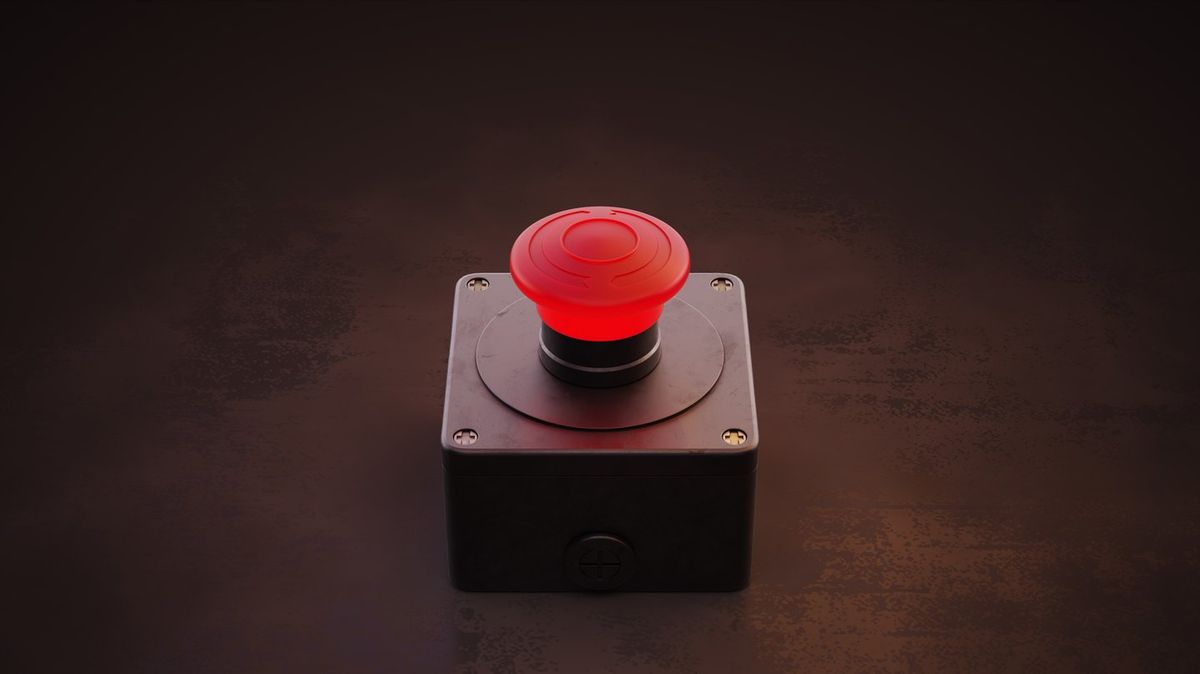
A deceptively straightforward ethical puzzle has been fuelling online arguments for weeks, after being floated to the public by YouTuber-turned-philosopher MrBeast.
Often compared to classic thought experiments like the trolley problem, the scenario has pushed people into two fiercely opposed camps. One side insists the “blue” choice is the only moral option, while the other argues the “red” choice is simply the most logical—each accusing the other of being either clueless or cruel.
MrBeast put the question to users on X in the form of a poll, laying out the rules plainly:
“Everyone on earth takes a private vote by pressing a red or blue button. If more than 50% of people press the blue button, everyone survives”.
At first glance, the decision seems obvious: just pick blue and guarantee survival for everyone. But the twist changes the stakes:
“If less than 50% of people press the blue button, only people who pressed the red button survive. Which button would you press?”

That single condition sparked endless back-and-forth, as timelines filled with debates between “Blue Button” and “Red Button” supporters—one group framing their answer as ethical duty, the other as practical self-preservation.
Steven Conway, a mathematician and game theory specialist at Swinburne University of Technology, has argued the problem is a lot less straightforward than it first appears. Writing in The Conversation, he noted that many people assume the solution is clear-cut:
“Most people think the choice is extremely obvious,”
But he added that the same “obviousness” points in different directions depending on how someone reasons about risk, trust, and collective behaviour:
“However, not everyone agrees whether the obvious answer is blue or red.”
Conway explained that, underneath the viral framing, the dilemma echoes famous questions from both moral philosophy and strategic decision-making. In his view, it reveals two competing instincts about how people should choose when outcomes depend on what everyone else does:
“From the point of view of philosophy and game theory, the question shows two different intuitions and views of decision–making with starkly contrasting results,”
He also suggested the intensity of the reaction says something about how many people currently perceive their own security in the world:
“And the very popularity of the question highlights the fraught existential stakes many of us feel in modern life.”
When Conway broke down what each option implies, he pointed out why the red-button argument can feel compelling from a purely self-interested perspective:
“The case for red seems simple.
“If more than 50% of people press the blue button, red pressers survive. If not, red pressers survive anyway. So basic self–interest leads to red.”