

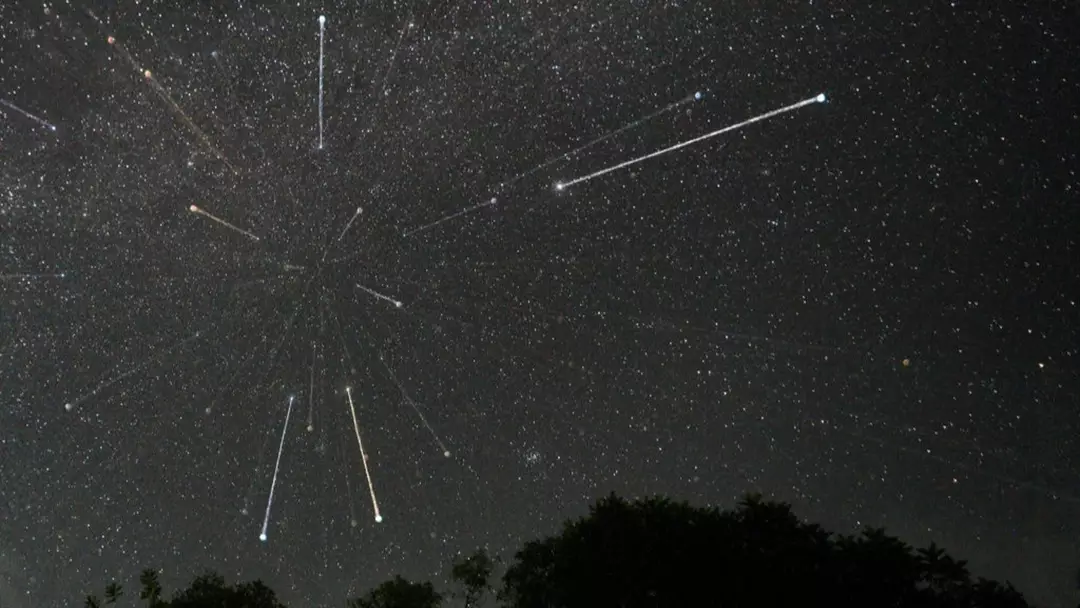
The most anticipated meteor shower is just around the corner.
2025 has been an exceptional year for astronomy enthusiasts, offering a multitude of celestial wonders.
From the visibility of Uranus with the naked eye last month, various Northern Light occurrences, and 12 breathtaking full moons, there’s been a lot to marvel at.
Now, the highly anticipated Geminid meteor shower will captivate sky-watchers this week.
Each December, the Geminid shower dazzles the night sky with up to 120 meteors per hour.
Unlike most meteor showers that derive from comets, the Geminids are linked to the rocky asteroid 3200 Phaethon. They occur when Earth passes through its debris.
The result is spectacular streaks of light across the sky.
Rubert Lunsford, journal editor of the American Meteor Society, explained to National Geographic that the larger debris from 3200 Phaethon “survives further into our atmosphere and tends to produce brighter meteors.”
Meteor tails form as metals like calcium, silicon, iron, sodium, nickel, and magnesium heat up while traveling through our atmosphere.
The Geminid meteor shower, active since early December, remains visible until December 20.
This weekend marks the peak viewing time for the cosmic display.
The best time to observe the meteor shower is from Saturday, December 13, through Sunday, December 14.
The display will be visible starting at around 9 PM, with the optimal viewing time around 2 AM local time.
At 2 AM, the Geminids’ radiant point, where the meteors appear to originate, reaches its highest position in the sky.
Even earlier in the evening, it’s worthwhile to keep an eye out.
Lunsford advises, “Potential observers have the choice to observe prior to moonrise or to look toward the west with the moon at their back after 2 AM.”
“Since the strongest rates occur near 2 AM, most people will face eastward before that time, then swing around to the west after it to avoid having the moonlight affect their night vision.”
For the best view of the Geminid meteor shower, NASA has shared some tips.
If possible, venture outside urban areas to escape light pollution.
Artificial lights from buildings, streets, and vehicles can hinder the view of dimmer meteors.
NASA suggests heading at least 20 to 30 miles away from cities or using natural features like mountains, forests, or lakes to block out light pollution.
Allow up to 30 minutes for your eyes to fully adapt to the darkness.
Happy sky-watching!