

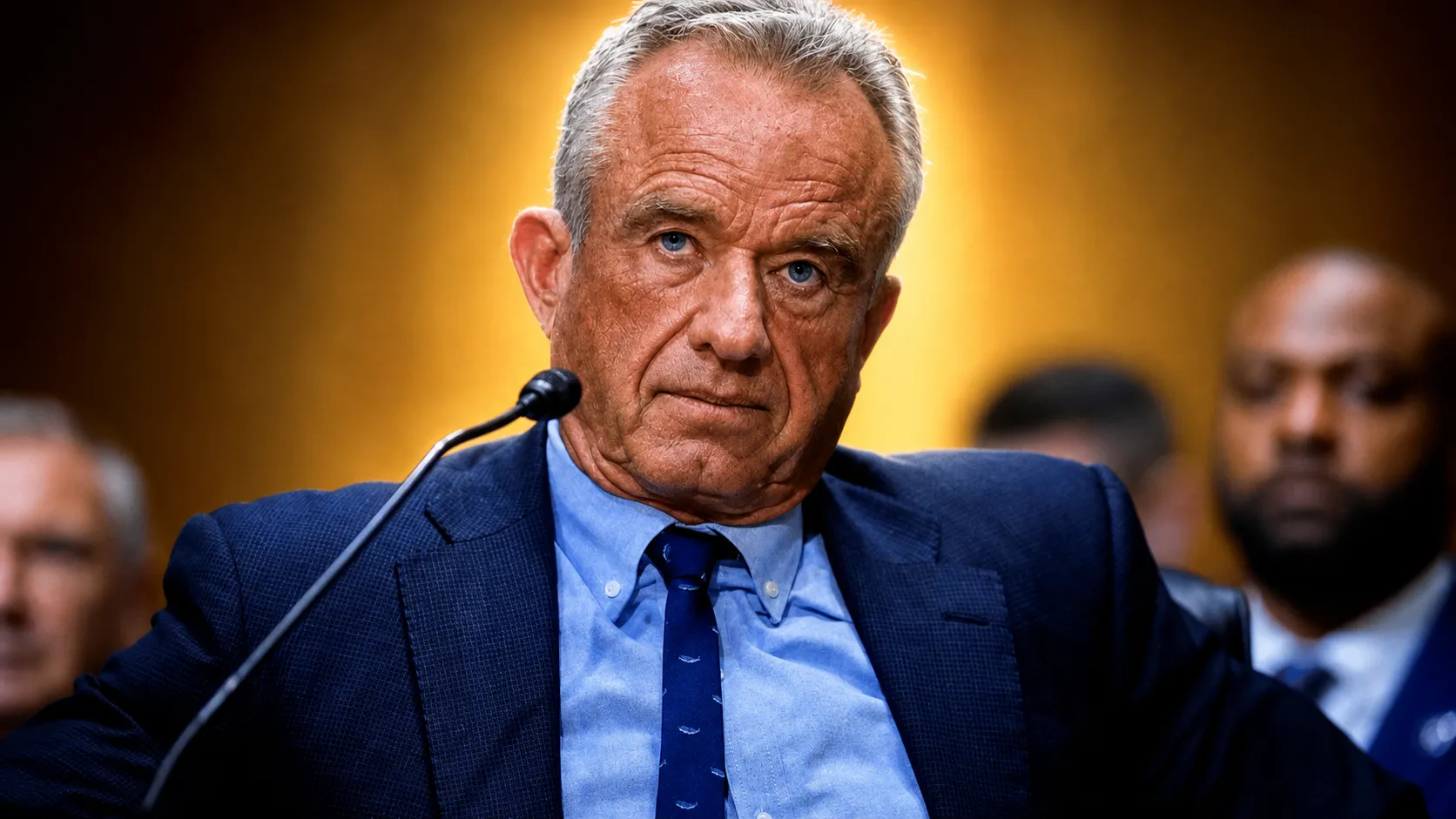
Health and Human Services Secretary Robert F. Kennedy Jr. is reportedly considering changes that could make it simpler for people to seek compensation for injuries they say were caused by Covid-19 vaccines.
The Department of Health and Human Services has said further information about the proposal will be released in November. For now, an earlier notice posted on the agency’s website has outlined some of the initial details.
According to that notice, Kennedy’s department plans to later publish a list of injuries that may be linked to Covid-19 vaccines.
The proposed ‘injury table’ would be compiled ‘based on compelling, reliable, valid, medical, and scientific evidence’ that are ‘presumed to be caused by covered COVID-19 countermeasures’.
The health department’s website adds:
“One way that an individual who was administered or used a covered countermeasure can show that they sustained a covered injury is by demonstrating that they sustained an injury listed on a Countermeasures Injury Table (Table) within the time interval set forth on the Table.”
In federal regulatory filings, HHS has said the table would establish which injuries are presumed to be caused by covered Covid-19 countermeasures, along with the time period in which those injuries must appear after vaccination or use of the countermeasure. The department has also set a target of November 2026 for publishing the proposed rule.
Who could qualify? Under the Countermeasures Injury Compensation Program, the people most likely to be eligible would be those who received a covered Covid-19 countermeasure, later suffered a serious physical injury or death, and can show that the injury fits the program’s medical and scientific standards. HHS says timing alone is not enough; the injury has to be directly caused by the countermeasure or meet the requirements of the table.
The program is also meant to cover only certain losses, such as unreimbursed medical expenses and lost employment income, and it generally acts as a payer of last resort. People must file within one year of receiving or using the covered countermeasure they believe caused the injury.
The proposal has drawn criticism, largely because some observers argue it suggests claims could move forward without people having to firmly establish what caused their injuries.
Pharmaceutical attorney Richard Hughes IV is among those who have raised concerns, particularly over whether enough evidence would be required in order to obtain compensation.
“That would be scientifically unsound,” the expert told The Hill, before noting it would be ‘politically useful in the current environment’.
Hughes also said that ‘compelling, reliable, valid, medical and scientific evidence’ would still be necessary under the law for any successful claim.
He added:
“In plain terms, timing alone is not enough. Suspicion is not enough. Political pressure is not enough. The statute requires strong medical and scientific evidence of direct causation.”
Covid vaccines have been shown to be highly effective, although rare side effects have been reported in a small number of cases, including myocarditis, an inflammation of the heart.
Federal health officials have previously said the risks of serious vaccine side effects are rare, and that the benefits of vaccination remain significant because Covid itself can cause severe illness and longer-term complications.
Even with that limited risk, Dr. Joseph Wu, director of the Stanford Cardiovascular Institute, has stressed that vaccination is still important because ‘Covid’s worse’.
Kennedy has repeatedly said he is not anti-vaccine, though he has also made a number of claims about vaccine safety that health experts say are false.
In 2023, he falsely told Fox News that ‘autism comes from vaccines’, despite multiple studies finding no link between vaccines and the development of the neurodevelopmental disorder.
As of July 1, 2026, federal data showed that 14,146 Covid-related CICP claims had been filed, with 112 found eligible for compensation and 62 compensated. Most claims were denied for missing medical records, missing the filing deadline, or failing to meet the program’s proof standards.