

Christopher Nolan’s new epic The Odyssey is dominating conversation this summer, though much of that discussion has focused on controversy rather than acclaim, as debate swirls around the film’s approach to history, dialogue and casting.
Drawing from Homer’s ancient Greek tale, the movie charts Odysseus’ struggle to return to Ithaca after spending 10 years at war in Troy. Its ensemble includes Matt Damon, Tom Holland, Anne Hathaway, Robert Pattinson and Lupita Nyong’o.
The film officially opened in theaters on July 17 and runs 2 hours and 53 minutes, making it one of Nolan’s longest releases. It was shot over 91 days, on a reported $250 million budget, and was filmed entirely on 70 mm IMAX cameras, a scale that has helped make it one of the summer’s most closely watched studio releases.
Big-screen versions of revered literary works almost always prompt arguments over how faithful they are to the original, but the response to The Odyssey has been especially heated. In many cases, discussion of the film has expanded beyond the adaptation itself and into wider culture-war disputes.
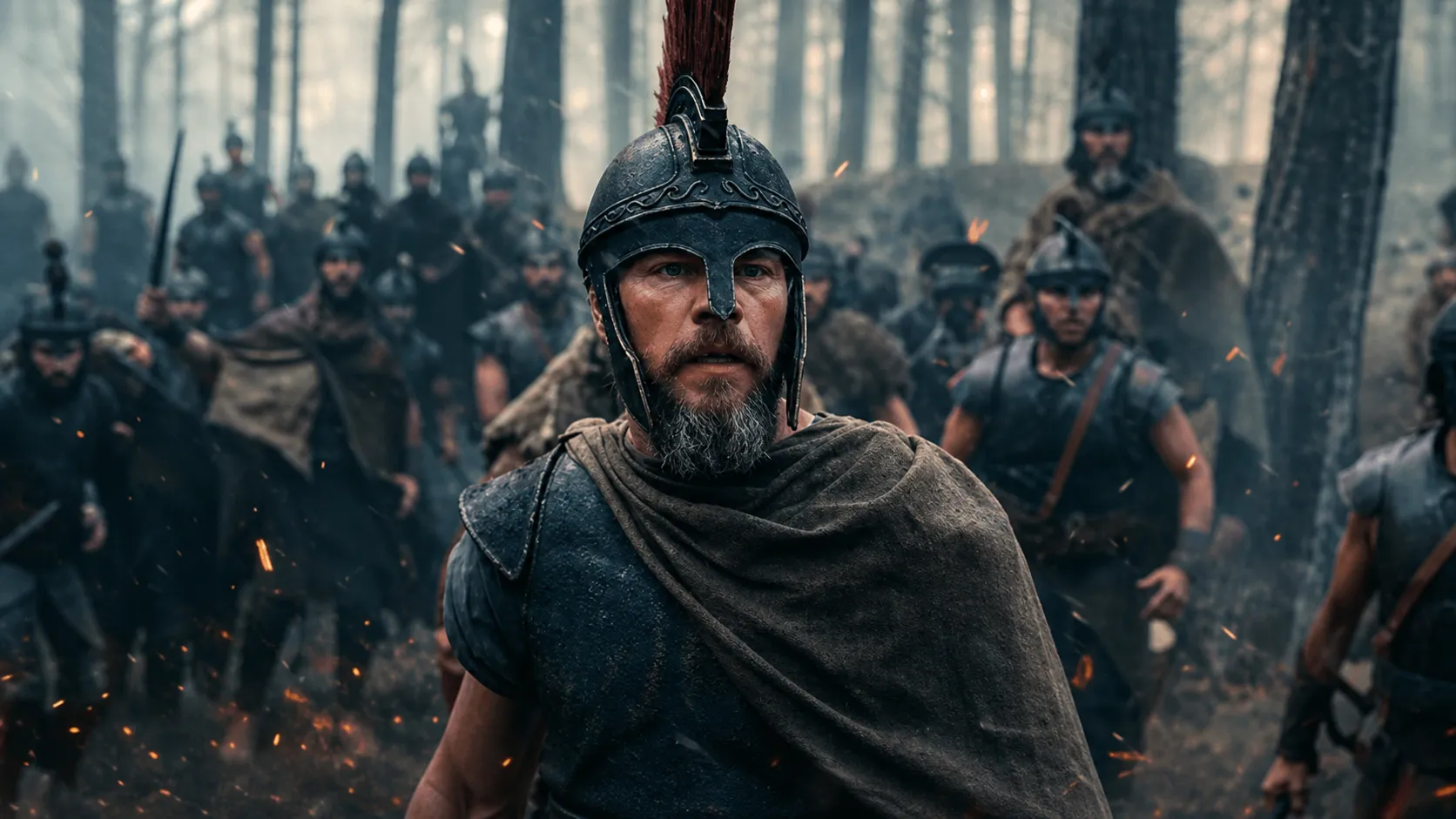
After the first trailers arrived, some viewers criticized the costumes, singling out Odysseus’ feathered helmet and crimson cloak as out of step with the era. Others said Agamemnon’s dark armor looked more like something from Nolan’s Dark Knight films than the Bronze Age.
In remarks to TIME, Nolan said available evidence from that period comes from ‘very fragmentary archaeological records”, and argued that the artistic choices were rooted in genuine historical possibilities. He pointed to Mycenaean daggers discovered with blackened bronze surfaces created through a mixture of gold, silver and sulfur.
Nolan was also asked about complaints concerning the vessel featured in the movie, with some observers saying it resembled a Viking ship more than an ancient Greek one.
Speaking to the Los Angeles Times, he said the production turned to a genuine Viking craft found in Norway because the film required a wooden ship made using ancient methods that could still cope with heavy ocean conditions.
Cast members are said to have trained in both sailing and rowing, while the vessel’s actual 26-person crew appeared in the film as background performers.
Another flashpoint was the script’s use of contemporary phrasing, especially Telemachus referring to Odysseus as ‘dad’.
Nolan said his focus was on “language that has emotional, not intellectual meaning to people,” and Tom Holland told Channel 4 that a strictly accurate alternative would have been Greek anyway. Adam Cooper, who leads the linguistics program at Northeastern University, also told Northeastern Global News that the term was probably intended to convey an intimate father-son relationship that would still have had an equivalent emotional meaning in ancient Greek.
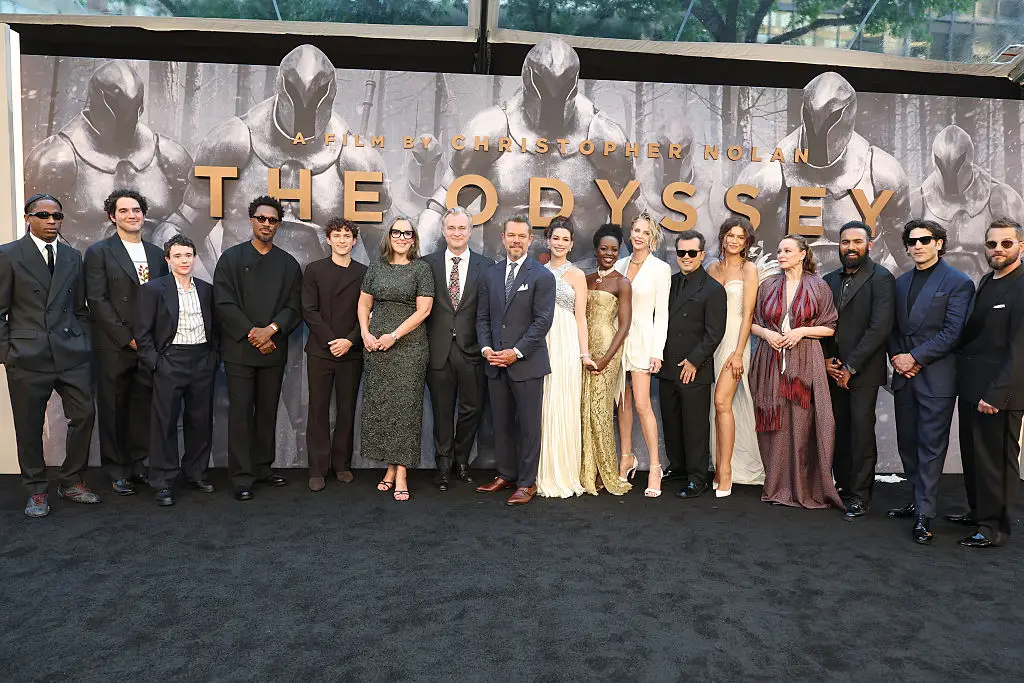
The ensemble, which also features Zendaya, Elliot Page, Himesh Patel, Corey Hawkins and Travis Scott, has drawn online criticism as well, particularly over Nyong’o being cast as Helen of Troy. In Homer’s text, Helen is described only briefly as ‘beautiful-haired’ and ‘white-armed.’
Polygon reported that Elon Musk boosted complaints about the casting on X, including messages from blogger Matt Walsh, who alleged Nolan chose Nyong’o because he feared being labeled racist.
Musk escalated matters by calling Nolan an ‘anti-white racist’ who was ‘pissing on Homer’s grave.’
As Polygon also noted, the popular description of Helen as ‘the most beautiful woman in the world’ is not actually found in Homer’s Odyssey, but instead comes from the ancient poet Sappho.
Nolan told The Telegraph that the backlash was ‘irrelevant’ and ‘comes with the territory,’ while Nyong’o made clear to Elle that she stands by his creative approach.
“Our cast is representative of the world,” she said. “I’m not spending my time thinking of a defense.”
Now that the film is in theaters, the debate has shifted from speculation to reviews, and early critical reactions have been mixed rather than uniformly negative. Some critics have praised the movie’s scale, spectacle and technical ambition, while others have said its storytelling can feel remote or emotionally cool despite the grandeur.
That split fits Nolan’s wider body of work, which often divides audiences even as it draws huge attention. For supporters, The Odyssey is another example of the director pushing studio filmmaking into unusually ambitious territory; for detractors, it is proof that his obsession with precision, structure and spectacle can sometimes come at the expense of warmth.
Either way, the response has made The Odyssey one of the defining pop-culture talking points of the summer, with the conversation surrounding it now ranging from classical scholarship and historical authenticity to casting, contemporary dialogue and the politics of online outrage.