

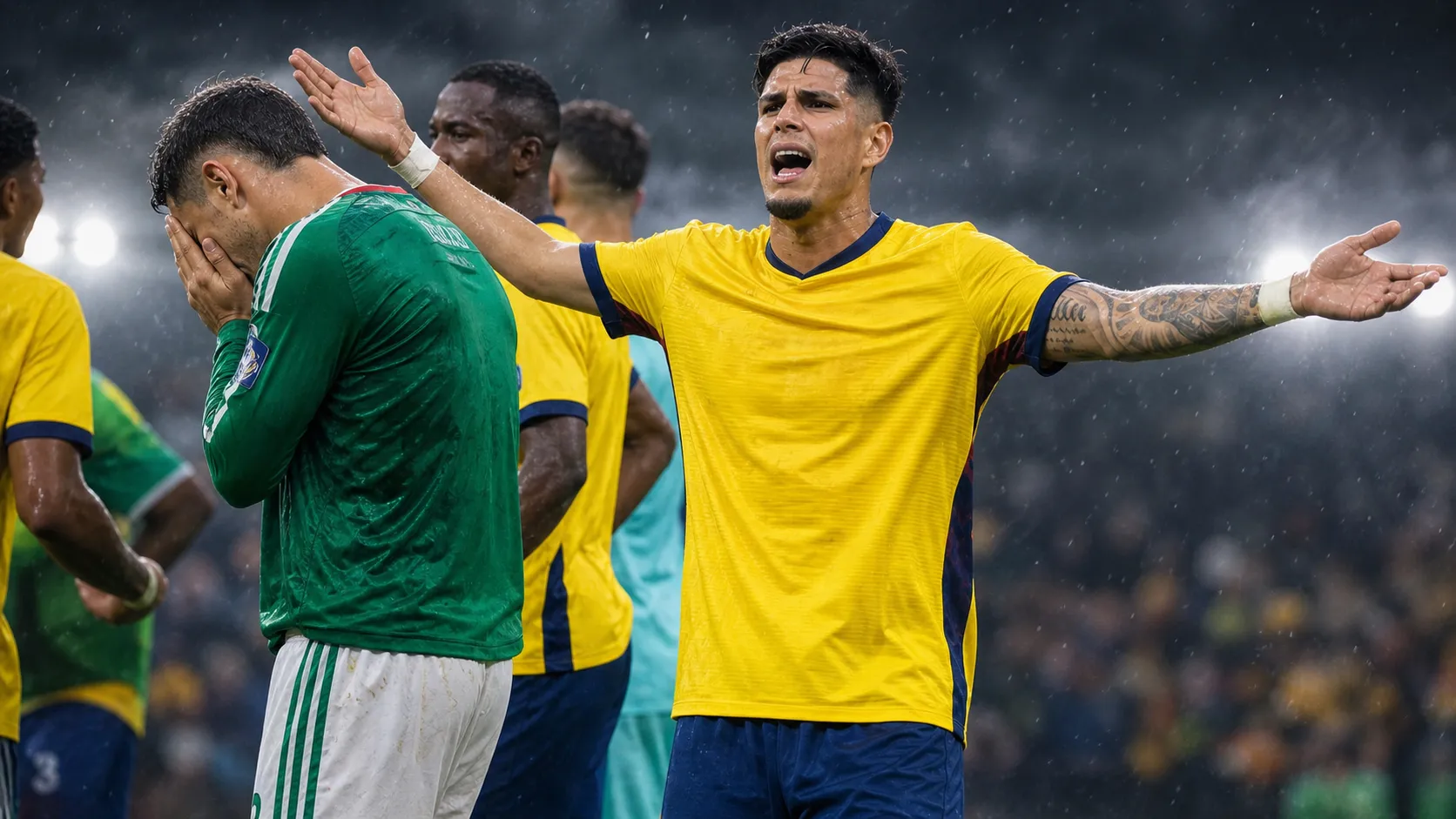
Ecuador defender Piero Hincapié was sent off in the round-of-32 defeat to Mexico after covering his mouth while speaking to an opponent, with FIFA’s new rule on concealed communication enforced for the second time at the 2026 World Cup.
Hincapié was shown a straight red card in stoppage time of Mexico’s 2-0 win in Mexico City after appearing to cover his mouth during an exchange with Mexico forward Santi Giménez.
The decision was reviewed by VAR and referee Slavko Vinčić, of Slovenia, then went to the pitchside monitor before Hincapié was dismissed.
The incident came less than two weeks after Paraguay midfielder Miguel Almirón became the first player to be sent off under the same law, during his team’s group match against Turkey.
In that case, Almirón was shown a red card after also covering his mouth in a confrontation with an opponent, prompting a review and on-field intervention from the referee.
Both dismissals fell under a law change approved by The IFAB in April 2026 and introduced for the World Cup, which states that a player, substitute or substituted player who covers their mouth when communicating with an opponent in a provocative, derisory or inflammatory manner or situation can be sent off.
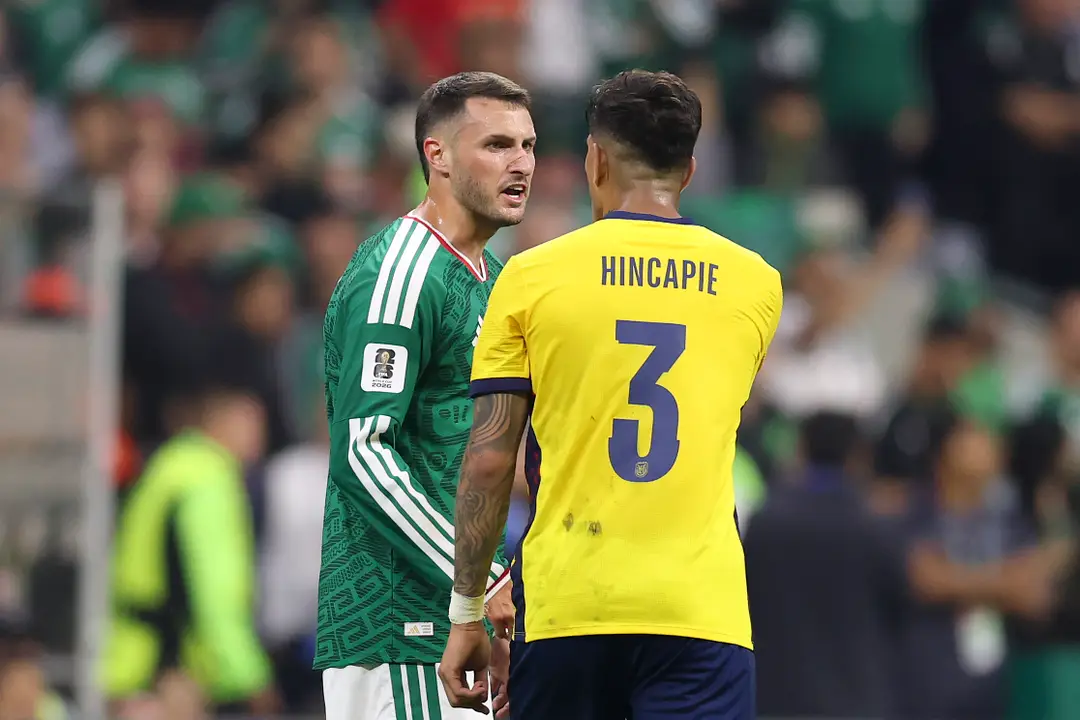
The IFAB said the measure is designed to deter discriminatory or abusive behaviour and can be applied at the discretion of the competition organiser.
FIFA president Gianni Infantino had previously argued that a player covering their mouth during a confrontation should be presumed to be hiding something they should not be saying.
“If it is a friendly conversation, they can continue to do it without any problem,” FIFA referee chief Pierluigi Collina explained in June.
“We respect that there are players who are friends and it is normal to chat before, during or after the match. When it is confrontational, it is a completely different story. Covering the mouth means you are doing something potentially very wrong.
“This is something you do on purpose. It is not something that a player can do instinctively.”
FIFA President Gianni Infantino had also previously explained the thinking behind the rule in comments to Sky News.
Meanwhile, FIFA President Gianni Infantino previously said: “There must be a presumption that he has said something he shouldn’t have said, otherwise he wouldn’t have had to cover his mouth.
“I simply do not understand if you don’t have something to hide, you don´t hide your mouth when you say something. That’s it, as simple as that.”
The rule was approved at a special meeting of the International Football Association Board in Vancouver earlier this year, following controversy stemming from a Champions League game in February.
In that match, Gianluca Prestianni was accused of racist abuse after pulling his shirt over his mouth while speaking to Real Madrid’s Vinicius Jr.
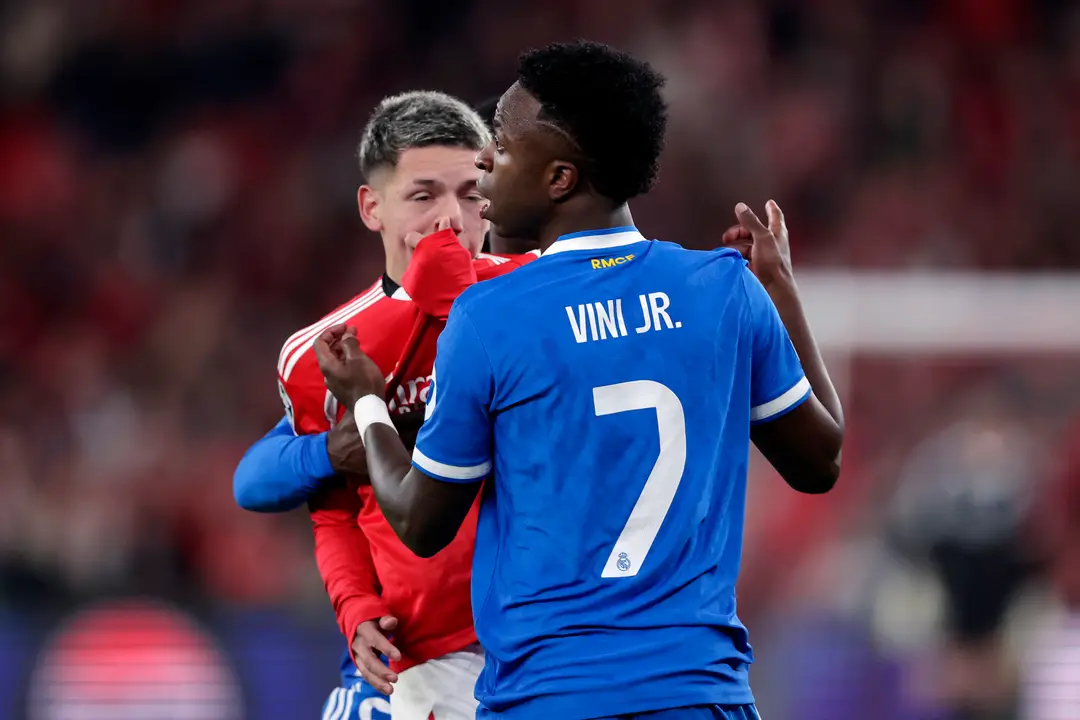
Prestianni denied the accusation, while his club said the player was the target of a ‘defamation campaign’.
He was ultimately found guilty of homophobic conduct and handed a six-match ban.
There has been no allegation that either Almirón or Hincapié used abusive language.
The mouth-covering crackdown is one of several law changes introduced for the 2026 World Cup, alongside a separate red-card provision for players who leave the field in protest at a referee’s decision.
Other tournament measures include time limits on substitutions, stricter enforcement against delaying restarts and expanded VAR intervention for certain mistaken disciplinary and restart decisions.
The IFAB has also said that competitions starting on or after 1 July 2026 will operate under the updated Laws of the Game, while tournaments such as the World Cup can apply the relevant options earlier if they choose.