

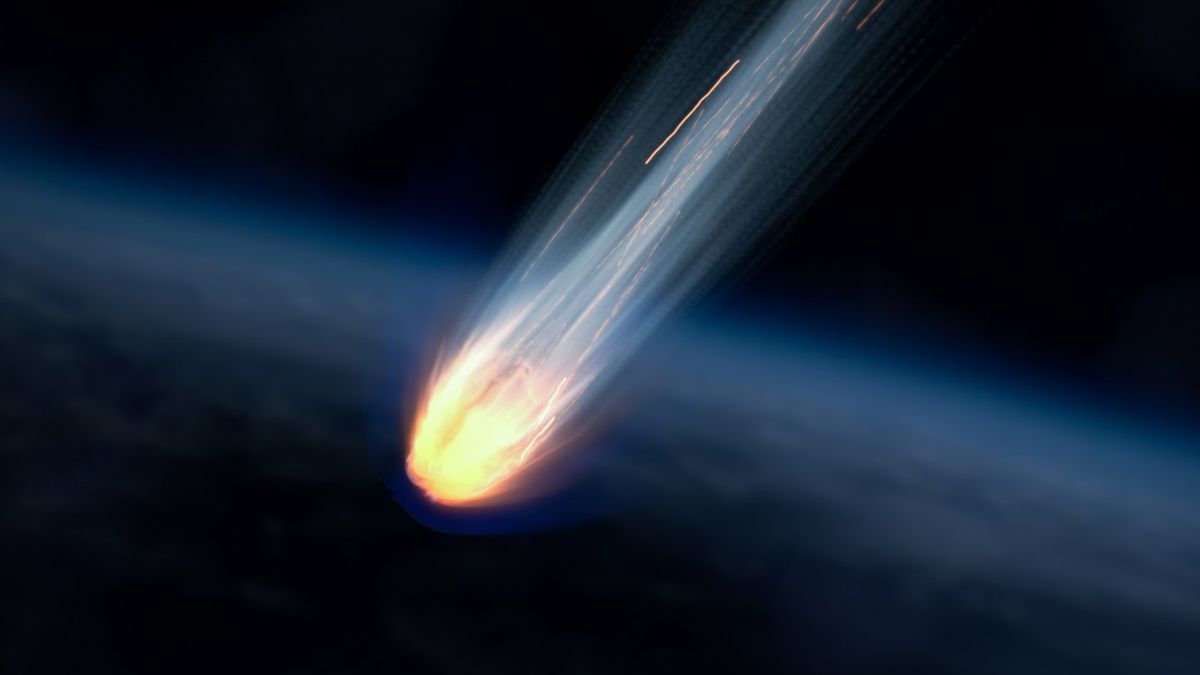
NASA didn’t spot a meteor that exploded over Cleveland, Ohio, on Tuesday (March 17) — coming shortly after a scientist explained why tracking every single space rock simply isn’t realistic.
According to National Today, the blast created a shockwave comparable to about 250 tons of TNT, despite coming from an object only around two metres across and weighing roughly seven tonnes.
Even though it was big enough to trigger a noticeable boom across several states, it still fell below what current detection networks reliably pick up.
That’s largely because NASA’s planetary defence work prioritises larger near-Earth objects — the ones most likely to cause widespread harm if they ever struck Earth.
The meteor reportedly entered the atmosphere at about 8.57 am EDT, first appearing roughly 50 miles above Lake Erie.
From there, it covered more than 30 miles through the upper atmosphere before breaking up at around 30 miles above northern Ohio.
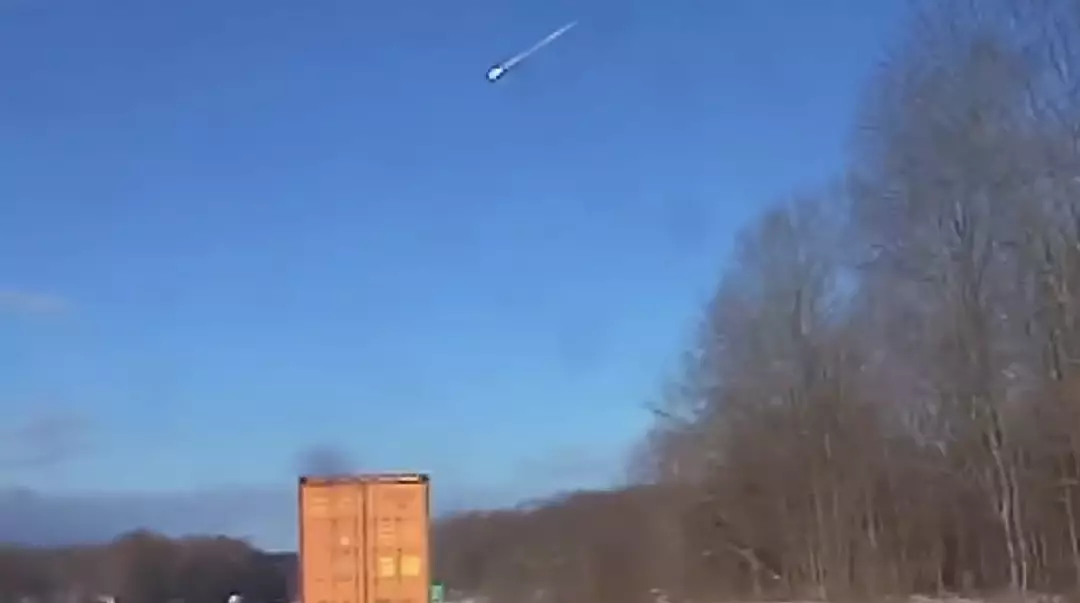
As it shattered, the meteor released a concentrated burst of energy, producing a pressure wave that people heard in parts of Ohio, Pennsylvania and Michigan.
Witnesses described a loud bang and a bright fireball cutting across the sky, and reports quickly circulated online.
The National Weather Service later acknowledged the incident, stating: “We’re receiving reports across western Pennsylvania and eastern Ohio of a loud boom and a fireball in the sky.
“Our satellite data suggest it was possibly a meteor entering the atmosphere.”
NASA also confirmed that a fireball was recorded over northeast Ohio near Cleveland.
As for why it wasn’t flagged ahead of time, the simplest explanation is its small size.
Pop culture often centres on civilisation-ending asteroids, but those aren’t typically the hardest for scientists to monitor.
The biggest objects are generally easier to track and, in many cases, are discovered years — even decades — before they come anywhere close to Earth.
Smaller meteoroids are a different story: they’re much more frequent, far tougher to detect in advance, and often only become noticeable when they enter the atmosphere and burn, creating the familiar streaks visible from the ground.
NASA’s head of planetary defence, Kelly Fast, has previously said the bigger uncertainty lies between those extremes.
“What keeps me up at night is the asteroids we don’t know about,” she said while speaking to the American Association for the Advancement of Science.
“Small stuff is hitting us all the time so we’re not so much worried about that.
“And we’re not so worried about the large ones from the movies because we know where they are.
“It’s the ones in between, about 140 metres and larger, that could really do regional rather than global damage and we don’t know where they are.”
Fast added that there are believed to be around 25,000 asteroids in that range, with researchers having located only about 40 percent so far.
“It takes time to find them, even with the best telescopes,” she said.
Sometimes, the less we know the better…