


A 1960 scientific paper that gave humanity a precise doomsday date has resurfaced with that day now imminent.
Heinz von Foerster, Patricia M. Mora and Lawrence W. Amiot published “Doomsday: Friday, 13 November, A.D. 2026” in the journal Science on November 4, 1960. The physicist and his colleagues used population estimates stretching from roughly 400 BC to 1958 to build their mathematical model.
The trio observed that the time required for global population to double was consistently shrinking. They constructed an equation around that accelerating pattern, concluding that humanity’s numbers would approach infinity at a mathematical singularity in November 2026. The calculation was never about famine, resource depletion or planetary destruction in the conventional sense.
“Our great-great-grandchildren will not starve. They will be squeezed to death,” the authors wrote in the paper.

Under their model, Earth’s population would have surpassed 25 billion by 2020. The paper made no attempt to calculate when food, land or energy would run out; the “squeezed to death” formulation described a mathematical endpoint rather than a physical one.
The claims caused what historian Alan MacEachern, writing for The Conversation, called an “immediate stir.” The paper quickly entered political discourse. In 1963, a chemical industry witness cited it before a Canadian parliamentary committee to argue that pesticides would be necessary to feed the growing population. By 1971, it appeared in a US Supreme Court abortion case preceding Roe v. Wade, cited against government efforts to encourage population growth.
Skeptics pushed back quickly. Two years after publication, Harold F. Dorn criticized the paper in Science itself, predicting its reliability would be disproved soon enough. Demographers questioned whether population doubling times could keep shrinking without limit, noting that a human pregnancy takes nine months and that such biological constraints would eventually intervene.
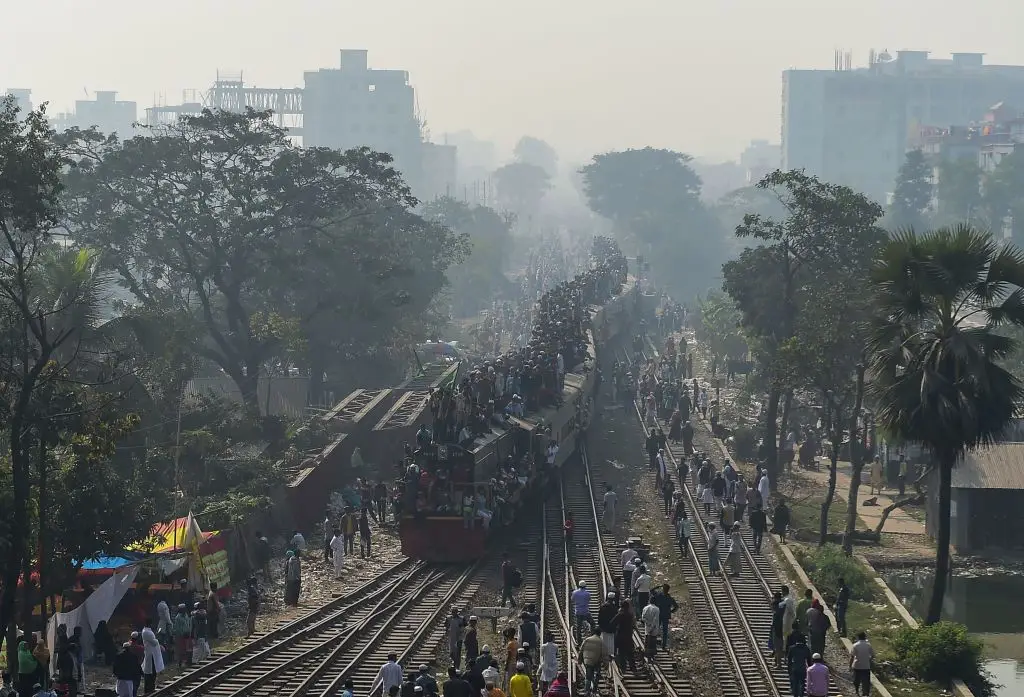
The equation remained persuasive for decades and was regularly cited in academic and policy circles. But the trajectory began separating from reality around 1993, roughly halfway to the named date, MacEachern observed. The global birth rate is now slightly less than half what it was in 1960, and the time between population doublings did not keep falling indefinitely as the model assumed. The population has not followed the path the paper set out, and its prediction of numbers racing toward infinity has not materialized.
The 1960 paper emerged from a specific intellectual moment when accelerating population growth dominated scientific and policy conversations. Von Foerster and his colleagues took historical doubling-time data and projected it forward with mathematical rigor but without accounting for the demographic transition already beginning in developed nations. Their model treated human reproduction as an unbounded geometric progression rather than a socially mediated behavior subject to changing incentives, education levels and urbanization.
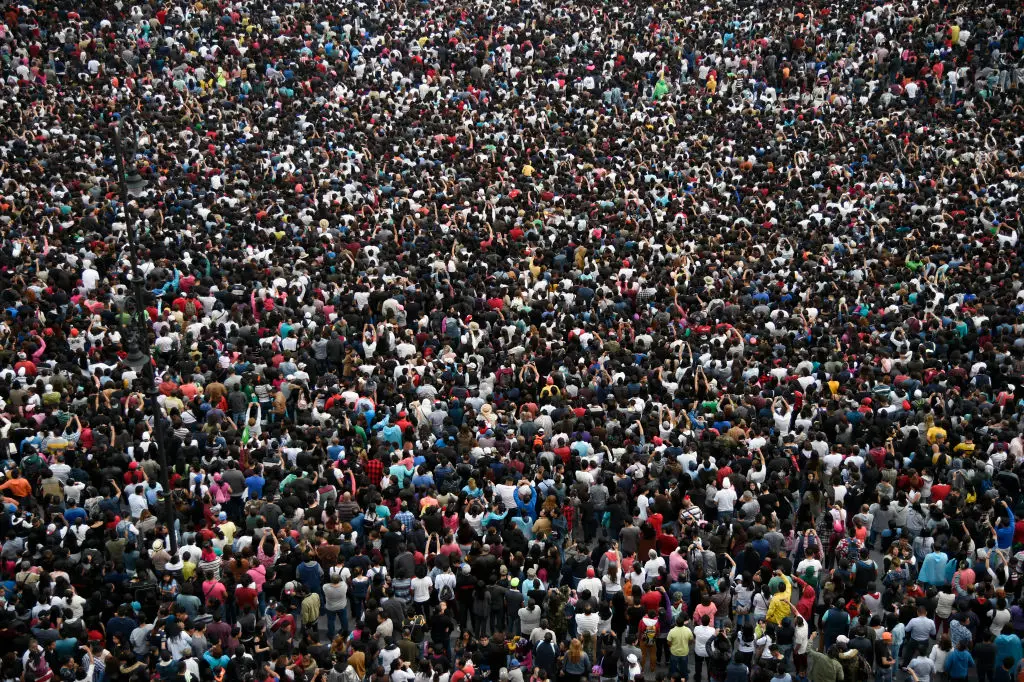
The “doomsday” framing in the title proved more durable than the mathematics beneath it, with media outlets periodically reviving the November 13 date as it approached. The prediction functions now less as a scientific claim than as a historical artifact demonstrating how mid-century thinkers grappled with exponential growth curves before fertility rates declined across much of the world.
The paper’s afterlife in legal and political arguments reveals how scientific models get repurposed for ideological ends unrelated to their original formulation. The chemical industry witness and the Supreme Court litigants each found in the mathematics a warrant for their preexisting positions, stretching the singularity concept into policy prescriptions the authors never directly offered.