

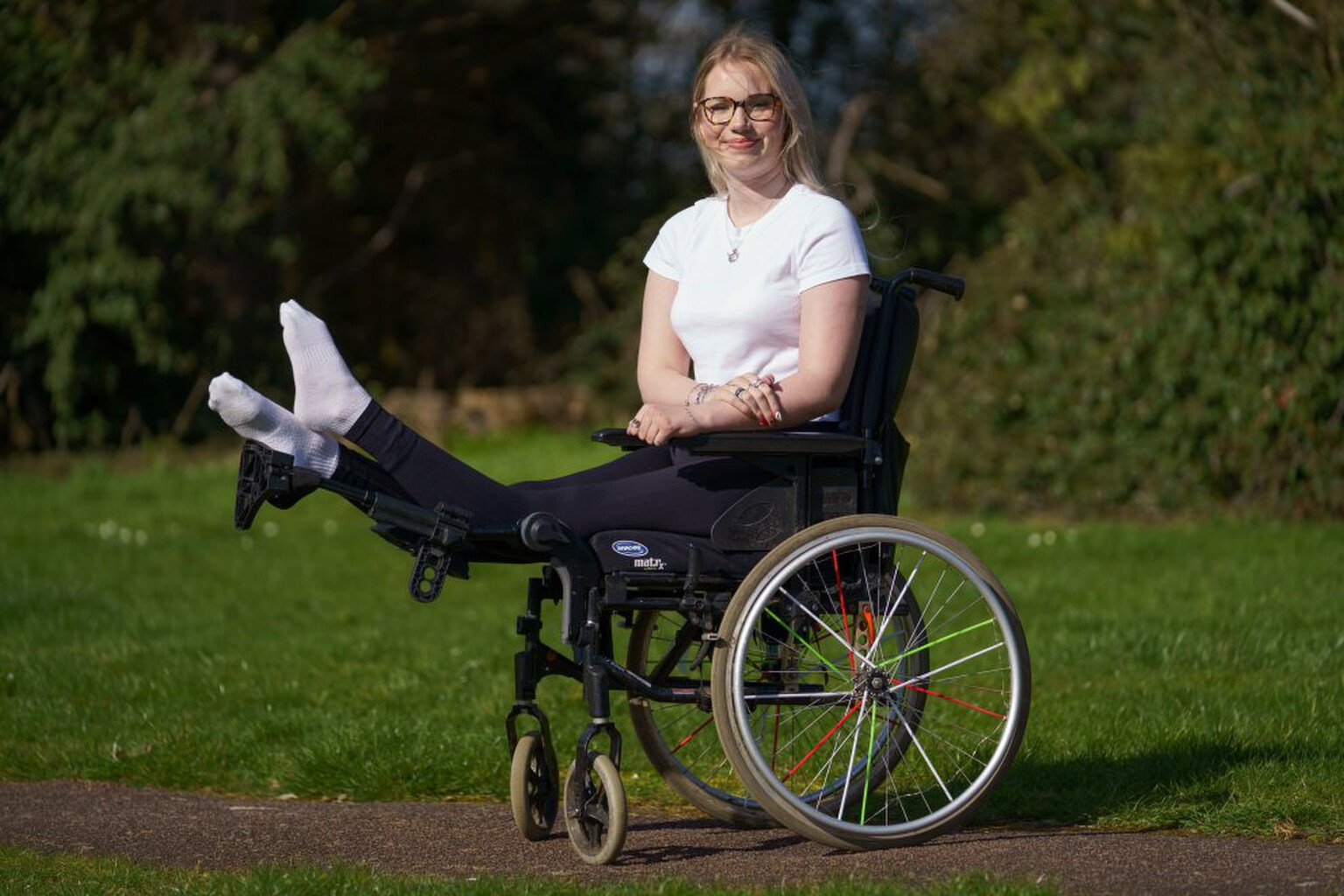
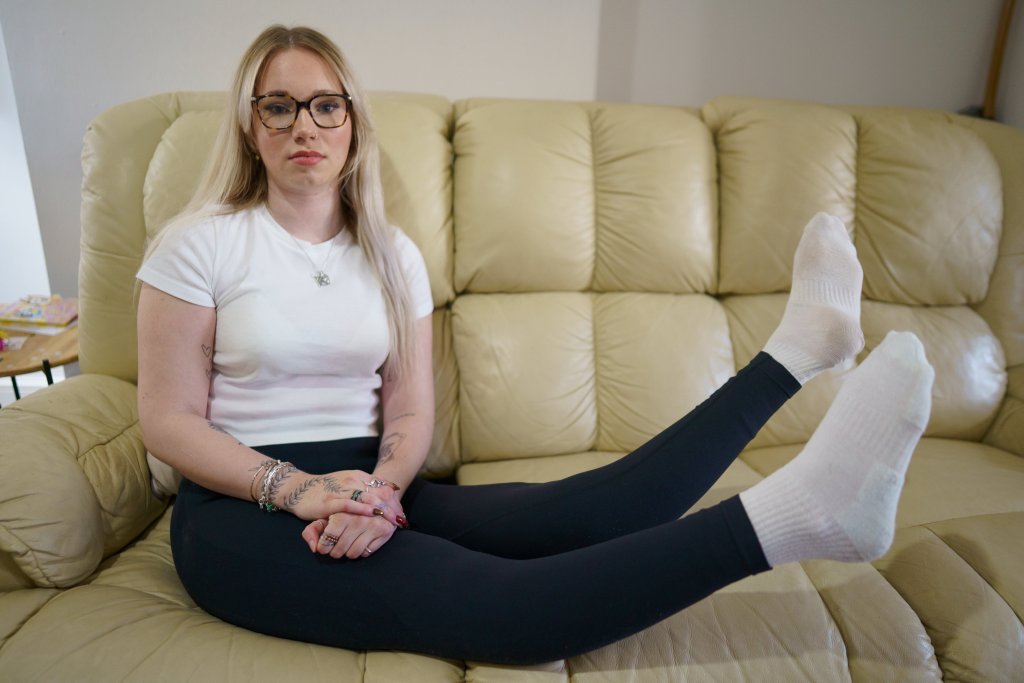
Megan Dixon, 21, has scheduled double amputation surgery for August after her legs locked straight and bent backward at a 45-degree angle.
The Cambridgeshire woman has not walked since she was 14, and after eight years of escalating pain and deteriorating mobility, doctors have told her removing both legs is her only remaining option. She has also been diagnosed with functional neurological disorder, a condition that disrupts how the brain sends and receives signals.
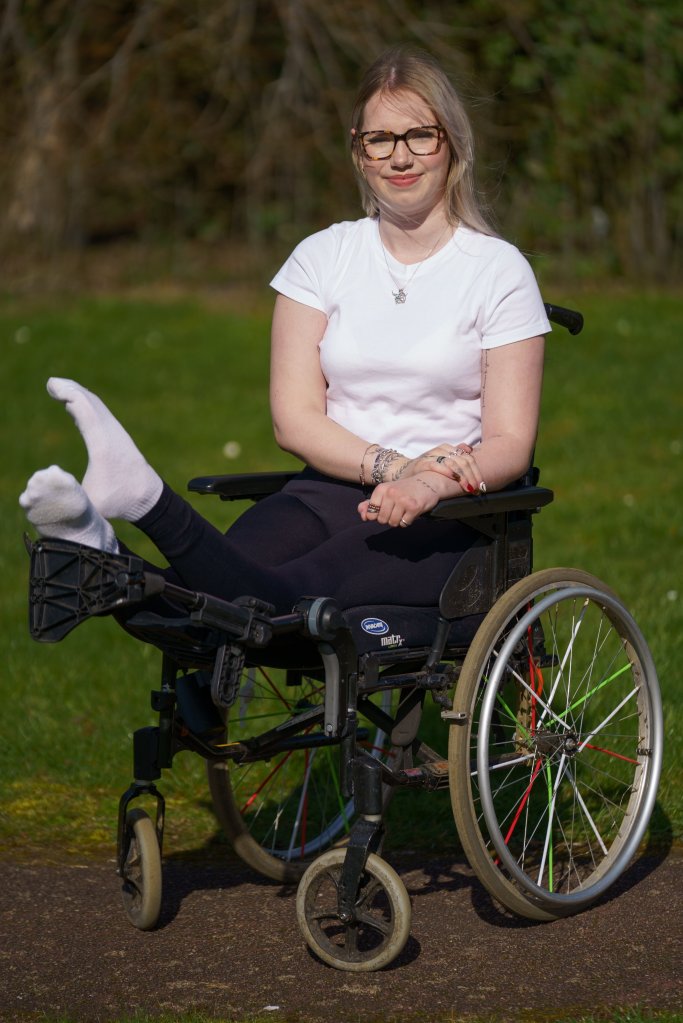
“It was the hardest when I met with the amputee clinic and they said amputation was my best and only option,” she said. “I was hoping deep down they would say there was another way. But this is my reality now, and I haven’t fully come to terms with it yet.”
Megan’s medical ordeal began at 13 when she contracted whooping cough and glandular fever. Within a year, her legs stopped working entirely. Initially diagnosed with myalgic encephalomyelitis, she underwent physiotherapy while her legs remained locked in a rigid straight position.
Her condition rapidly worsened. “From there I got worse and worse,” she recalled. “I started to go into a comatose-like state. When I was 16, I stopped being able to sit up by myself, and I started to lose the ability to speak.”
Her paediatrician suspected a stroke, and Megan was rushed to Bristol Hospital for what was supposed to be four days of testing. She remained there for a year and a half, during which she lost her speech, mobility, strength, and sight. She became paralysed from the neck down and required an NG feeding tube.
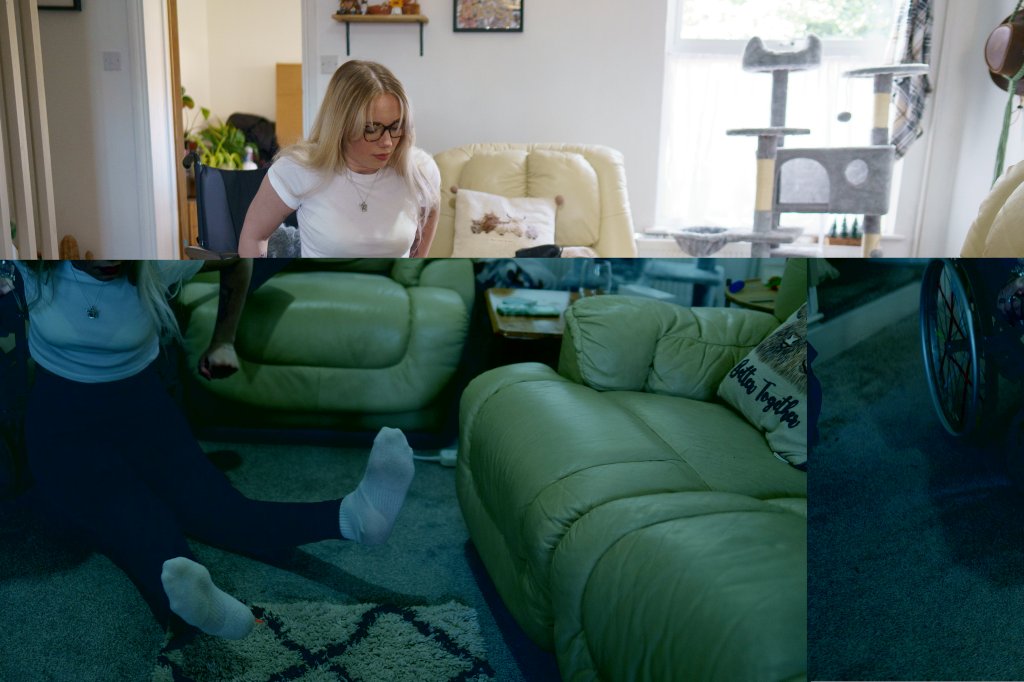
The pain during this period was relentless. “I could feel my bones in my legs grating together, but I kept being told the pain was in my head and it wasn’t real,” she said. “I was silently screaming for 24-hours a day. When I went into a coma-like state, I had no idea what was going on. No one could wake me up. My legs were completely locked straight, and even under anaesthetic, they couldn’t bend my knees. My left leg had started to bend the wrong way by ten degrees.”
After turning 18, Megan was discharged from the children’s hospital and spent a year in the community without support. “I had essentially been left to rot and die in bed,” she said. “My family complained about my care, and I was sent to a private nursing home specializing in neurological disorders.”
There, completely paralysed from the neck down, she worked to regain her functions. But her legs continued deteriorating. She consulted six surgeons; five turned her away. By the time she found one willing to help, the damage had become irreversible.
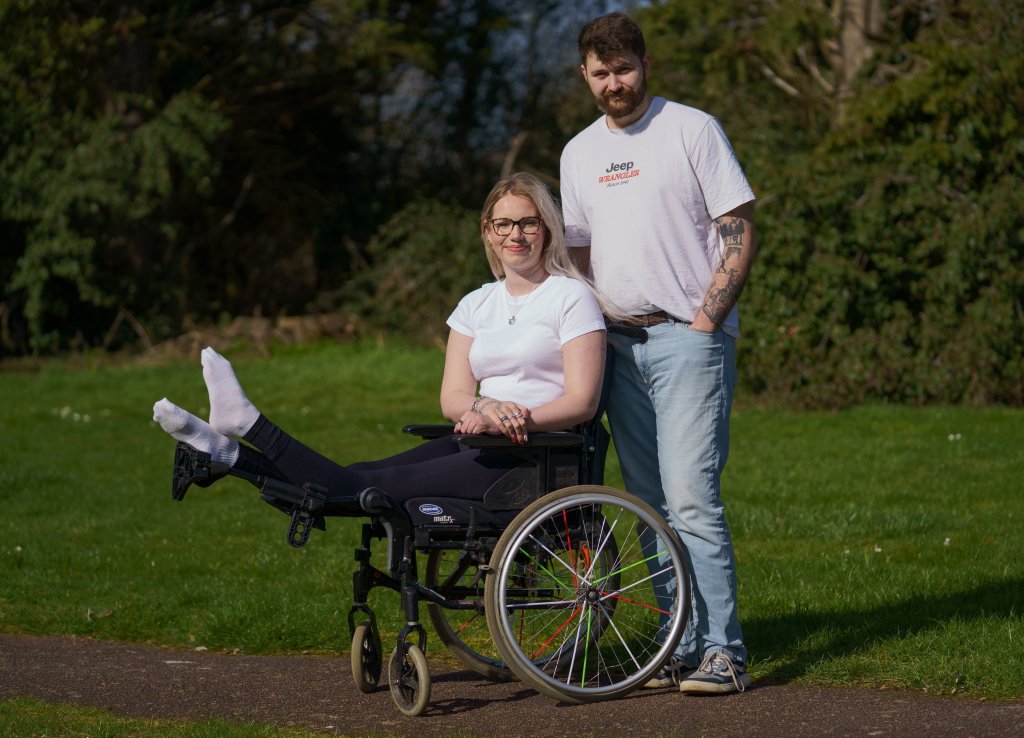
“My left knee is bent at a 45-degree angle, and my right is close behind,” she explained. “My only option left is amputation.”
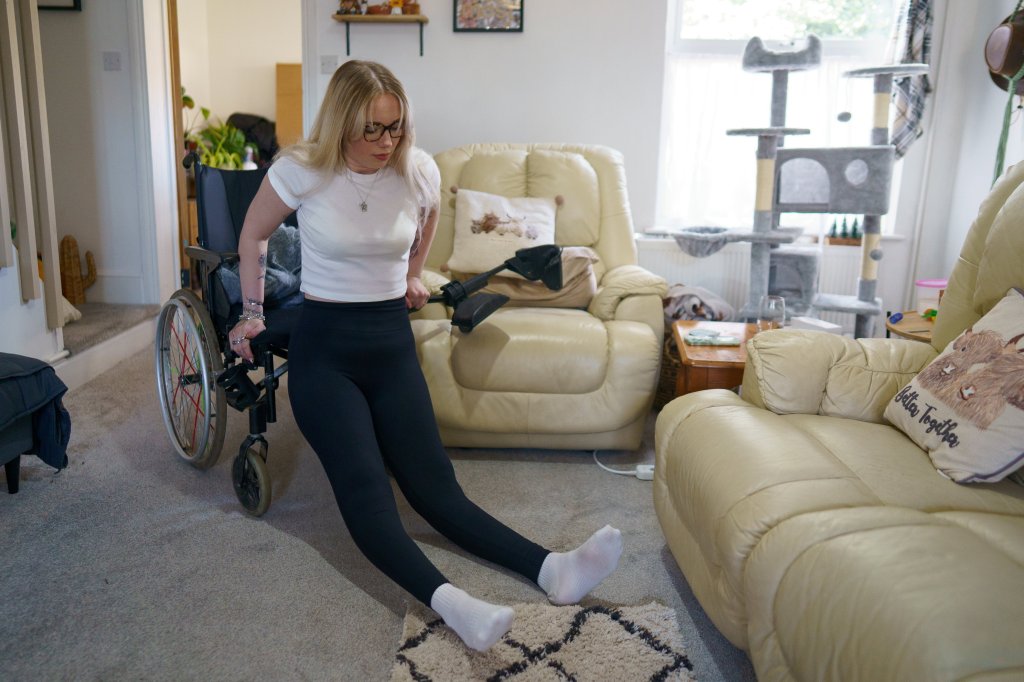
Daily life has become extraordinarily difficult. “I can’t walk on my own, so I have to bum shuffle everywhere or use my wheelchair,” she said. “Getting from the floor to the bed is absolute agony for me because of the weight and pressure through my knees. I have to be carried to the bed or the toilet, and simple tasks take me so much longer.”
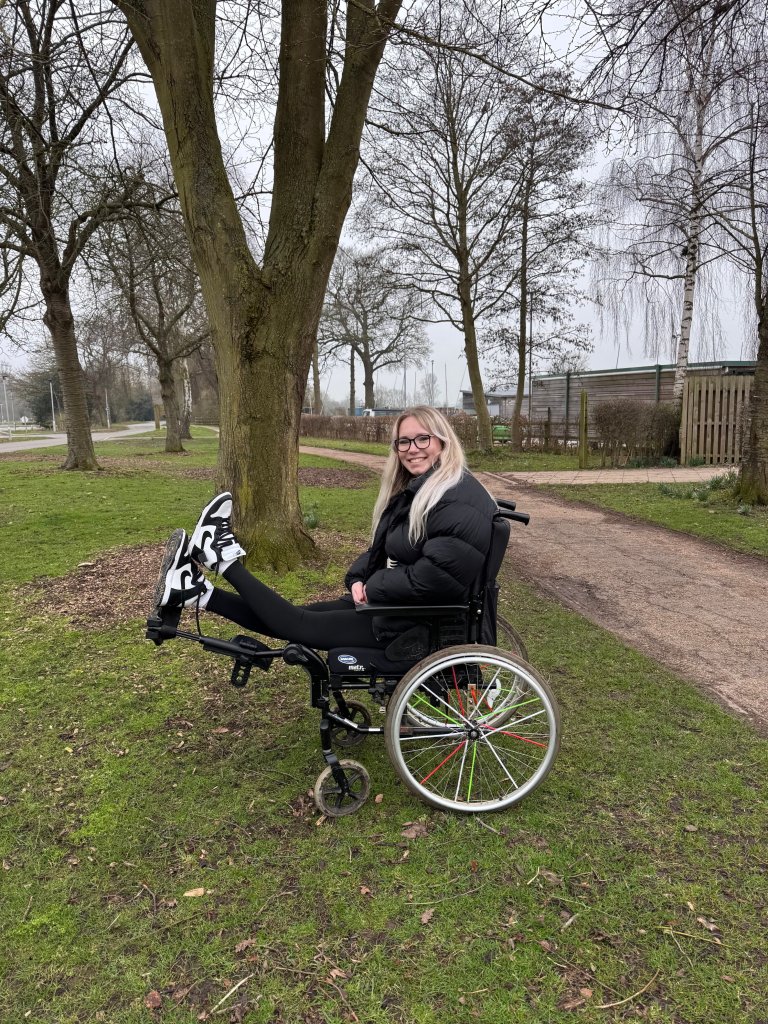
Megan is now fundraising for an electric wheelchair and additional medical equipment to restore her independence following the August amputation. She has spent much of her adolescence and early adulthood bedbound or comatose, only transitioning to a wheelchair at 19.
“I want to be able to go out with my partner, visiting the zoo, and have him by my side holding hands – as opposed to being on a day out with my carer,” she shared. “This is my last resort and my only option.”
She has also offered guidance to others facing similar circumstances. “If something doesn’t feel right in your body, please listen to it and trust yourself,” she urged. “For six years I was dismissed, and as a result the only surgery now available to me is, regrettably, amputation.”
Her advice to others confronting amputation is unflinchingly honest. “There are no words that can truly make it easier,” she said. “It is a devastating and life-changing experience, and something I would never wish on anyone. All you can do is take it one day at a time. There will be days when it feels overwhelming, and that’s okay. Allow yourself to feel everything that comes with this journey. Struggling doesn’t mean you are weak—it means you are human.”
She continued, “But even in the darkest moments, try to hold on to the smallest positives. Sometimes hope comes in the smallest forms: a kind word, a moment of strength, or simply getting through another day. Keep fighting for the life that comes after. None of us should have to face something like this, but if it leads to a future where life is a little more bearable, a little less painful, and holds more independence. Then all of this will be worth it.”
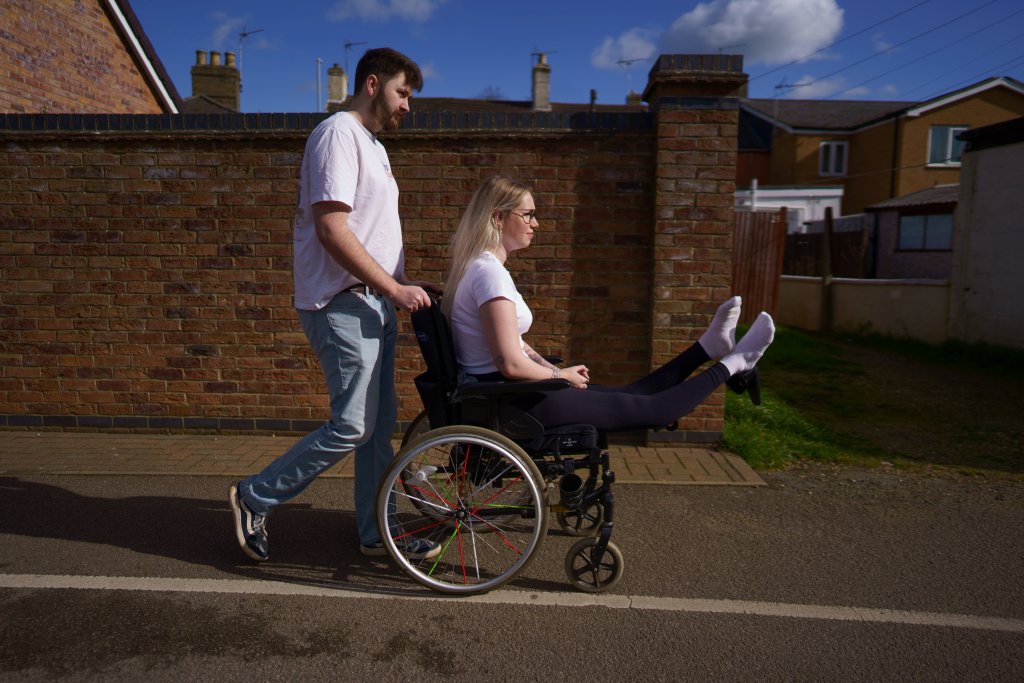
Megan’s legs first locked completely straight when she was 14 following physiotherapy for her ME diagnosis, and the subsequent years brought progressive bending, paralysis, coma-like episodes, and repeated dismissal of her symptoms before the irreversible joint damage set in.
She is due to have her legs amputated in August.