

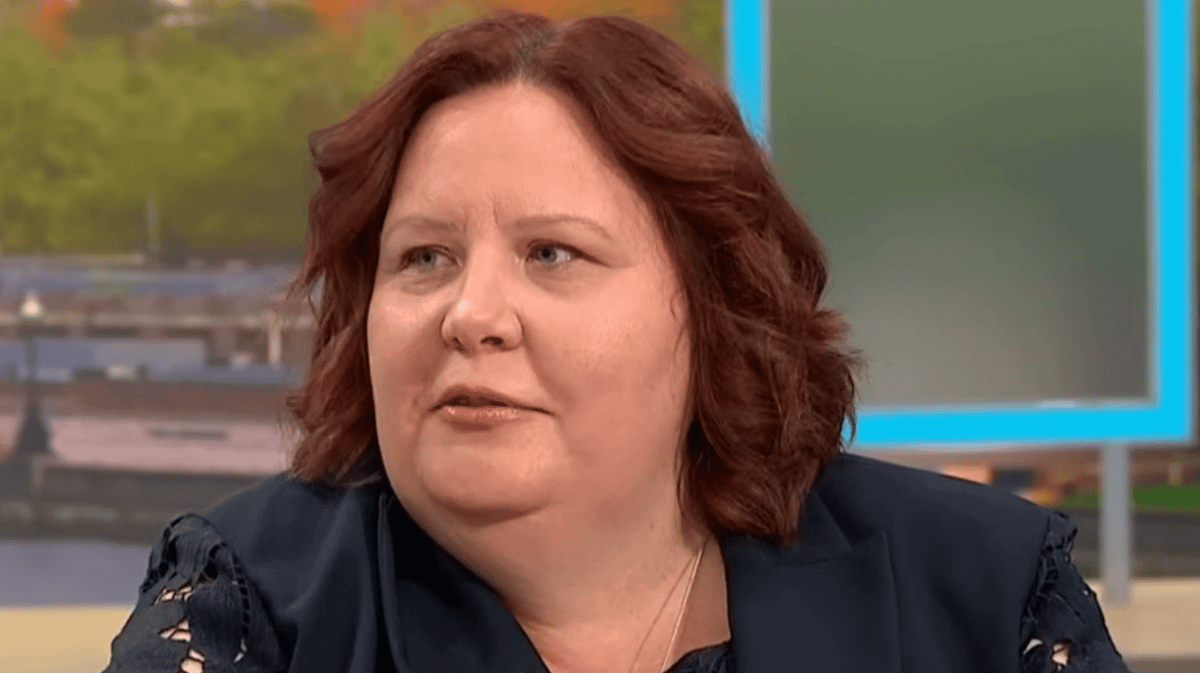
A woman who lost her son and husband onboard the Titan submarine has said she’s ‘not angry’ about the devastating ordeal.
OceanGate’s Titan submersible set off on June 18 2023 with the aim of travelling around 3800 meters down into the Atlantic to reach the Titanic wreck.
Among the passengers were Christine Dawood’s husband, Shazarda, and their son, Suleman Dawood. While they descended, Christine remained aboard the support vessel with her daughter, Alina, waiting and hoping for their safe return.
Just over an hour into the dive, Titan lost contact with its mothership, the Polar Prince. With reports stating there were 96 Hours of oxygen available, families held onto hope that the crew could still be found in time.
That hope was later shattered when it emerged the submersible had imploded not long after it began its descent. OceanGate CEO Stockton Rush, French explorer Paul-Henri Nargeolet, British adventurer Hamish Harding, and Shahzada and Suleman were all killed.
Investigators concluded the craft’s distinctive carbon fibre hole suffered a catastrophic failure, leading to the implosion. In the aftermath, Ocean Gate ceased operations.
Appearing on ITV’s Good Morning Britain today, May 11, Christine Dawood told Susanna Reid and Ed Balls that, despite the tragedy, she said she ‘wasn’t angry’ about what happened.
“I don’t think I will ever be able to make sense of it,” she said. “But it’s my way of processing through it, and an attempt to move forward.”
She also spoke about how she and her husband first came across OceanGate during lockdown, and how interested he became after seeing the company’s advertising.
During the interview, Ed Balls asked how she has been able to avoid anger towards OceanGate given the investigations and documentaries that have ‘pointing the finger’ at the firm.
“Because what would it serve?” she asked. “What would the anger serve? Anger is part of grief. If you go through the grief cycle, anger is part of it, but it’s just part of it.”
“I don’t want to get stuck in it. It’s part of a whole circle where you have to move on, and it’s not good for me.
Balls then asked whether she experienced an ‘angry phase,’ and Christine said she did have times when anger surfaced.
“At the world, at myself, at anything,” she admitted. “But I don’t want to reside in that anger, because there’s so much I can still do to help others.
“There are other people to live for, and if I’m in this bitter and angry phase then people will stop talking to me, and I love talking to people!”
“It’s not helpful to me,” she said.
Christine added that she believes she should have been clearly told what could go wrong before the expedition, alleging that ‘everything was hidden’.
A report by The U.S. Coast Guard concluded the tragedy could have been avoided, and said it was partly linked to a ‘toxic workplace culture’ and ‘intimidation tactics’ at OceanGate.
The findings also stated OceanGate had ‘critically flawed’ safety practices.
Christine has since published a book, 96 Hours, in which she recounts her experience of the disaster.