

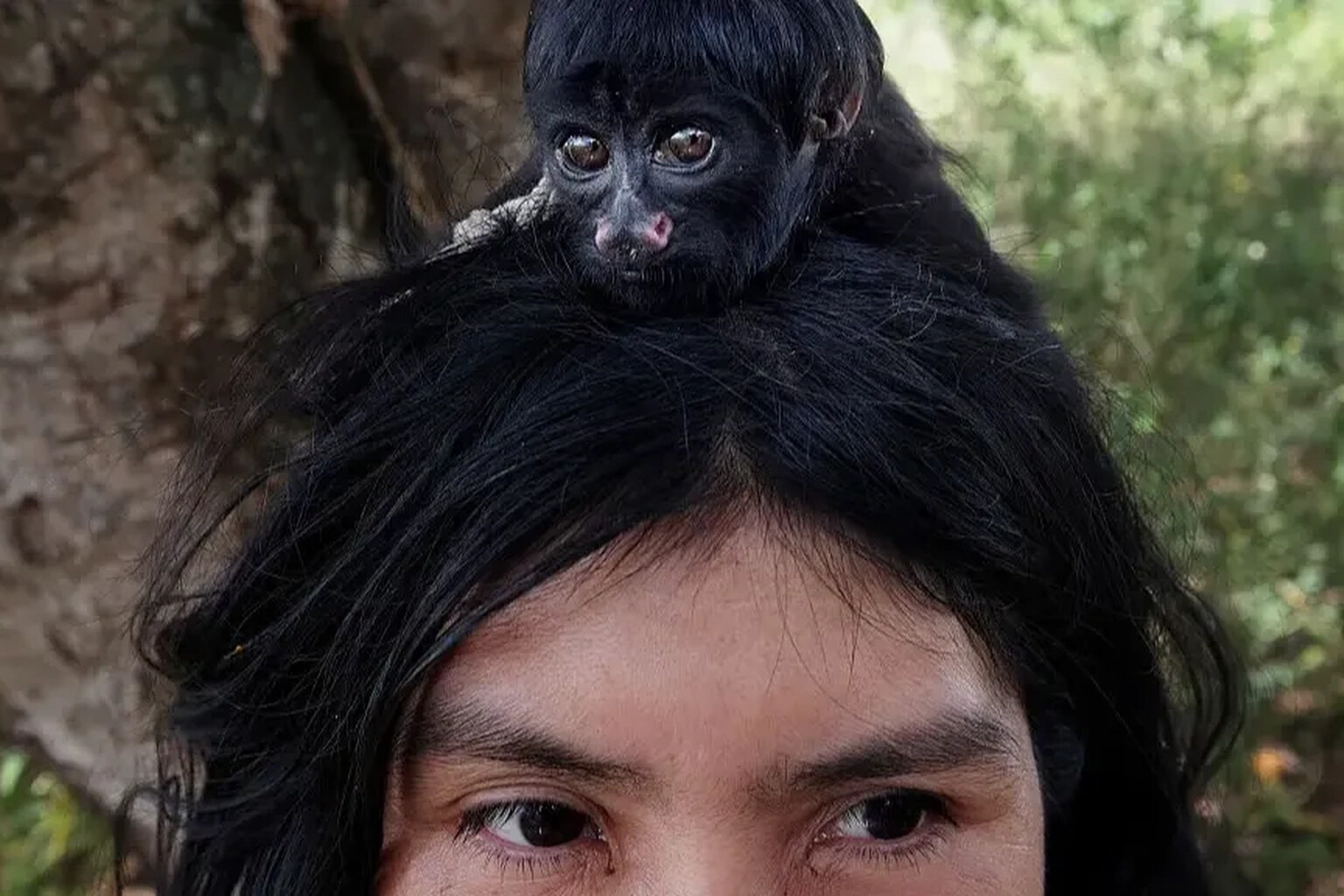
An Awá tribeswoman named Parakeet has spoken out about why she nurses baby monkeys alongside her own children.
Parakeet, a member of what advocates call Earth’s most threatened tribe, told 9News that the practice consumes hours of her day. “I spend a long time breastfeeding the baby monkeys,” she said. She noted that the arrangement is temporary: “When they have grown, they go back to the forest to live. I hear the howler monkey that used to be my pet, singing there in the forest.”
The Awá are nomadic hunter-gatherers in Brazil’s northeastern Maranhão state, and their women routinely breastfeed young animals including monkeys, squirrels and agoutis, the sharp-toothed rodents that crack nut shells in the wild. Photographer Domenico Pugliese, who documented the tribe more than a decade ago, said the nursing continues until the creatures reach full maturity. “They feed the squirrels and monkeys like they feed their kids, breastfeeding,” he said.
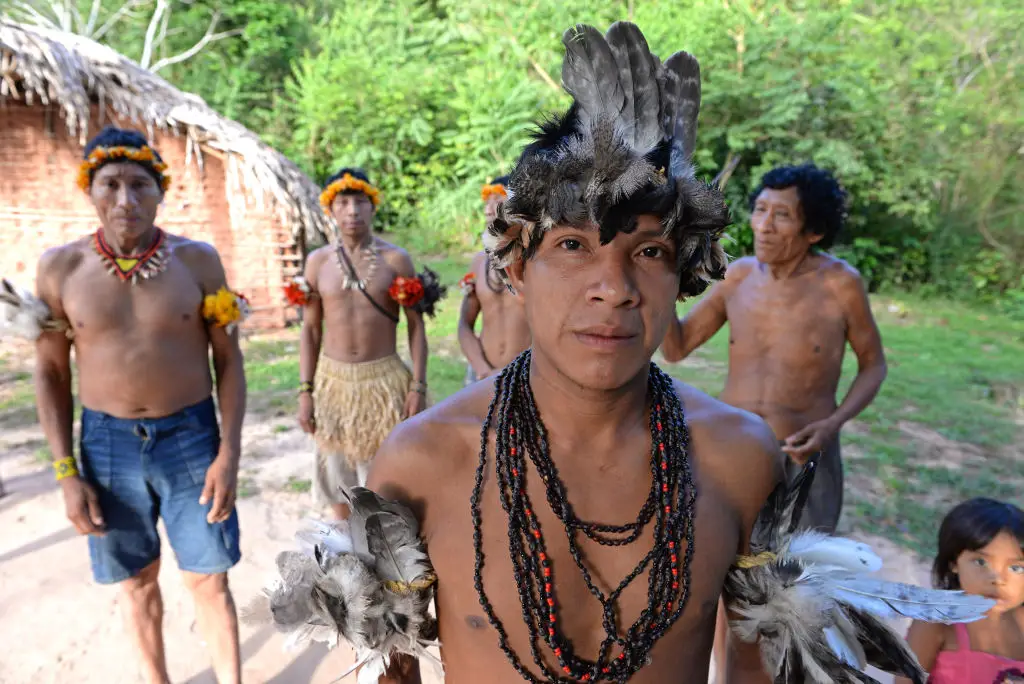
Pugliese, who spent extended time with the Awá, found the custom revelatory. “It highlights how far we have come from where we were,” he said. “They are so close to nature. In fact, it is not even close – they are part of nature.”
The animals do not merely survive on milk. Most Awá families keep far more pets than people in their households, according to Survival International, the human rights group that has championed their cause for decades. Raccoon-like coatis, wild pigs and king vultures all live among them, though monkeys rank as the clear favorites.
The broader context for Parakeet’s remarks is growing pressure on Awá lands. Around 20 uncontacted Awá emerged from the rainforest on Monday, November 16, approaching a government outpost in the village of Tawari. They carried long wooden spears and came seeking yams, accepting offered food before retreating to their territory.
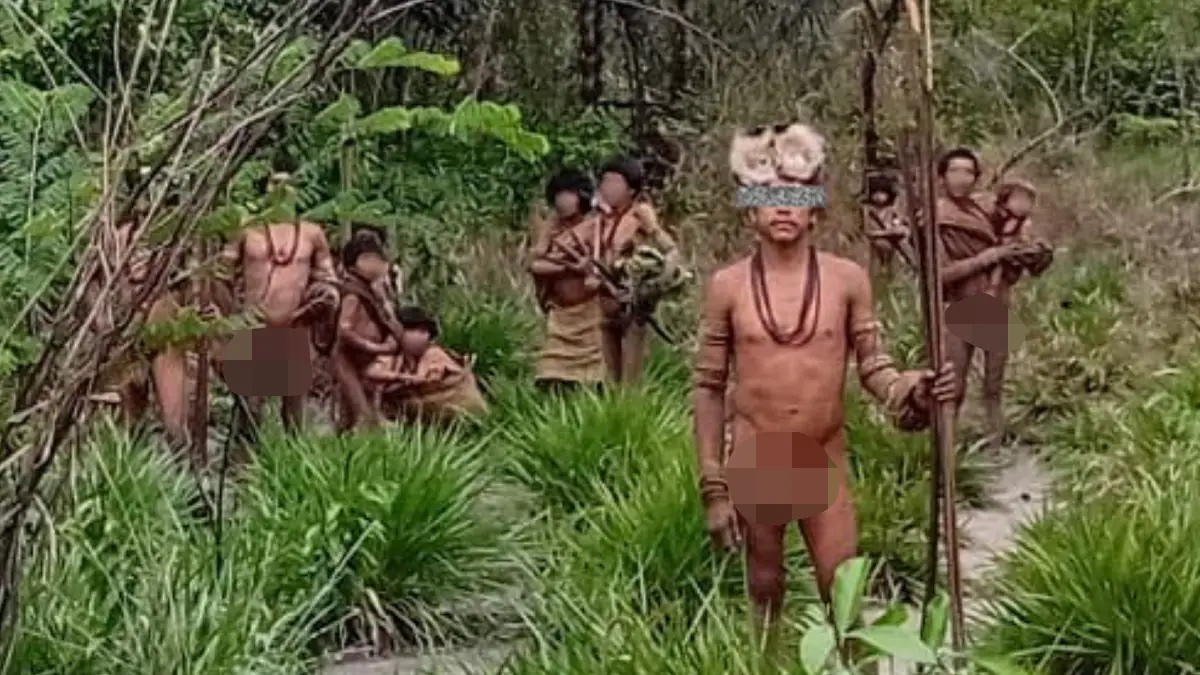
Their territory, Arariboia, spans roughly 1.2 million acres. The Awá hunt armadillos with bows and arrows, gather wild honey, and collect babassu nuts from the dense canopy. Illegal loggers, hunters and cattle ranchers have pressed inward in recent years, and Survival International says the land has faced escalating invasion. That encroachment may explain why the group sought food from outsiders.
Caroline Pearce, director of Survival International, connected the November encounter to systemic failure. “This is a troubling indication of how the continued invasion of unconnected peoples’ forests put otherwise self-sufficient Indigenous people in real danger,” she said.
Pearce directed her sharpest criticism at Brasília. “The Brazilian government must commit the resources necessary to protect Arariboia from the loggers and ranchers who are razing it, in flagrant defiance of the law,” she urged.
A team of Guajajara people known as the Forest Guardians has fought the invaders for years, and Survival International reports that many have died in that struggle.
Survival International previously mounted an unprecedented campaign from 2012 to 2014 for a neighboring Awá territory, during which the group was labeled “Earth’s most threatened tribe.” The Awá remain among the last uncontacted peoples in the Amazon basin.