


The world’s first ‘co-sex’ lab was launched in 2019 to explore sexual arousal, and the researchers say the project was developed for an important purpose.
Sexologist Marieke Dewitte of Maastricht University in the Netherlands has spent years examining the nuances of sexual behaviour. In 2019, that interest expanded into what the university describes as “co-sex” research, focusing not just on individuals, but on partners together.
“I think it’s really important to talk about sex. That still doesn’t happen enough,” she explained in a press release.
She argues that many concerns people experience sexually can’t be understood in isolation, because relationship dynamics play a central role — yet they’re often overlooked in research settings.
“We know that most sexual problems do not play out at the individual level, but in a partner relationship. Nevertheless, research into that interaction is rarely done.”
Dewitte has also pointed out that the Netherlands tends to be comparatively open about sex, describing the country’s approach as “quite progressive” when it comes to discussing and studying the topic.

She added that the local research environment has made it easier to secure approval for studies involving physiological measurement.
“Genital arousal has been measured here for about seven years and, as a result, the ethics committee has less difficulty approving a research design than what I would see in my home country, for instance,” the sexologist added.
Building on earlier work by sexologists including Ellen Laan and Jacques van Lankveld, Dewitte moved ahead with plans to establish what is described as the first ‘dyadic sex lab’ — a space specifically designed to examine arousal and interaction between partners.
The lab itself is designed to feel more like a home than a clinic: a living-room-style setting with dim lighting and plants, where researchers can observe and analyse how couples respond during a sexual simulation.
So far, participants have largely been students. The press release acknowledges this limitation while noting that early-stage research often begins with the most accessible groups: “That does not make the group representative of an average population, but you have to start somewhere.”
Among the issues the team has explored are how partners’ arousal levels match up, how long it takes couples to reach a shared rhythm, and whether an instant sense of sexual compatibility can be identified.
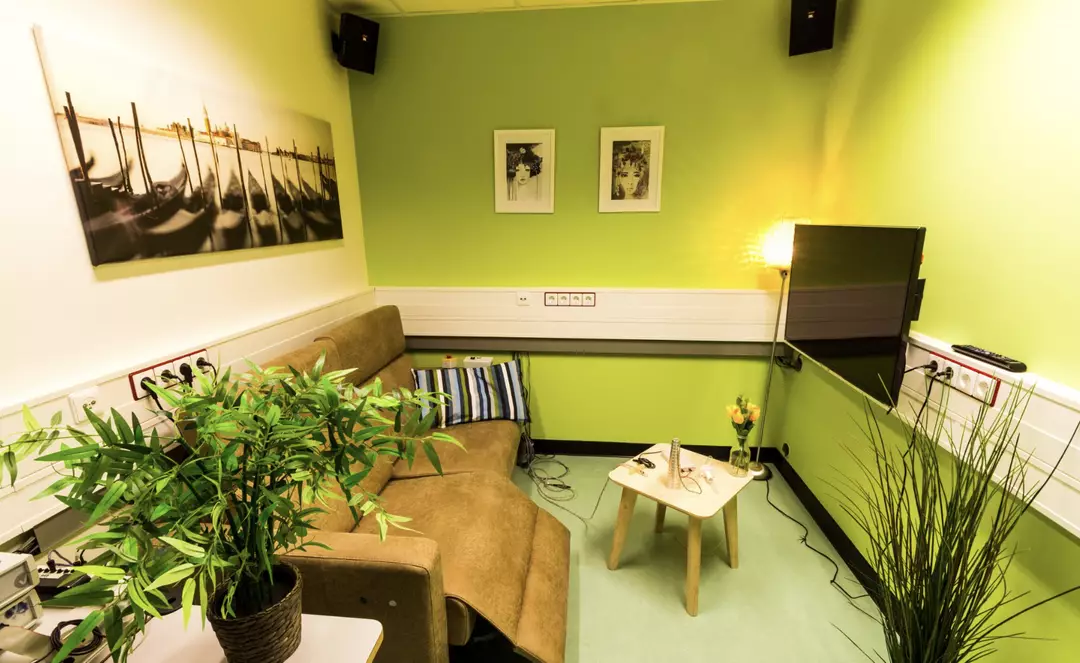
The current research, according to the press release, was developed with the University of Leuven and uses a structured setup to measure both physical responses and self-reported experiences.
The press release states: “In the current study—which was set up in collaboration with the University of Leuven—partners have a kind of Skype call from separate rooms, during which they stimulate themselves and focus their attention alternately on themselves or on their partner.
“Their physical and subjective arousal is measured during the conversation and afterwards they listen to the audio fragment again to make an assessment of their own and their partner’s level of arousal. In a follow-up study, the intention is also to have them stimulate each other physically.”
Dewitte has said the motivation behind the work is straightforward: she considers sexual wellbeing to be a core part of overall health and happiness, calling it ‘essential for our quality of life’.