

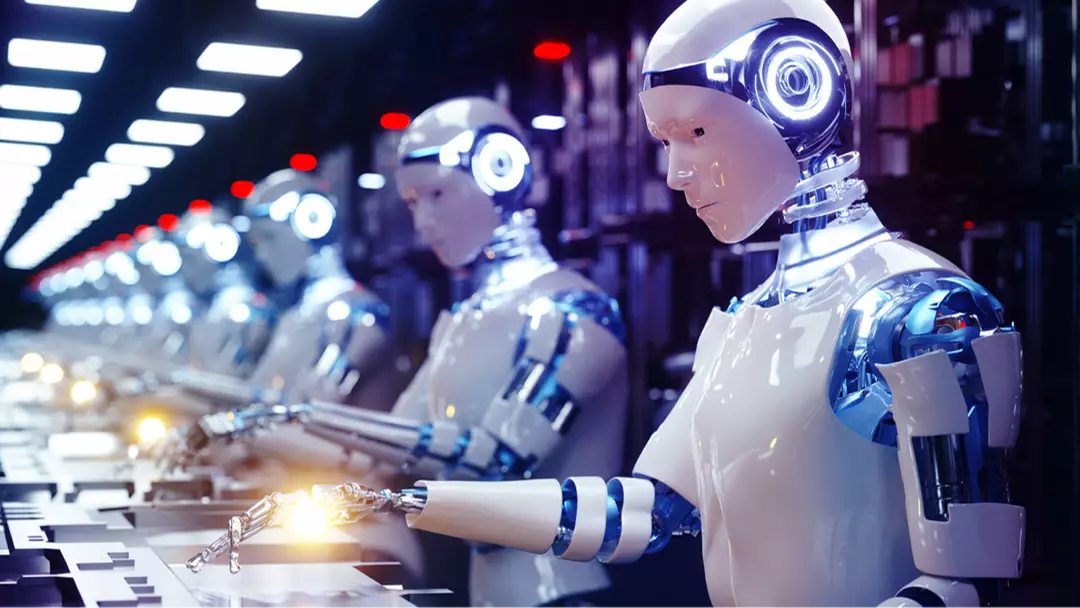
The future, though intimidating at times, offers numerous opportunities for positive advancements.
Many of us have entertained fears about technology and artificial intelligence dominating our lives or leading to widespread job losses. The general sentiment about the future often leans towards pessimism.
A study conducted by Zurich insurance group revealed that only 17% of people in the UK are optimistic about the future, while 56% hold a more negative outlook.
However, the evolution of technology isn’t just about job displacement or dystopian scenarios like those depicted in “The Matrix.” There are several ways technology could enhance our lives, with many developments expected by 2050.
Futurologist Tom Cheesewright provides a more hopeful perspective, stating, “It’s become fashionable to bemoan a future dominated by AI, robotics and relentless technological change, but really, we have a lot to look forward to.”
Reflecting on our progress in the 21st century, from understanding the human genome to the rise of renewable energy, Cheesewright believes that “the next 24 years have the potential to be the greatest era of human progress in our long history.”
Cheesewright, alongside astrophysicist Dr. Alastair Reynolds, suggests several ways technology may benefit humanity by 2050.
By mid-century, experts predict that bio-printers will be capable of creating intricate organs like kidneys and livers using a patient’s own cells, eliminating rejection risks and the wait for donor matches.
Progress in this field is underway. Researchers at UC San Francisco and Cedars-Sinai have already made strides toward growing organs from scratch. Where this research will lead in 24 years remains to be seen.
In a development reminiscent of Roald Dahl’s “Charlie and the Great Glass Elevator,” there are expectations of constructing the first space elevator by 2050, designed to transport both cargo and humans into orbit.
Japanese company Obayashi has expressed similar intentions, aiming for a 2050 completion date. Their plan involves a 96,000-km carbon nanotube cable, a vast floating Earth Port, and other facilities dedicated to space exploration.
By 2050, having robot roommates could become commonplace and more affordable. While humanoid robots are being developed, they currently come at a steep price. Tesla’s Optimus robot, anticipated to launch this year, is priced at approximately $20,000, according to Sherwood News.
Similarly, Norway’s 1X Technologies offers the Neo robot for early buyers at a comparable cost. Interested customers in the US can pre-order with a $200 deposit, with deliveries expected to begin this year.
The future might also see a decline in meat consumption as alternative protein sources become more prevalent. Experts suggest that lab-grown meat will become an affordable and viable option for those seeking to reduce meat consumption for ethical reasons.
In March 2025, reports said that lab-grown meat might reach UK markets by 2027. The US approved lab-grown meat sales in 2023, indicating shifting perceptions that could be more pronounced by 2050.
As technology advances, smartphones might be replaced by smart glasses by 2050. Would you consider swapping your phone for smart glasses anytime soon? Share your thoughts in the comments below.