

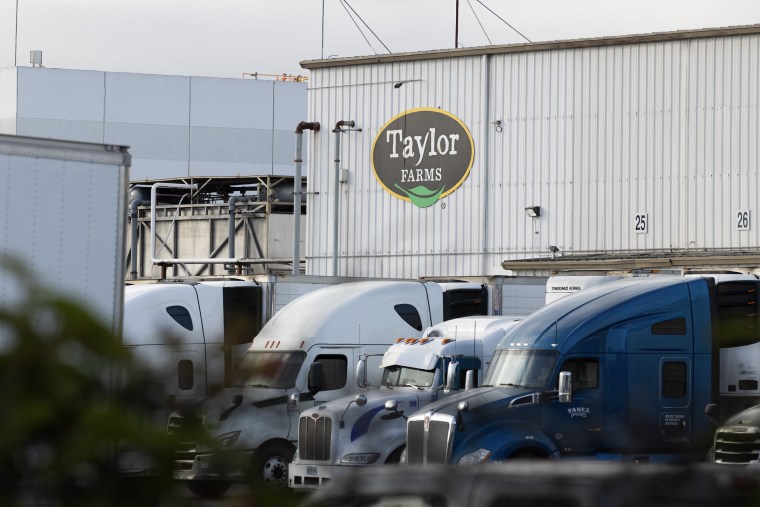
Federal health officials say they remain confident that iceberg lettuce from Taylor Farms in Mexico is the source of a major cyclosporiasis outbreak affecting thousands of people across five states, even though a laboratory test for the parasite turned out to be a false positive over the weekend.
The FDA reported on Saturday that a sample of lettuce from Taylor Farms de Mexico had tested positive for cyclospora. But on Sunday, after agency laboratory experts re-reviewed the results, the FDA announced the positive finding was actually a false positive based on incorrect amplification in the testing process.
Taylor Farms said it received an apology from the FDA regarding the false test result. However, health officials said they did not issue an official apology to the company. Regardless of the laboratory error, federal officials made clear that the findings change nothing about their investigation or the voluntary recall announced Friday by Taylor Farms de Mexico.
As of Monday, more than 8,000 cyclosporiasis cases have been reported across the five-state outbreak in Michigan, Ohio, Indiana, Kentucky and West Virginia, with Michigan accounting for more than 6,100 of those cases. A total of 1,644 people have been confirmed infected with cyclospora after eating at Taco Bell locations in these states, with 94 hospitalizations reported and no deaths. Health officials say the actual number of sick people is likely higher, as some cases are still under investigation and the outbreak may potentially be one of the largest foodborne illness outbreaks the country has ever recorded.
The false positive test result illustrated a fundamental challenge in investigating cyclospora outbreaks. The microscopic parasite is notoriously difficult to detect and grow in laboratory settings. Unlike bacteria or viruses, cyclospora cannot be cultured in petri dishes or standard lab conditions, making it nearly impossible for technicians to produce direct laboratory evidence of contamination on produce. Testing for cyclospora is not included in routine stool cultures and must be specifically requested by healthcare providers, and the parasite sheds intermittently in patient samples, sometimes requiring multiple samples over several days to confirm.
“Due to the complexity in detection of Cyclospora, FDA laboratory experts re-reviewed the sample results and have concluded that the finding does not represent true amplification and should be considered a false positive,” the FDA said in its statement about the erroneous test.
Because of these testing constraints, the FDA and CDC have instead relied heavily on epidemiological evidence and traceback investigations to identify the outbreak source. The FDA’s traceback investigation identified convergence on a single supplier, Taylor Farms de Mexico, that supplied shredded iceberg lettuce to Taco Bell locations where sick people ate before becoming ill. Interviews with more than 2,000 infected patients confirmed a pattern linking the illness to the product, and the timing and geographic distribution of cases all pointed to the same supplier.
“FDA’s traceback investigation and outbreak data continue to converge on shredded iceberg lettuce from Taylor Farms locations in central Mexico,” the FDA stated Monday, emphasizing that epidemiological data remained “very strong” despite the laboratory error.
On Friday, July 17, Taylor Farms de Mexico announced it was voluntarily recalling all iceberg lettuce sourced from central Mexico from the U.S. Market due to potential contamination with cyclospora. The recall affects products distributed to 27 states and includes Marketside-brand iceberg salad and shredded lettuce sold at Walmart, with best-if-used-by dates between July 18 and August 3, 2026. Taco Bell completed removal of the affected lettuce from its restaurants nationwide following the voluntary recall.
Cyclospora is a microscopic parasite that contaminates produce when it comes into contact with water or areas exposed to human feces. The infection causes severe intestinal illness marked by watery diarrhea, sometimes described as explosive, along with fatigue, loss of appetite, nausea and bloating. Symptoms typically develop one week after exposure but can take anywhere from two days to two weeks or longer to appear. Without treatment, symptoms can persist for weeks or even months.
The illnesses linked to the outbreak began in late May, with the last confirmed case date in mid-July. The timing illustrates another challenge in investigating cyclospora outbreaks: the incubation period of up to two weeks means contaminated food is often already discarded or consumed by the time investigators begin their detective work.
Food safety experts noted that the recall was the appropriate action regardless of the laboratory result. “Because it’s so difficult to find cyclospora on produce, epidemiological evidence alone can, in some circumstances, provide sufficient justification for public health action,” said Frank Yiannas, former deputy commissioner of food policy at the FDA. He credited the FDA with transparency in acknowledging the laboratory error but said the agency should investigate what caused the quality control failure and share lessons learned with the public and industry.
The false positive raised some concerns about public messaging. Taylor Farms claimed the FDA apologized, which health officials disputed. Donald Schaffner, chair of the Department of Food Science at Rutgers University, said false positives are always possible with cyclospora testing and urged consumers not to dismiss the recall warning based on the laboratory error.
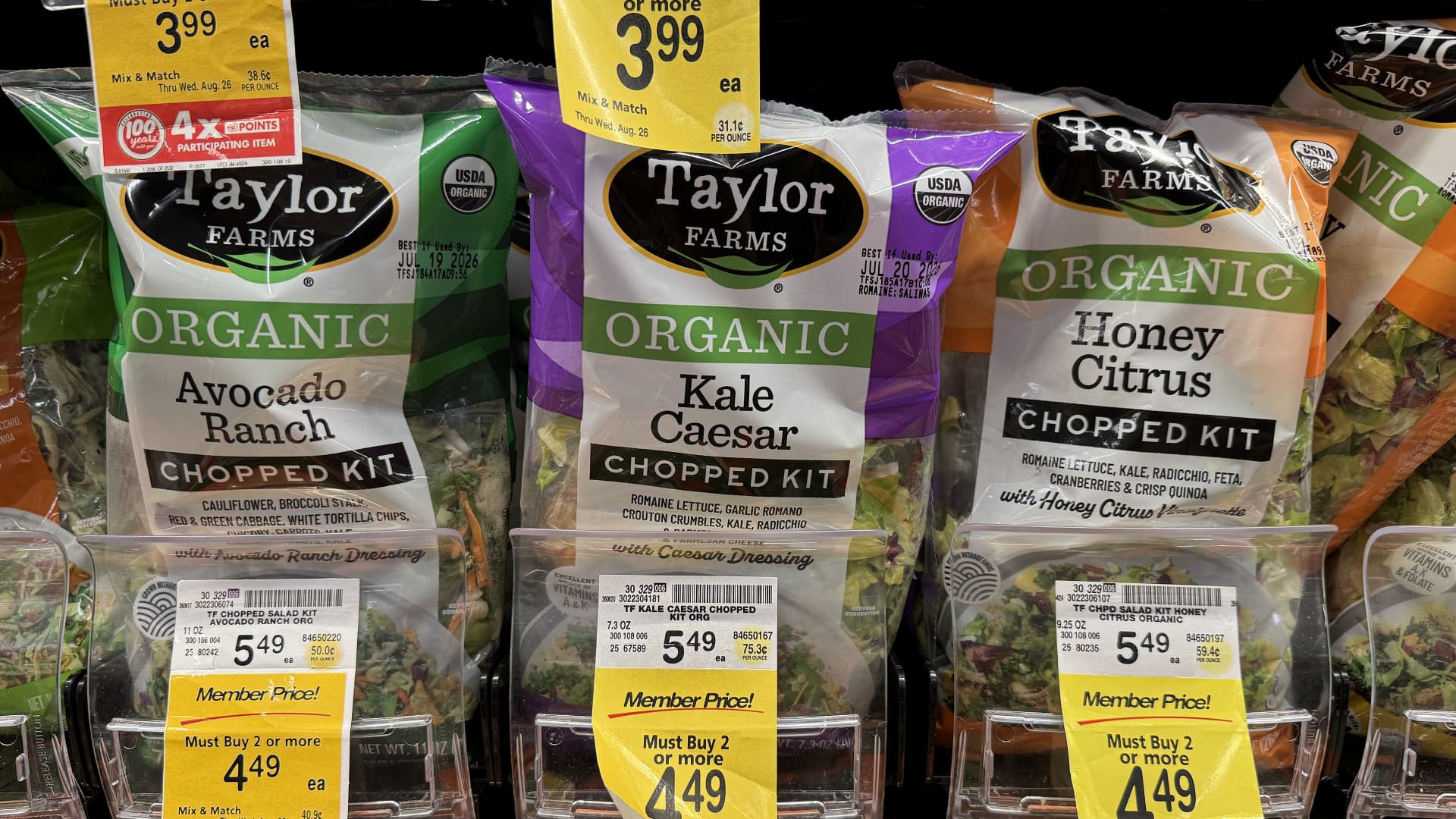
This is not Taylor Farms’ first food safety issue. The company was also linked to a 2024 E. Coli outbreak tied to raw onions used in McDonald’s Quarter Pounder sandwiches, which resulted in 104 confirmed illnesses across 14 states and one death.
The CDC and FDA are continuing to investigate whether the contaminated lettuce reached retailers or consumers beyond the identified supply chain, and they continue to advise Americans against eating recalled iceberg lettuce from Taylor Farms de Mexico.