

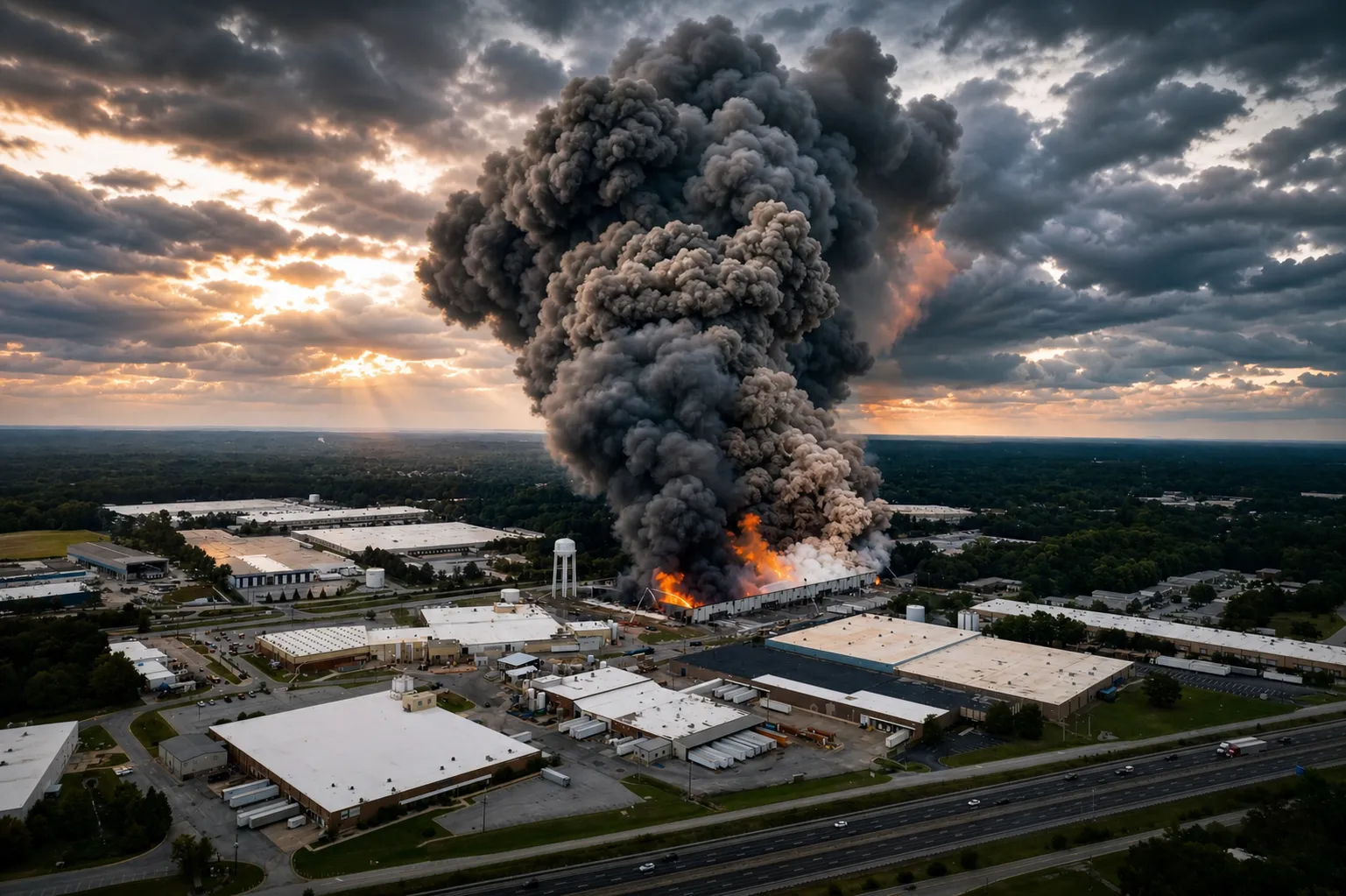
A federal investigation into a catastrophic chemical fire near Atlanta has concluded that overstorage of pool chemicals and corroded fire suppression equipment combined to transform a minor sprinkler malfunction into a disaster that threatened thousands of residents.
The U.S. Chemical Safety and Hazard Investigation Board released its final report Tuesday on the September 29, 2024, incident at the KIK Consumer Products BioLab facility in Conyers, Georgia, located about 25 miles southeast of downtown Atlanta. The investigation found that a corroded sprinkler system component failed around 5 a.m., allowing water to contact highly reactive pool-treatment chemicals stored in the warehouse. The resulting chemical reaction generated intense heat, triggered additional sprinkler activations, and released massive plumes of toxic smoke containing chlorine, hydrogen chloride, and bromine.
The fire forced approximately 17,000 residents to evacuate their homes and triggered shelter-in-place orders for about 90,000 people across Rockdale County and metro Atlanta. The incident shut down Interstate 20 and forced schools to close for nearly two weeks. The warehouse fire was particularly disastrous in its timing, occurring just two days after Hurricane Helene had swept through the region, leaving residents without power, water service, or access to supplies.
At the time of the fire, the warehouse contained nearly 14 million pounds of chlorinated isocyanurates and other reactive chemicals—more than twice the 6.2 million pounds the company had told local authorities the facility would hold when it was built in 2019. The chemicals were packaged in approximately 5,000 giant sacks, each weighing more than a ton, stacked in ways that prevented first responders from controlling the initial situation.
The investigation revealed a clear pattern of corrosion that had been documented for years. Chlorine fumes naturally released from the stored chemicals combined with ambient humidity in the warehouse to form hydrochloric acid droplets on metal surfaces, particularly the sprinkler heads. During a sprinkler inspection in December 2023, more than 1,100 sprinkler heads were visually observed to be corroded. Yet instead of systematically replacing the corroded components, facility operators had engaged in reactive maintenance, repairing or replacing parts only after they had already begun leaking or failed completely.
The investigation found that fire protection alarm systems registered abnormal statuses on 60 different days between January 2023 and the day of the disaster. Emergency repairs were made to leaking sprinkler heads just days before the catastrophic fire broke out. The board stated that had BioLab Conyers taken proactive steps to prevent sprinkler system leaks instead of allowing the system to run to failure, the incident likely would not have occurred.
The chemical reaction that followed the initial water contact generated heat that activated additional sprinkler heads, which then wetted more of the stored materials, including cyanuric acid, aluminum sulfate, and sodium bromide. These additional reactions generated substantial heat, leading to decomposition of products and the release of significant plumes of smoke and toxic vapors. Fire crews initially extinguished a first fire by 6:30 a.m., but a second, larger blaze broke out shortly before 12:30 p.m., eventually destroying the warehouse structure and causing an estimated $50.5 million in property damage.
The investigation also uncovered a significant gap in federal chemical-safety regulations. The pool-treatment chemicals involved in the fire can generate large quantities of toxic gases when they react with water or heat, yet they are not covered by federal programs intended to prevent major industrial chemical accidents. Because these oxidizing chemicals are not included under OSHA’s Process Management standards or the EPA’s Risk Management Program, BioLab was not required to conduct the same formal hazard reviews as facilities storing other types of hazardous materials.
The report also documented a history of safety lapses at the company. BioLab had experienced multiple chemical accidents between 2004 and 2024. In September 2020, a thermal decomposition event at the same facility led to a fire that closed Interstate 20. The investigation found that despite these incidents, KIK Consumer Products, the parent company, failed to consistently apply lessons learned across its facilities. At the Conyers plant, smaller off-gassing events had become normalized.
Federal regulators responded swiftly. The company was cited by the U.S. Department of Labor for six violations, including four serious ones, and faced more than $60,000 in proposed penalties. The Chemical Safety Board called for expanded regulatory coverage of the chemicals to prevent similar incidents.
BioLab issued a statement saying it cooperated fully with the investigation and would carefully consider the board’s recommendations. The company decided last year not to rebuild the Conyers facility and has since ceased manufacturing operations at the site, listing the property for sale in January.
The facility had employed a permanent fire watch team for two or three months before the incident after strong odors from oxidizers in storage buildings were detected. Two employees were on duty for fire watch on the morning of the fire and heard a popping sound that alerted them to the initial chemical reaction, prompting them to call 911 and triggering the emergency response.