

A tiny Texas town of just over 3,200 residents is mounting an unlikely legal challenge against the Trump administration’s sweeping border wall plan, taking on federal authorities in court and illustrating the complicated tensions between local communities and sweeping federal policies.
The lawsuit brought by the Presidio Municipal Development District pits the small border community directly against the Department of Homeland Security as it races forward with a $46 billion plan to complete a border wall spanning from the Pacific Ocean to the Gulf of Mexico. The dispute centers on a seemingly obscure piece of legislation that neither side anticipated would become central to the wall’s construction timeline.
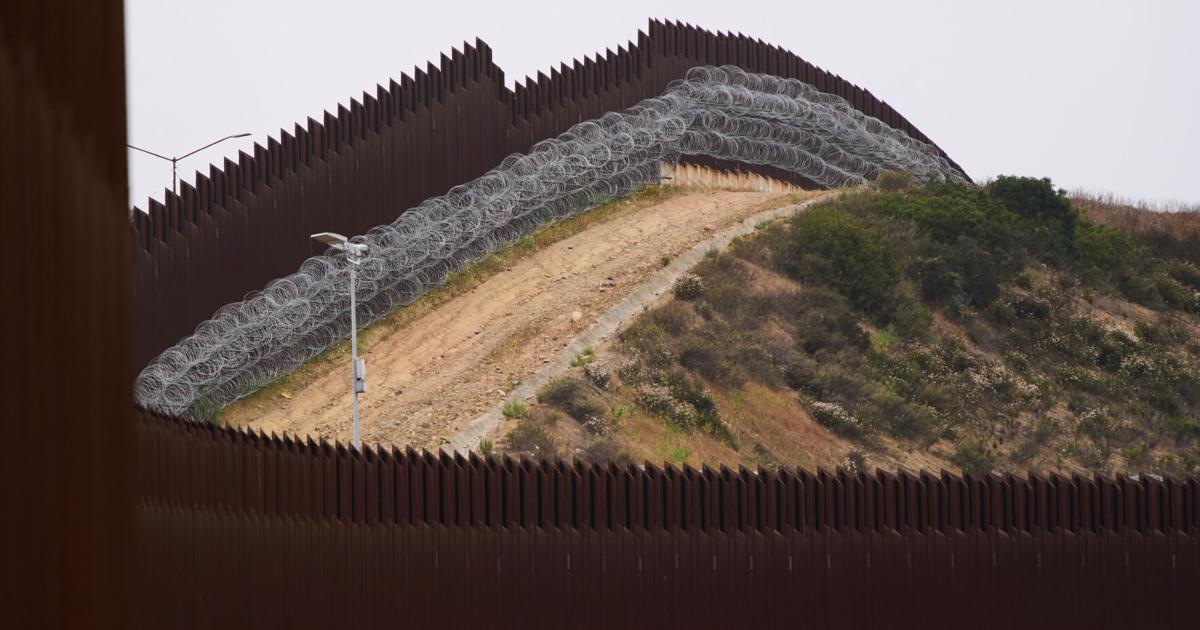
At the heart of the conflict is a 15-mile levee system that has protected Presidio and its surrounding area for decades. The town argues that building a border wall by replacing the earthen slope of the existing levee with a concrete wall topped by 30-foot steel bollard panels could compromise flood protection in an area where flash flooding represents a serious recurring threat. The levee underwent millions of dollars in upgrades following a catastrophic 2008 flood.
The case went before federal court on Tuesday as tensions between the Trump administration’s border security agenda and local concerns about environmental and public safety impacts continue to mount across the entire border region. The Presidio development district contends that the government is not following the law as it races forward with construction plans, and that adequate consultation and coordination have not occurred.
The Rivers and Harbors Act of 1899 requires that the Army Corps of Engineers provide engineering approval when significant alterations are planned for a levee system. Lawyers for Presidio argue that despite the Department of Homeland Security waiving this requirement, the language of the Act still mandates that the agency must consult with the Corps before launching the project. The levee, known as the Presidio Flood Control Project, is owned by the International Boundary and Water Commission and provides flood protection to approximately 52 square miles of urban and agricultural land.
The case showcases a dynamic that has proven important to many Americans, particularly Republicans: the friction that can arise between small municipalities and federal authorities in Washington. What began as a local effort to protect community interests has escalated into a federal lawsuit where a development district with limited resources is challenging one of the Trump administration’s most prominent policy initiatives.
The Trump administration responded to the lawsuit in a striking way. On July 2, after the Presidio district filed its case, the Department of Homeland Security updated its waiver notice to include the Rivers and Harbors Act itself—the very law at the center of the dispute. The department had previously waived numerous environmental, cultural resource protection, and contracting laws to expedite border wall construction in the Big Bend region, but had not initially included the 1899 law in those waivers.
John Kennedy, the executive director of the Presidio Municipal Development District, said the government’s action did not address the underlying flood safety concerns that prompted the lawsuit. “The government is now acknowledging in court that it does not intend to comply with the Army Corps process and that interagency review remains unfinished,” Kennedy said in a statement, characterizing the waiver as an admission rather than a solution.
A lawyer for Democracy Forward, the organization representing Presidio’s development district, pointed to a troubling pattern. “There is unfortunately a long history here of CBP construction causing or increasing flood risks,” said Laura Bakst, the lawyer handling the case. The development district said it had asked Customs and Border Protection for more details about construction plans but was told they cannot be shared due to national security concerns.
The Trump administration countered through its legal team by arguing that it is premature to claim the wall could harm Presidio because Customs and Border Protection has not yet finalized detailed plans for the wall’s exact location or construction methods. A government lawyer said during the hearing that such decisions have not been made, making it impossible at this stage to assess specific harm to the levee system.
The dispute reflects broader resistance to the wall project along the border. The Department of Homeland Security is running into opposition from landowners, environmental groups, Native American tribes and others who argue that rapid government construction endangers historical and religious sites and disrupts ways of life along the border. This opposition exists even as border crossings from Mexico have reached extreme lows, raising questions about the necessity of expanded wall construction.
The administration has waived numerous regulations to accelerate wall construction in the Big Bend region and across the border more broadly. These waivers extend beyond environmental protections to include cultural resource safeguards and standard contracting procedures—all designed to expedite what the Trump administration describes as a signature promise and key component of its broader immigration enforcement agenda.
The case is likely to take months to resolve, and the outcome remains uncertain. For now, Presidio continues pressing its arguments in federal court, a small Texas town determined to make sure that border security decisions account for local flood risks and environmental concerns that officials worry have been overlooked in the rush to complete the wall.