

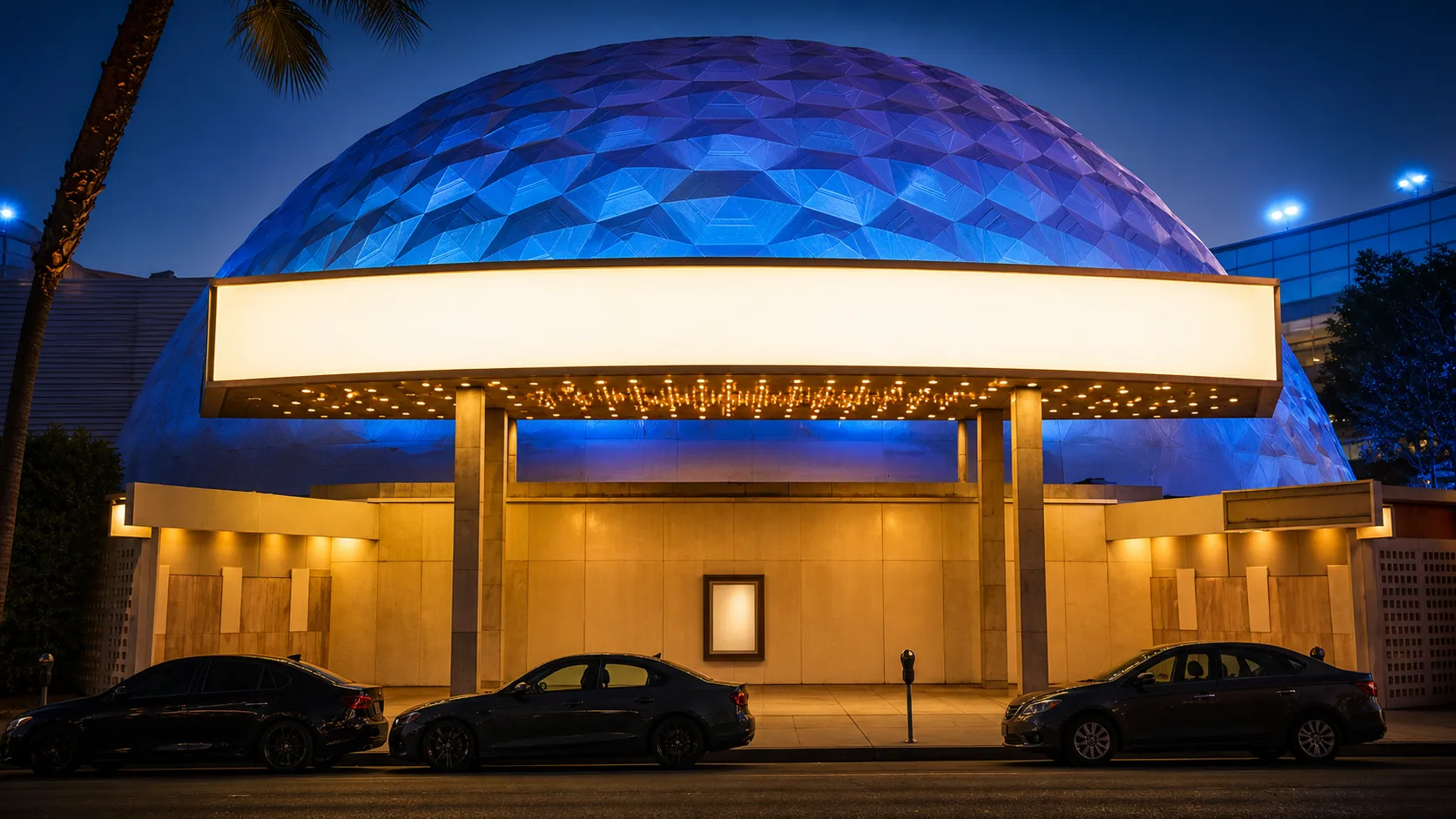
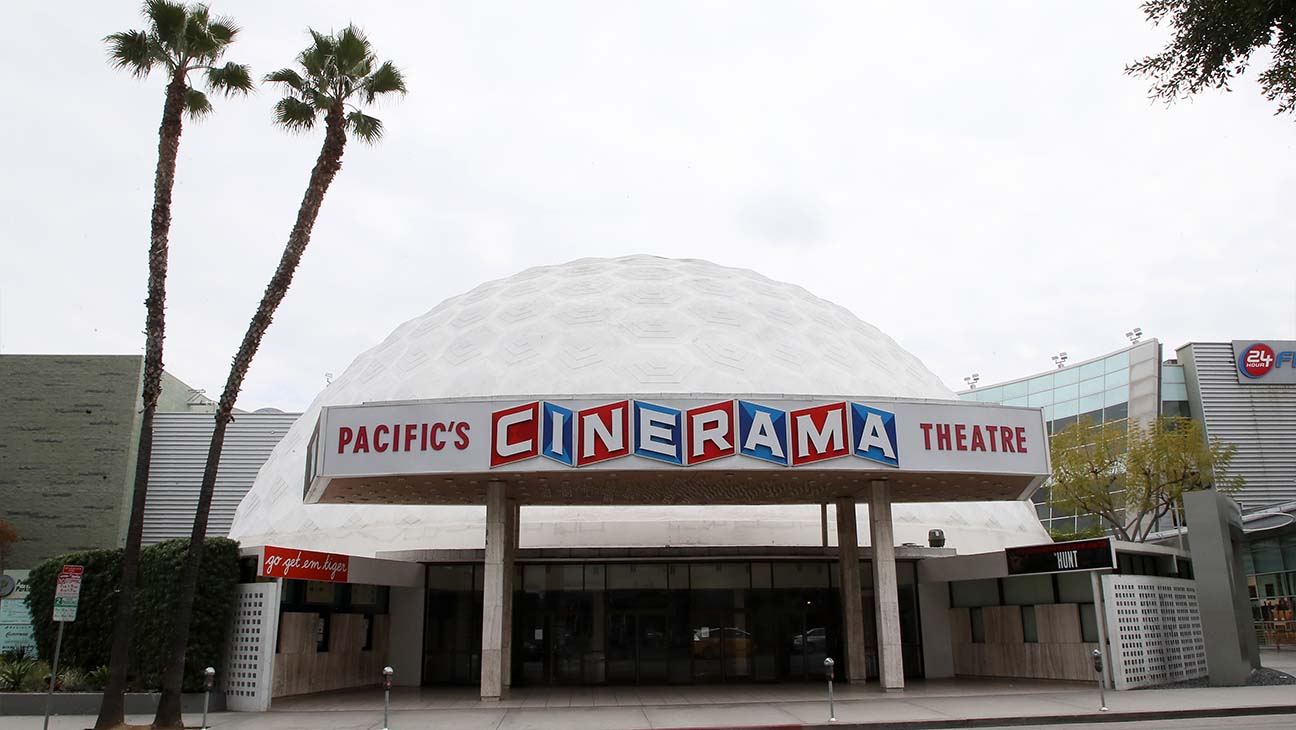
After years of sitting dark and facing an uncertain future, the Cinerama Dome, one of Hollywood’s most iconic theaters, is finally coming back to life. Sony Pictures Entertainment has announced plans to restore and reopen the legendary Los Angeles venue in early 2028, marking a major milestone for a theater that has captured the hearts of moviegoers and cinephiles since its debut in 1963.
The announcement came as welcome news to a city that has been fighting to preserve one of its most treasured cultural landmarks. The Cinerama Dome, a Los Angeles Historic-Cultural Monument, closed at the beginning of the COVID pandemic and never reopened. Its owner, Pacific Theatres, filed for bankruptcy in 2021, forcing the closure of the entire ArcLight cinema chain as well. Since then, the distinctive geodesic dome designed by Welton Becket Associates has remained shuttered, sparking constant speculation about whether the beloved theater would ever welcome audiences again.
Sony’s acquisition marks a turning point for the venue. The company has entrusted operation of the Dome to Alamo Drafthouse Cinema, the upmarket theater chain Sony purchased in 2024. Renovations will begin next month and extend through early 2028. Sony promised that the restoration will honor the landmark’s distinctive aesthetic character and immersive large-format curved-screen presentation that have made it a beloved destination for generations.
The Cinerama Dome is famous for its remarkable 86-foot-wide curved screen and its iconic architectural presence. The world’s first all-concrete geodesic dome, it was constructed from 316 concrete polygons, weighing 7,500 pounds each, and completed in an extraordinary 16 weeks in 1963. It opened with the premiere of “It’s a Mad, Mad, Mad, Mad World,” the first film screened in the Cinerama format that shares the theater’s name. Until its closure, it was one of the city’s highest-grossing multiplexes and a favorite venue for splashy Hollywood premieres.
As part of the deal, Sony will also take over operations of the adjacent former ArcLight Theater Hollywood, a 14-screen complex next door to the Cinerama Dome. This multiplex will be operated by Alamo Drafthouse and will offer the chain’s signature dine-in experience. It will retain 35mm projection capabilities for archival film prints and will house several premium format screens, including 70mm auditoriums with immersive audio and 4K laser projection capabilities.
The Cinerama Dome itself, however, will maintain its unique identity. While Alamo Drafthouse will operate the space, Sony has promised that the iconic Cinerama name and exterior branding will remain intact, and the theater will not operate as a dine-in venue. Instead, it will feature traditional programming including repertory screenings, filmmaker series, premieres, and special events that have been central to the venue’s legacy.
The reopening has been a constant source of intrigue and interest for Los Angeles’s avid moviegoing audience, which has signed petitions and staged demonstrations over the years in hopes of bringing the monument back to life. As recently as May of this year, locals attended a city hearing about a liquor license renewal for the property, many presuming at the time that the shutdown would be permanent.
Sony’s involvement represents a significant moment in Hollywood’s evolution. The company’s acquisition of Alamo Drafthouse in 2024 marked the first time in over 75 years that a major Hollywood studio has owned a theater chain. This became possible only after the Paramount Consent Decrees, which had prohibited studios from owning theaters since 1948, were rescinded in 2020. Sony Chairman and CEO Tom Rothman expressed enthusiasm about the investment, stating that he is deeply proud Sony is investing in Hollywood and that the Dome has hosted generations of unforgettable movie moments.
Michael Kustermann, CEO of Alamo Drafthouse and head of Sony Pictures Experiences, added that the Cinerama Dome will be Alamo’s new West Coast flagship, offering extraordinary programming and events while returning to Los Angeles one of its most beloved and culturally significant moviegoing destinations.
The historic venue’s reopening comes at a time when theatrical exhibition faces significant challenges from streaming services and changing entertainment habits. Yet for decades, the Cinerama Dome represented the pinnacle of the big-screen moviegoing experience, and its restoration signals a continued faith in the future of cinema as a shared cultural experience.