

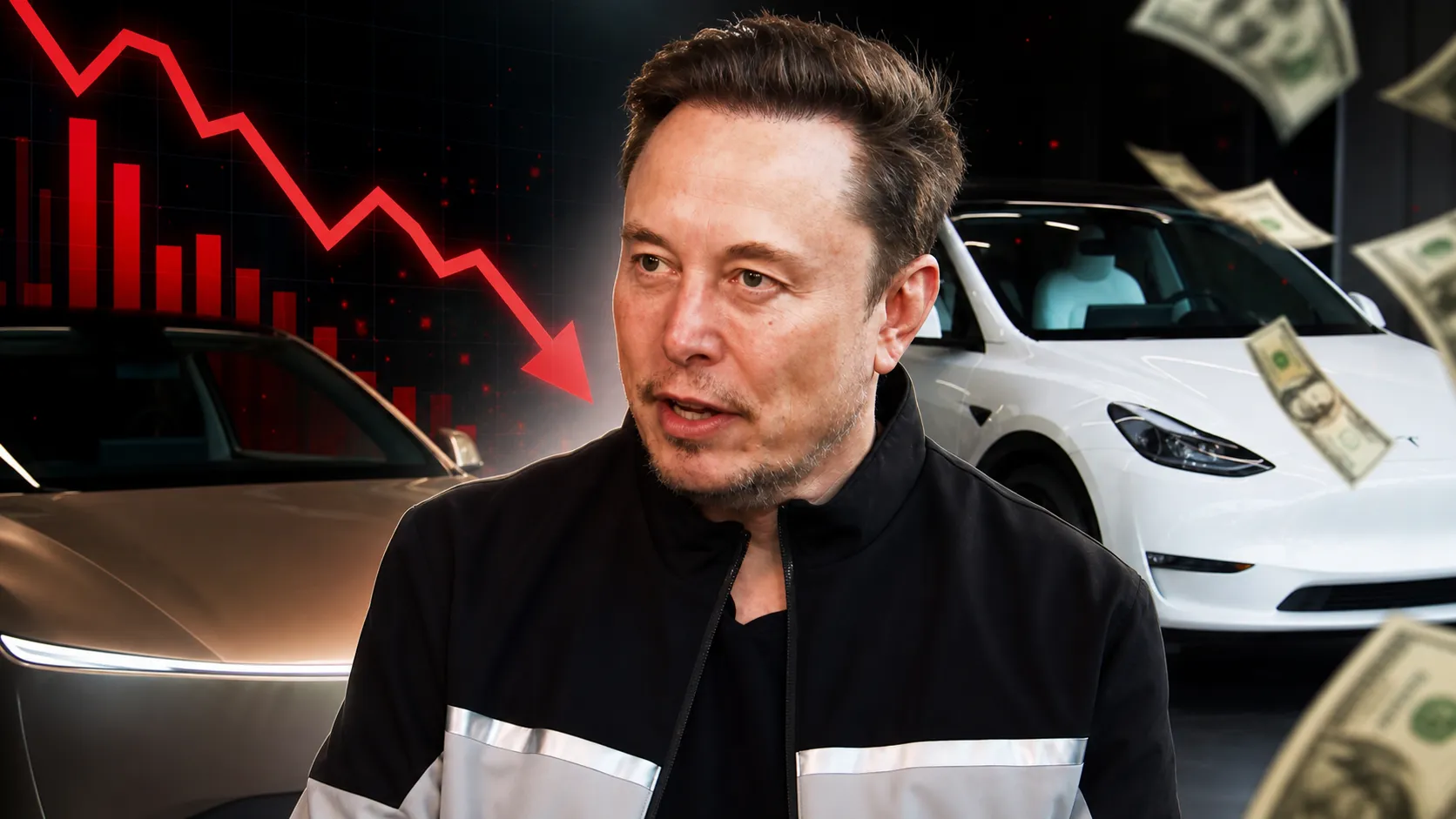
Tesla’s second-quarter earnings revealed a stark disconnect between the company’s record-breaking vehicle delivery numbers and its deteriorating profitability. While Tesla delivered nearly 480,000 vehicles in the quarter, its highest ever for a second quarter, the company missed profit expectations as soaring spending on artificial intelligence and robotics research overwhelmed gains from vehicle sales.
Tesla reported adjusted earnings of 33 cents per share, falling well short of the 51 cents analysts had expected. The company posted net income of $1.11 billion, down 5 percent from $1.17 billion a year earlier despite delivering 25 percent more vehicles than in the same period last year. The gap between surging deliveries and declining profits underscores the company’s pivot away from its traditional automotive business toward longer-term bets on autonomous vehicles, humanoid robots, and artificial intelligence technology.
Operating expenses climbed much faster than revenue, with the company’s research and development spending surging as it poured capital into artificial intelligence and other development projects. The 47 percent increase in operating expenses brought the total to $4.35 billion in the second quarter. This spending surge caused Tesla’s operating margin to plunge to 1.4 percent from 4.1 percent a year ago, compressing profitability despite the company’s highest-ever vehicle delivery count.
CEO Elon Musk has deliberately shifted the company’s strategic focus away from maximizing profits on vehicle sales and toward building infrastructure for driverless Robotaxi services, ramping up production of the driverless Cybercab, and converting older factory lines in Fremont, California to begin manufacturing Optimus humanoid robots. Musk has promised shareholders and consumers an artificial-intelligence-powered robot capable of serving as a babysitter, factory worker, or world-class surgeon.
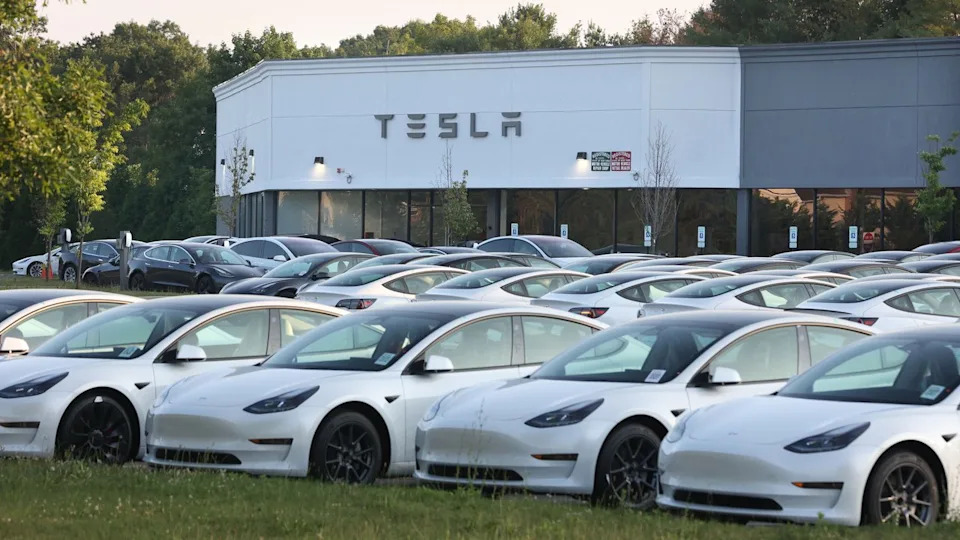
The profitability pressures appeared despite record second-quarter vehicle deliveries of 480,126 units, which beat analyst estimates by roughly 74,000 vehicles and marked the company’s strongest second quarter ever. Tesla’s core automotive segment generated $20.52 billion in revenue, up 23 percent from a year ago. Revenue from the energy business, which includes solar panels and battery storage systems, increased 13 percent to $3.14 billion. Services and other business revenue jumped 50 percent to $4.58 billion.
However, gross profit margins shrank even as volumes surged. Gross margin, which represents profit after accounting for the cost of goods sold, fell to 16.8 percent from 17.2 percent a year earlier. Analysts had expected 19.4 percent, signaling that Tesla achieved its delivery growth partly through price reductions and declining average selling prices per vehicle. Additionally, revenue from regulatory credits purchased by other automakers declined compared to previous quarters.
The company’s massive capital spending commitment is weighing heavily on cash generation. Free cash flow turned negative in the quarter, with the company burning $1.1 billion after generating $146 million in free cash flow during the same quarter last year and $1.44 billion in the first quarter of 2026. Capital expenditures soared 142 percent to $5.79 billion from $2.39 billion in the second quarter of 2025.
Tesla announced in April that its full-year capital expenditure budget would exceed $25 billion, up sharply from the $8.6 billion the company spent in 2025. The company stated in its earnings materials that it is undertaking “capacity build out and ramp related to our multi-year infrastructure initiatives, including AI compute, solar, battery material and semiconductor manufacturing.”
Tesla’s earnings report comes as the company faces intensifying competitive pressures from Chinese automakers. During the second quarter, BYD retook the global lead in battery-electric vehicle sales, selling 557,090 units compared to Tesla’s 480,126. BYD has maintained an advantage over Tesla in European registrations every month this year, while other Chinese competitors including Nio and Xiaomi are offering high-technology electric vehicles at lower prices than Tesla’s aging product lineup.
The company has also faced consumer backlash in some markets tied to CEO Elon Musk’s polarizing political activities and endorsements, though some regions including North America have shown signs of demand recovery. Soaring energy prices from geopolitical tensions bolstered electric vehicle demand in Europe during the first half of the year, helping offset weakness in other markets.
Tesla’s stock price has declined 17 percent this year even as the broader Nasdaq market has risen, reflecting investor concerns about the company’s shifting priorities and compressed margins. The stock slid nearly 3 percent in extended trading after the earnings announcement. Investors are watching closely whether Tesla’s enormous capital investments in artificial intelligence and robotics will eventually translate into profitable new revenue streams, or whether the company is sacrificing near-term profitability for long-term bets that may never materialize.