

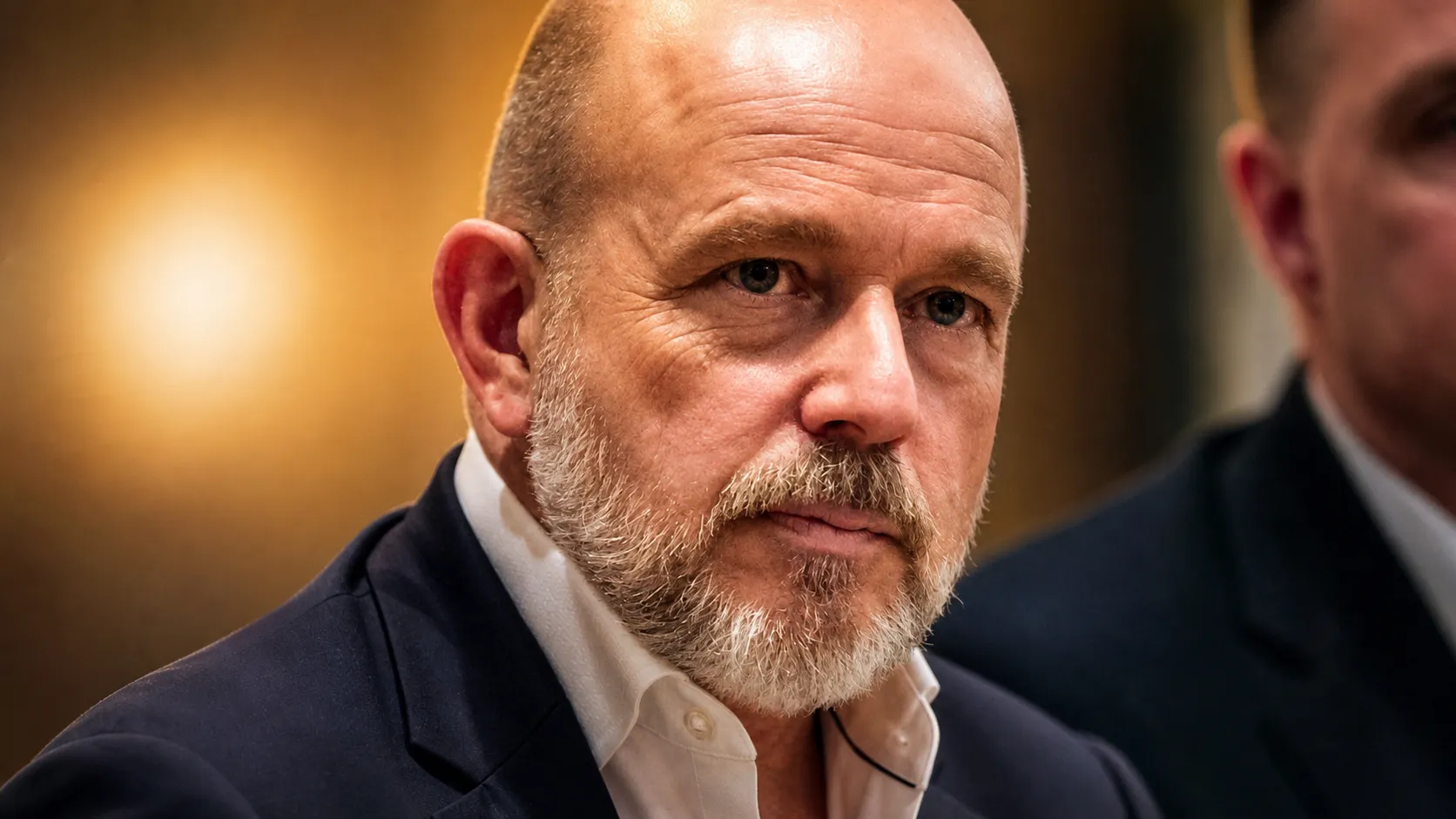
Republican Steve Hilton is directly confronting one of his biggest liabilities in his bid to become California governor: many voters simply do not like President Donald Trump, who enthusiastically endorsed him. In a striking new campaign move, Hilton is essentially asking those voters to support him anyway.
The former Fox News host released full-page advertisements in major California newspapers this week with the headline, “Can you be anti-Trump but still vote for me?” The ads, appearing in the San Francisco Chronicle and Los Angeles Times, represent a remarkable gambit for a candidate who has Donald Trump’s coveted endorsement and needs Republican votes to survive the general election.
“Yes, I’m the Republican. The ‘Fox News’ guy,” the ad reads, acknowledging Hilton’s background. “But this election is not about who you hate in Washington. It’s about what you love here.” The advertisement goes on to tell voters: “You don’t have to like Trump. You don’t have to become a Republican. You just have to ask yourself: does it make sense to vote the same way and expect a different result?”
The unconventional pitch underscores the enormous challenge Hilton faces as he heads into November against Democrat Xavier Becerra, the former U.S. Secretary of Health and Human Services. Hilton advanced from California’s primary election in June alongside Becerra under the state’s unusual “top two” primary system, which sends the two candidates with the most votes regardless of party affiliation to the general election. But California is heavily Democratic, with registered Democrats outnumbers Republicans nearly two to one. Trump is deeply unpopular in the state, with approval ratings hovering around 24 to 28 percent among likely voters.
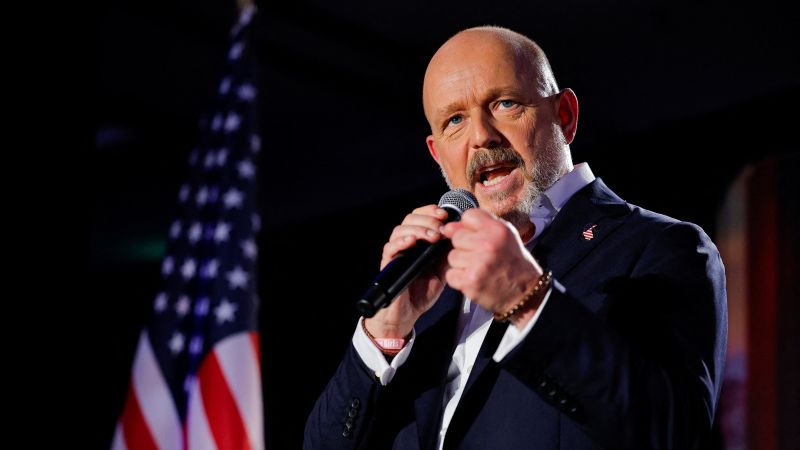
Trump endorsed Hilton in April, calling the British-born political strategist a “truly fine man” who could help turn California around. At the time, the endorsement helped Hilton consolidate Republican support in a crowded primary where Democrats worried that two Republicans might emerge as the top vote-getters, locking Democrats out of the general election entirely. But now that Hilton faces a Democratic opponent in November, the Trump endorsement has become a potential millstone.
Hilton’s new advertising strategy suggests his campaign recognizes this reality. A recent poll by the Public Policy Institute of California showed Becerra leading Hilton by 25 percentage points, with 61 percent of likely voters backing Becerra compared to 36 percent backing Hilton. The advertisements appear designed to reach the persuadable voters Hilton needs to have any realistic chance of winning. Internal polling from his campaign shows that three-quarters of persuadable voters dissatisfied with California’s direction did not vote for Trump, according to Hilton’s campaign.
The ads are part of a broader messaging strategy emphasizing affordability, housing, public safety, and economic issues rather than partisan politics. Hilton is arguing that California needs change after 16 years of Democratic control and that voters should judge him on his potential solutions to the state’s high cost of living rather than on his relationship with Trump.
A campaign spokesperson said the new advertising is not about distancing from Trump’s endorsement. “This is NOT Steve distancing himself from President Trump,” the spokesperson said. “In fact, Steve has consistently said he is proud to have the President’s endorsement and will continue to do so.” The campaign added that it is focused on “building a broad coalition of voters seeking change after 16 years of one-party rule.”
Becerra’s campaign has wasted no time attacking Hilton over his Trump connection. Becerra’s spokesperson said voters looking for solutions to high gas and food prices “won’t find salvation in Donald Trump’s disciple.” The Democratic campaign also argues that Hilton, despite his stated focus on affordability, “cheers on a president whose illegal war has sent gas prices soaring and illegal tariffs have cost California families thousands of dollars.”
Political strategists say Hilton’s challenge is difficult but not insurmountable. Some Republicans point out that while Trump’s low approval ratings are a drag on Hilton’s candidacy, the larger problem is California’s unfavorable voter registration numbers. Polls also show that a narrow majority of Californians believe the state is heading in the wrong direction, a constituency Hilton has sought to target throughout his campaign.
Hilton’s campaign is planning television ads to run alongside the print advertisements, with a spot featuring Hilton holding a California flag as he battles what the campaign characterizes as the Democratic “machine.” He plans campaign events targeting working-class voters, including Latino voters, as he seeks to build a coalition that can overcome both his party’s registration disadvantage and voter resistance to Trump.
California has not elected a Republican governor in 20 years, making Hilton’s path to victory extremely steep. But by directly acknowledging voter concerns about Trump while asking them to focus on other issues, his campaign is attempting a high-wire act: maintaining support from the conservative base energized by Trump’s endorsement while simultaneously appealing to the much larger pool of voters who oppose the president.