

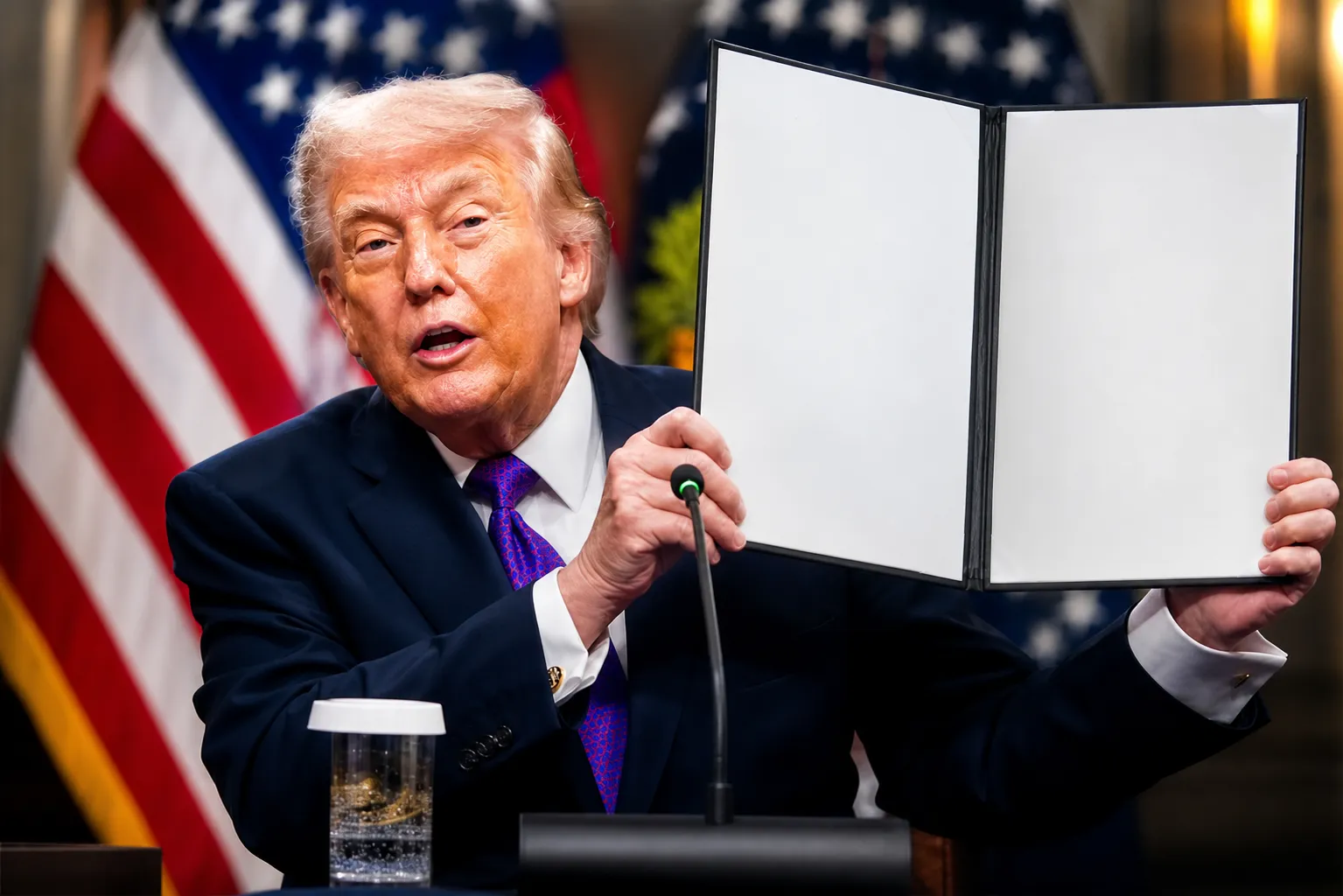
President Donald Trump is expanding a voluntary pledge to protect American consumers from rising electricity costs driven by the rapid expansion of artificial intelligence data centers, dramatically broadening the agreement beyond the original seven major technology companies who signed in March.
The expanded Ratepayer Protection Pledge now covers nearly 200 new signatories, including major electric utilities such as Duke Energy and Nextera, data center developers, electricity cooperatives, public power providers, and Republican governors from multiple states. The White House announced that the pledge will now extend to 80 percent of all power delivered to U.S. Homes and businesses.
Trump was set to announce the expansion at an event Thursday, accompanied by Energy Secretary Chris Wright, Environmental Protection Agency Administrator Lee Zeldin, and four Republican governors who have already signed the pledge: Louisiana’s Jeff Landry, Georgia’s Brian Kemp, Nebraska’s Jim Pillen, and Idaho’s Brad Little. Additional governors from Montana, Wyoming, and Missouri have also endorsed the initiative.
The expansion reflects mounting political pressure as data center growth strains electricity grids across the nation. Electricity prices have risen 4 percent over the past 12 months according to the Bureau of Labor Statistics, outpacing overall inflation. In areas with high concentrations of data centers, the impact has been severe, with electricity costs in some regions jumping 267 percent over the past five years, according to analysis from Bloomberg.
The initiative emerged from Trump’s State of the Union address in February, where he introduced the pledge and emphasized it during the White House ceremony in March where Google, Microsoft, Meta, Oracle, xAI, OpenAI, and Amazon signed on. The pledge represents Trump’s effort to balance his push for American artificial intelligence dominance against growing public concern that data centers will drive up household energy bills.
Under the pledge, companies agree to cover their own electricity costs rather than passing them on to consumers. The companies commit to build, bring, or buy all the power generation resources needed to satisfy their energy demands and pay for new power delivery infrastructure upgrades. They also agree to negotiate separate rate structures with utilities and state governments, and to cover costs even for capacity they request but do not ultimately use.
Trump has framed the pledge as a solution that will ultimately lower electricity costs. “They need some PR help because people think that if a data center goes in there, electricity prices are going to go up,” Trump said during the original March signing. “It’s not going to happen.”
However, energy experts have raised significant doubts about the pledge’s effectiveness. The agreement is nonbinding and lacks legal enforcement mechanisms, meaning there are no penalties if companies fail to meet their commitments. Electricity rates are set by utilities and approved by regulators, not through White House announcements, according to legal scholars.
One expert called the pledge “an unenforceable document that does not benefit consumers,” noting that it has no impact on utility rates established through regulatory processes. The burden of enforcement would fall to state utility commissions during rate cases, where the actual allocation of data center costs gets decided.
The political stakes are significant. Rising electricity costs became a major issue in recent elections, with opposition to rising power prices cited as a key factor in Democratic victories in states including Georgia, Virginia, and New Jersey. The Trump administration faces pressure to demonstrate it can address cost of living concerns that have soured voters on its economic stewardship.
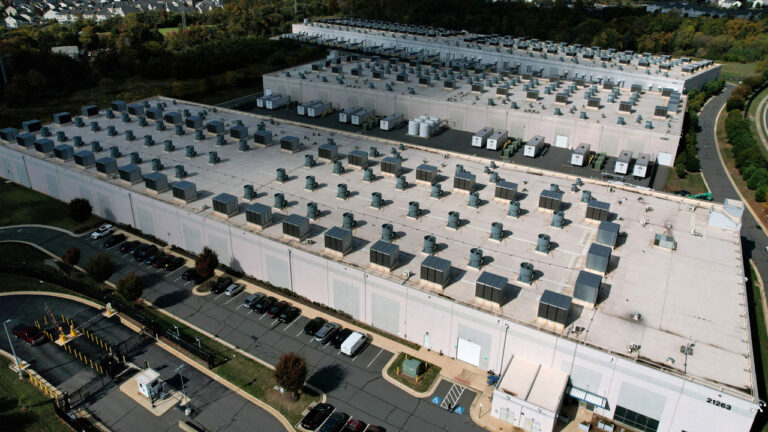
The expansion also reflects a real challenge facing the nation’s electricity grid. Data centers currently consume between 4 and 6 percent of all U.S. Electricity, but projections show that figure could reach 12 percent or higher by 2028. The regional grid system is already under severe strain in certain areas, particularly in the Mid-Atlantic region where the concentration of data centers is highest.
Virginia’s Northern Virginia corridor, home to the world’s largest concentration of data centers, already accounts for roughly 40 percent of the state’s total electricity consumption. Residents in nearby areas have seen dramatic bill increases, with one Virginia resident’s January 2026 electricity bill reaching $281, roughly triple his normal monthly payment.
Some states have begun taking action independently. Virginia enacted the first direct data center power consumption tax in U.S. History, imposing $0.011 per kilowatt-hour on all electricity used by data centers starting July 1, 2026. Oklahoma’s Data Center Consumer Ratepayer Protection Act took effect the same day.
Lawmakers in more than 30 states have introduced over 300 bills related to data center issues, including moratoriums, tax incentives, and energy policy changes. A November 2025 national survey found that 78 percent of Americans are somewhat or very concerned that new data centers being built across the country will increase their energy bills.
The Trump administration’s push to expand the pledge comes as it pursues broader goals of making the United States the global leader in artificial intelligence. The administration views data centers as critical infrastructure and has championed rapid expansion despite growing community opposition and concerns about environmental and resource impacts.
Data center advocates argue that the industry’s expansion is driving necessary investments in America’s aging electrical infrastructure and point to other factors driving up costs, including power plant retirements and transmission constraints. They contend that without data center investment, utilities would have less incentive to modernize the grid.
The expansion of the pledge signals that the administration intends to rely on voluntary commitments from the private sector to address what has become a significant political and practical challenge. Whether those commitments will prove sufficient to protect consumers from the electricity cost impacts of the AI boom remains an open question as the nation grapples with a historic surge in energy demand.