

After an eight-year pursuit, San Francisco’s Californios has achieved culinary history as the first Mexican restaurant anywhere in the world to earn three Michelin stars. Chef and co-owner Val Cantú received the honor at a ceremony in San Diego in June, standing alongside his wife Carolyn as he accepted the prestigious award and its crisp white Michelin chef’s jacket.

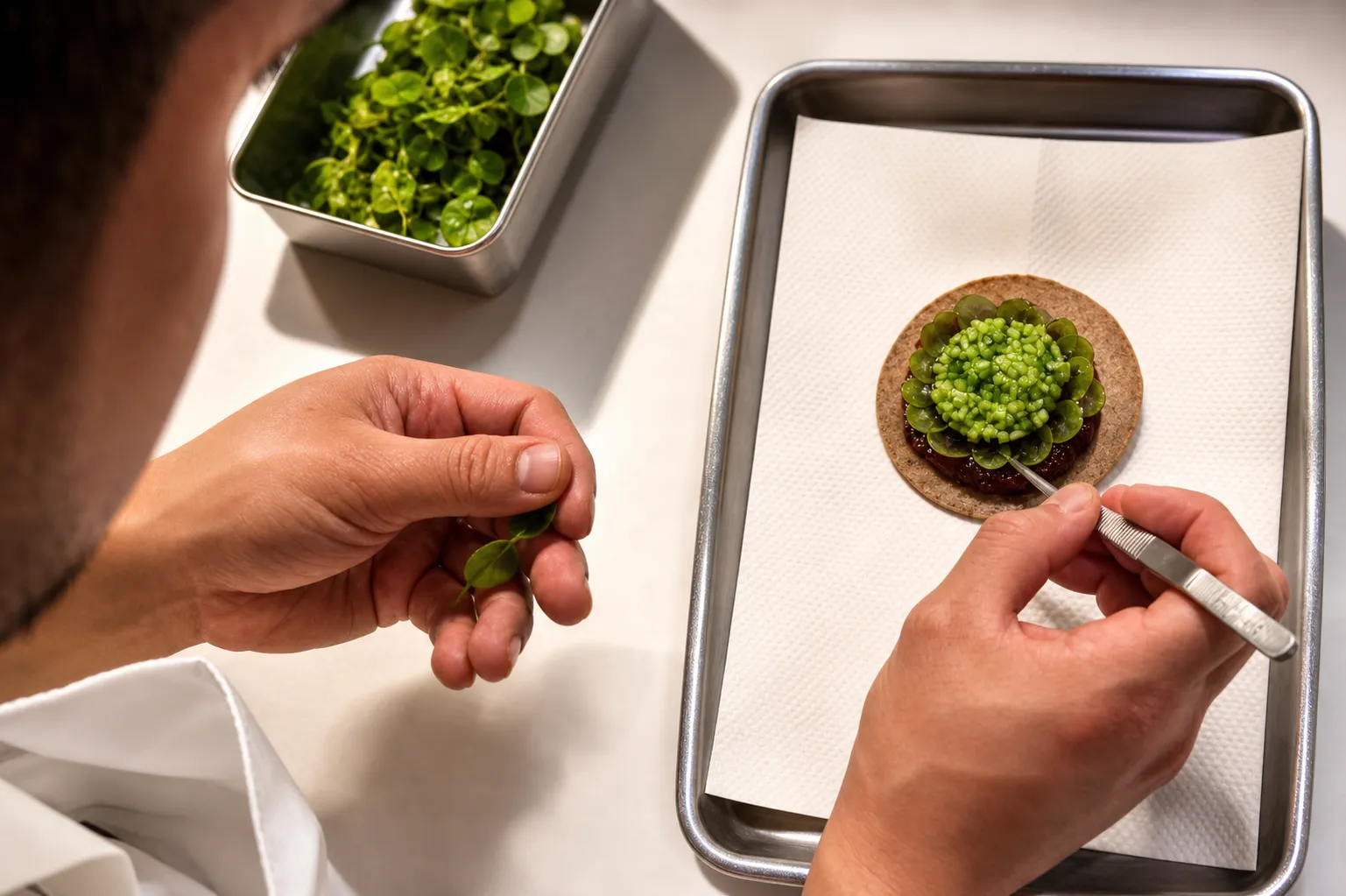
The ascent to this pinnacle represents an extraordinary milestone not merely for Californios but for Mexican cuisine globally. Since opening in 2015 in the Mission District, the restaurant earned one Michelin star immediately. In 2018, it claimed a second star. After relocating to a larger space in SoMa in 2021, Cantú and his team refined their craft further, ultimately crossing the threshold into the rarefied air of three-star status. Michelin’s inspectors noted that Californios succeeded because it has never been “afraid to cross borders” on the plate. From the first bite, diners experience Cantú’s blend of Mexican culture with California ingredients. A signature opening course features a sope—a small hand-formed masa cake made with white corn and beans from a farm in nearby Santa Rosa—topped with caviar made in partnership with a Sacramento sturgeon farm.
“It’s just really, really delicious and kind of feels like a warm hug,” Cantú said of the dish. “It feels comforting.”
The journey to three stars wasn’t smooth. After initially doubting whether a Mexican restaurant could reach such heights, Cantú told his staff he was willing to “toil away for forever” if necessary. One Michelin inspector captured the restaurant’s trajectory, noting that early on, the components suggested three stars were possible: “It was just a matter of time before they focused on offering a perfectly edited expression of the concept—not necessarily doing more, but doing less at the highest level.”
Cantú’s path to the kitchen was unconventional. Raised in Brownwood, Texas, where his father owned a Mexican restaurant and tortilleria, he initially studied business and English literature at the University of Texas at Austin. But by 2009, cooking had captured his passion. He worked at Uchi in Austin before moving to San Francisco, where he spent time at prestigious establishments including Saison and Sons & Daughters. While there, he noticed something striking: no one was elevating Mexican cuisine to fine dining. In search of deeper knowledge, he moved to Mexico City and worked at Pujol, Enrique Olvera’s acclaimed two-Michelin-star restaurant, immersing himself in Mexican culinary traditions.
The achievement carries significance beyond the restaurant’s walls. Mexican American restaurants have long faced skepticism for charging higher prices and offering tasting menus, a criticism rarely leveled at French or Japanese establishments with comparable pricing. Cantú’s success challenges stereotypes rooted in classism. As one food writer put it, Mexican food is often expected to be cheap based on the myth that all Mexicans are working-class and cannot afford higher-end cuisine. The three-star rating validates the notion that Mexican food in Mexico and across the diaspora deserves recognition as an elevated culinary experience.
The 16-course tasting menu runs approximately $325 to $390 per person, reflecting the quality of ingredients sourced from small California farms and the technical precision involved. Californios now joins just six other three-star Michelin restaurants in the entire Bay Area. The restaurant’s small team of about 40 staff members carries themselves with new confidence, as Cantú noted. “It’s been just really rewarding to see the team kind of like, carry a little bit more confidence in their step,” he said. “Maybe I’ve got some new confidence too.”
The accolade hasn’t stopped Cantú from looking forward. He is working on a cookbook and has plans to bring his masa-forward, Texas-inspired cooking to a new venture at Canyon Ranch Austin, opening in 2026. But the three-star achievement signals something larger than one restaurant’s success. Recent years have seen Michelin increasingly recognize Mexican restaurants, including a modest 10-by-10 foot taco stand in Mexico City, suggesting a broader shift in how Mexican cuisine is being evaluated on the world stage.
“Mexican cuisine is one of the most diverse and complex cuisines in the world,” Cantú said, “and there’s countless Mexican immigrants in the United States and Latin immigrants who have their own ideas and concepts of what things can be.”