


Paul De Gelder, who survived a devastating shark attack that cost him a hand and a leg, has taken part in research pointing to three overlapping conditions that can make bull shark encounters with humans far more dangerous — a combination investigators have nicknamed the ‘dinner bell’.
The former Australian serviceman was mauled in Sydney Harbour in 2009 while involved in a military counter-terrorism drill.
In the years since, he has become a shark conservation advocate and a familiar figure during Discovery’s Shark Week programming.
For his newest special, Bull Shark Dinner Bell, broadcast on Monday, De Gelder headed to Florida and teamed up with apex predator expert Rosie Moore to examine what prompts bull sharks to gather and strike.
Moore said there is rarely one simple cause behind a bite. “With bull sharks, there’s usually a number of factors that lead up to that bite,” she said on the Discovery Channel.
By the end of the investigation, the team had narrowed it down to three conditions that, when combined, appear to sharply increase the likelihood of aggressive behavior: rain, the presence of oily or fatty fish, and human movement in the water that creates vibrations.
Bull sharks are a species that draws extra attention from researchers because they are coastal ambush hunters and one of the few sharks that can move between saltwater and freshwater. The International Shark Attack File, housed at the Florida Museum of Natural History, says the risk of a shark bite remains extremely low overall, even though bull sharks are disproportionately associated with attacks in places where people swim, surf and wade.
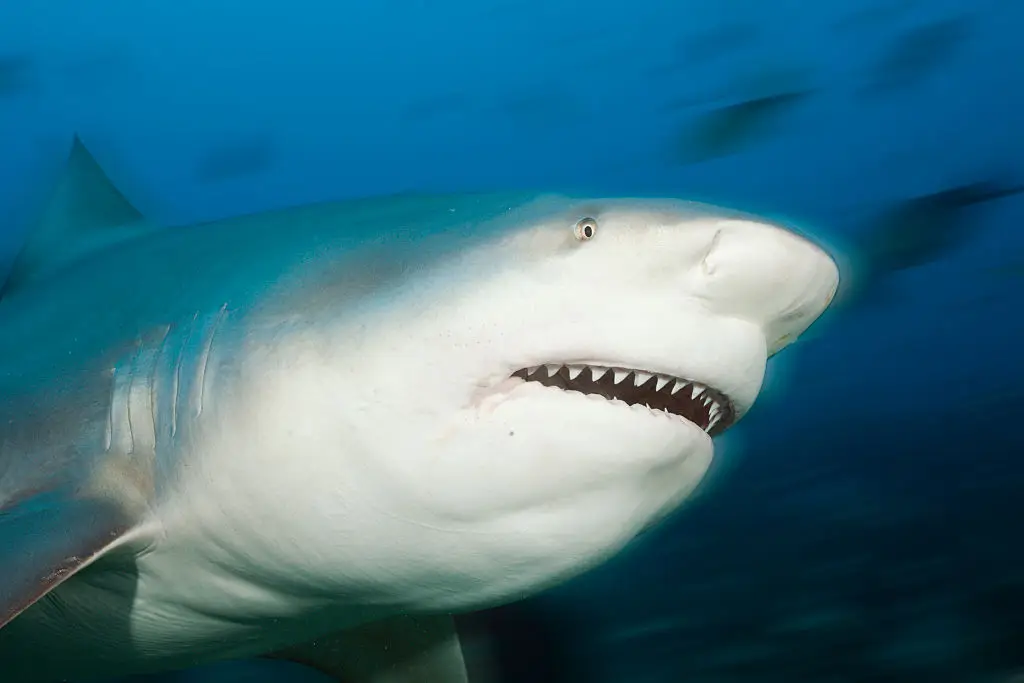
Although humans are not a preferred target for most of the roughly 500 shark species known to science, bull sharks have long been regarded as especially risky. They are often described as ambush hunters, live comfortably in temperate waters, and are frequently linked to attacks on people. Data from the Global Shark Attack File, which has recorded incidents since the 1940s, had already connected ten biting cases to bull sharks in 2026.
De Gelder said those figures support the species’ reputation.
“If you go through the Global Shark Attack Files since 2025, bull sharks are responsible for twice as many attacks as tiger sharks, and even 25 percent more than great whites,” he said.
Even so, he stressed that bull sharks are not indiscriminate killers. “If they chose to, they could kill you, but they more often than not don’t.”
To find out what shifts their behavior, De Gelder and Moore visited Jupiter Ledge near Palm Beach, an area well known for bull shark activity. The animals reportedly appeared around their vessel almost right away.
The first condition they explored was rainfall. Scientists involved in the program believe storms may stir bull sharks by producing vibrations at the water’s surface. To test the idea, Moore entered the Atlantic near five or six bull sharks while De Gelder switched on a water pump designed to mimic rain. The response was immediate: the sharks became more active, sped up, and more of them moved in as the artificial rain continued.
Moore offered one possible explanation. “I think the bull sharks might associate the raindrops on the surface with other fish. They detect the tiniest vibrations. They can literally see with their eyes closed,” Moore explained, adding that these heightened senses allow the sharks to hunt effectively even in total darkness.
She said the effect was unmistakable. “The rain has definitely triggered a more aggressive response. They’re faster, bolder, more willing to bite,” she said. “Rain is definitely a factor we need to ring this dinner bell.”
The second piece of the puzzle involved prey. Researchers lowered three different crates of meat into the sea, including one containing pork meant to stand in for human flesh.
That bait drew little interest. What did get the sharks’ attention was a crate packed with oily, fatty fish, which they repeatedly bumped and struck with their heads — conduct researchers say often comes before a bite.
Moore said that tracking seasonal fish movements where they overlap with bull shark habitat may offer people a better idea of when entering the water is riskier.
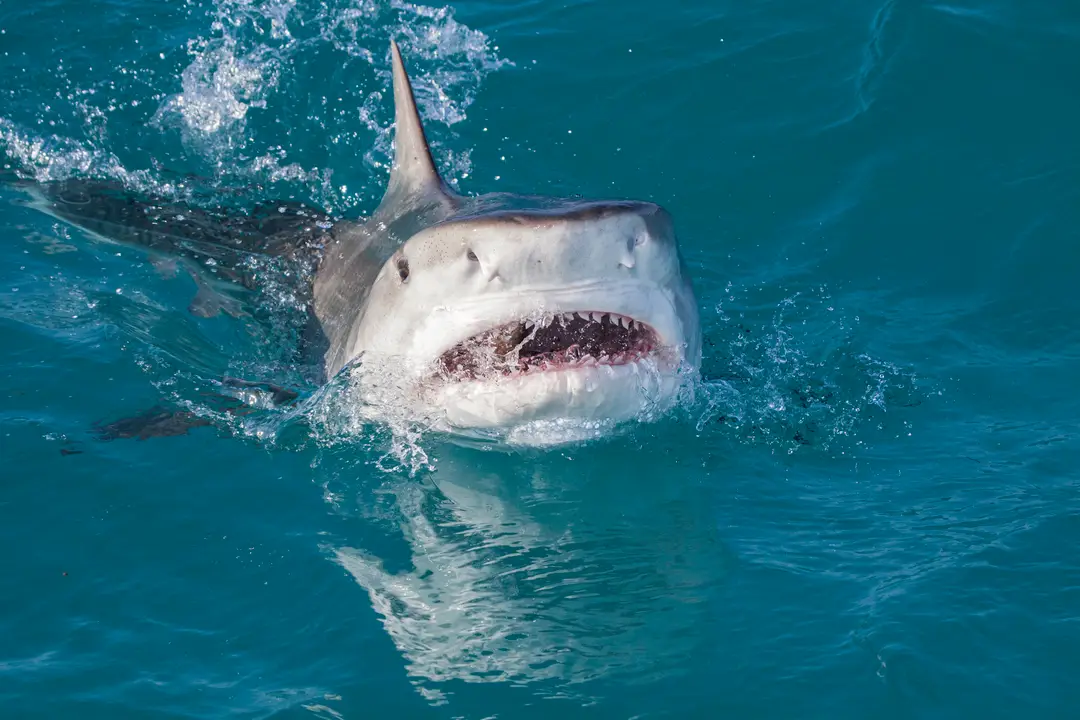
The third factor came down to people themselves, especially activities such as spearfishing that send strong signals through the water.
In one experiment, De Gelder speared a fish from the boat while Moore observed underwater in scuba gear. A bull shark rushed toward the struggling fish, and within seconds nearly a dozen others had converged on the area. Moore said the behavior seems tied to competition.
“Bull sharks are interesting because it’s almost like they get a sense of FOMO,” she said. “It triggers an uptick in aggression from the other sharks around it because if you’re a shark in the ocean, there’s not necessarily a grocery store for you to go to; you have to compete for that available prey.”
For a final demonstration, the team brought together all three triggers at once. De Gelder entered the water during the simulated rain with bait nearby. “As soon as I hit the water, they came to investigate,” he said.
The footage showed the sharks dropping both pectoral fins, which is widely seen as a sign of agitation, and one of them clamped onto De Gelder’s scuba fin.
“As soon as I hit the surface with the rain, the bait in the water, it was like the perfect storm,” he said.
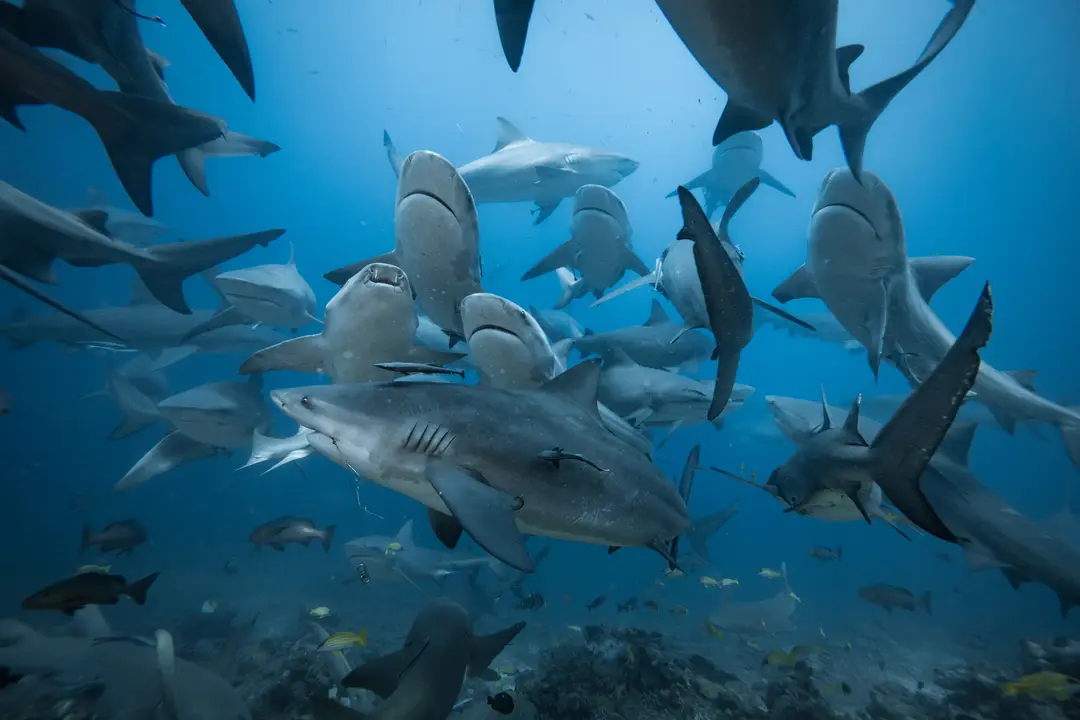
Moore said the scene was unlike anything she had seen before.
“I have never seen bull sharks behave like this,” she said. “You can literally see how if all these elements lined up and you had somebody in the water that was not prepared, they would not stand a chance. The dinner bell has rung.”
Despite how intense the test became, she said people and bull sharks can still share the water safely if the warning signs are understood.
Recent shark-attack data underscores that point. The International Shark Attack File says there were 65 unprovoked shark bites worldwide in 2025, near the 10-year average, and that the United States accounted for 38% of reported bites while Australia accounted for 32%. Florida again led the U.S. With 11 unprovoked bites, the most of any state, but the overall odds of a shark bite remain very low.
De Gelder ended with a direct caution to anyone heading into the ocean.
“Truly assess the conditions before you enter the water, it could save your life,” he said.