

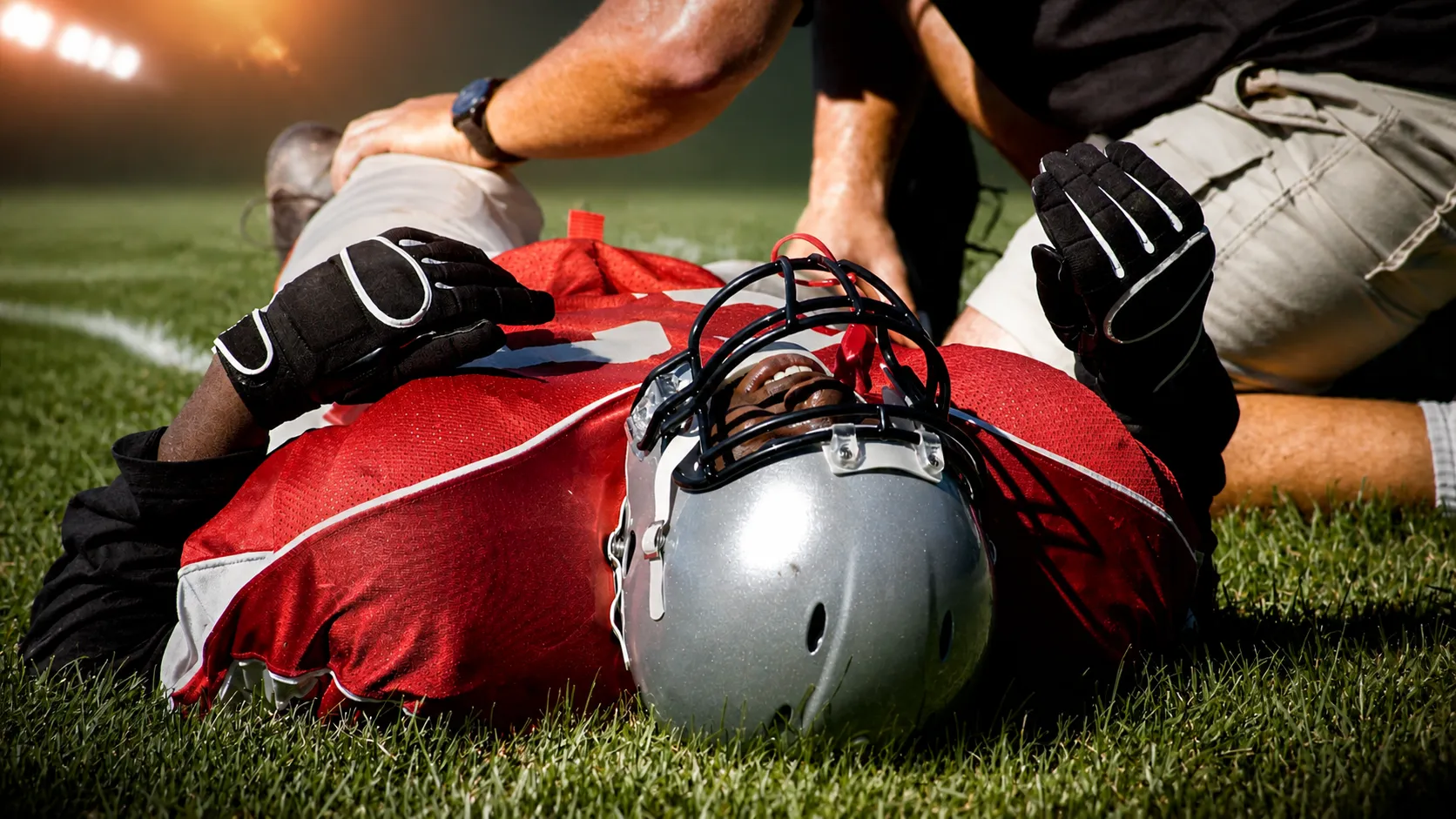
Football remains one of America’s most popular sports, but it also carries an exceptionally high injury risk. The National Football League has long been recognized as having higher injury rates than other major team-based collision sports, including rugby and ice hockey. Understanding the most common injuries that plague NFL players provides insight into the physical demands of the game and the challenges teams face in keeping their rosters healthy throughout a season.
Lower extremity injuries dominate the landscape of NFL injuries. The knee stands as the most commonly injured body part, accounting for more than 20 percent of all injuries in professional football. From 2015 to 2018, a mean of 41 percent of NFL players suffered at least one time-loss injury to the lower extremity. This statistic underscores how critical leg health is to maintaining an active roster.
Knee injuries encompass various ligament tears and sprains. The anterior cruciate ligament tear, known as an ACL injury, represents one of the most serious knee injuries a player can sustain. A total of 314 ACL injuries occurred between 2015 and 2019, with a mean of 62 per year. These injuries occur more frequently during games than practices, and players with three or fewer years of NFL experience face higher preseason injury rates than more veteran players. Most ACL tears happen through noncontact mechanisms, typically during pivoting, cutting, or landing movements rather than direct impacts. While ACL recovery requires extensive surgery and rehabilitation, affecting a player’s career trajectory significantly, other knee ligament injuries like the PCL, MCL, and LCL vary in severity and recovery time.
Ankle injuries rank as the second most common lower extremity injury, accounting for approximately 15 percent of all injuries. These injuries range widely in severity, from minor sprains that sideline players for a few days to high ankle sprains that can keep athletes out for an entire season. Recovery time typically ranges from one to six weeks depending on the grade of the sprain, and about 80 percent of athletes experience recurring sprains after an initial injury.
Hamstring strains represent another critical lower extremity injury. The NFL records approximately 176 hamstring injuries each season, nearly six per team on average. While some hamstring strains are relatively mild, requiring only two to three weeks of recovery, more severe tears can sideline players for months. On average, players with hamstring strains miss about 13 days, though recovery depends heavily on injury severity. The re-injury rate for hamstring strains exceeds 16 percent in NFL athletes, and about 20 percent of hamstring injuries during recent seasons were recurrences within the same calendar year.
Beyond the lower extremities, shoulder injuries rank high on the injury frequency list. Broken collarbones, acromioclavicular joint separations, rotator cuff injuries, and shoulder instability are the most common shoulder injuries encountered in the league. Quarterbacks and defensive backs face the highest risk of shoulder injuries, while linemen tend to suffer more rotator cuff and posterior shoulder instability issues.
Concussions have received increasing attention in recent years, though they represent a smaller percentage of overall NFL injuries compared to lower extremity problems. However, their significance extends far beyond their frequency. A concussion is a brain injury caused by a hit to the head or sudden movement that causes the brain to shake violently. Symptoms may include headaches, neck pain, nausea, dizziness, and feeling sluggish. The NFL recorded its fewest number of concussions in recent years at 182 total during the 2024 season, representing a 17 percent drop from the previous year, though the league continues working to reduce these injuries further.
Achilles tendon tears represent potentially career-ending injuries that have garnered significant attention in professional football. The Achilles tendon connects the calf muscles to the heel bone and plays a critical role in sprinting, jumping, and acceleration. When it tears or ruptures, typically during sudden explosive movements, surgery and extensive rehabilitation become necessary. While advances in surgical techniques have improved outcomes compared to decades past, between 30 and 40 percent of professional athletes do not return to play following an Achilles tendon rupture. Those who do return often experience decreased playing time and diminished performance compared to their pre-injury levels. Average return to play comes around nine to 11 months after injury.
The risk of injury varies by position. Running backs and linebackers face elevated knee injury risk, while defensive backs consistently demonstrate the highest number of all-cause injuries across all positions. Offensive linemen sustain the highest total number of injuries overall. Quarterbacks, by contrast, suffer injuries less frequently and typically experience upper body injuries when they are hurt.
Various factors influence injury rates across an NFL season. Teams that fail to make the playoffs show significantly higher injury rates than playoff-qualifying teams, often attributed to factors like player fatigue and reduced motivation. Additionally, lack of proper conditioning and training can increase injury susceptibility, as evidenced by increased injury rates during seasons when teams had reduced preseason preparation.
While protective equipment has evolved significantly, football remains an inherently high-risk sport. The physical demands of explosive movements, sudden directional changes, and high-velocity collisions create an environment where injuries are nearly inevitable. Modern medical teams employ comprehensive injury prevention strategies, advanced rehabilitation techniques, and careful return-to-play protocols designed to protect players and minimize career-threatening damage. Yet despite these efforts, injuries remain a permanent fixture of professional football and a constant challenge for teams managing rosters through the grueling NFL season.