

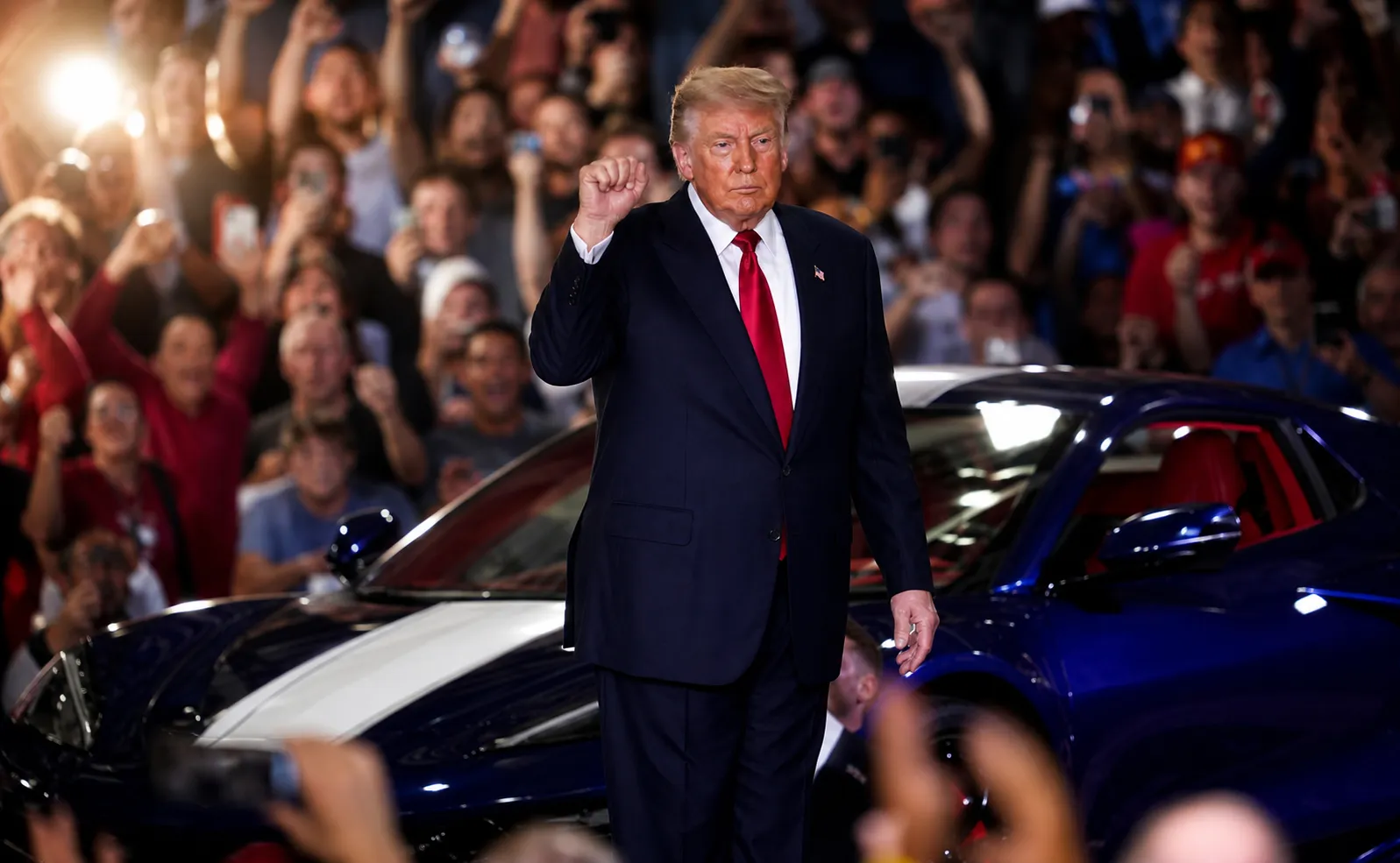
President Donald Trump visited General Motors’ proving ground in Milford, Michigan this week to tout the benefits of his tariffs, declaring that car companies are thriving under his trade policies. Yet even as crowds of supporters cheered and chanted at the rally, the economic reality on the ground paints a starkly different picture—one where rising costs and job losses are straining the finances of many Michigan families, including some of Trump’s most loyal backers.
Traveling to the battleground state ahead of Michigan’s primary elections next week, Trump delivered an optimistic message about his economic record. He declared that “car companies are doing better than they’ve ever done” thanks to his tariffs and told supporters that “Michigan is thriving.” During a tour of the facility, he autographed a white Corvette commemorating America’s 250th anniversary, predicting that “it’s amazing what tariffs will do for General Motors.” But according to multiple economic measures, those assertions clash sharply with conditions facing Michigan residents and workers.
The tariff costs have mounted substantially. Families across the Midwest paid an average of more than $2,000 in additional costs in 2025 due to tariffs imposed on imported goods and materials. Michigan residents faced an even steeper burden, with costs as high as $3,200 per household that year. On a national level, the nonpartisan Tax Policy Center estimates American households are bearing an average tariff burden of about $920 in 2026. These price increases have contributed to ongoing inflation concerns, despite Trump’s pledges that his business background would resolve such economic problems.
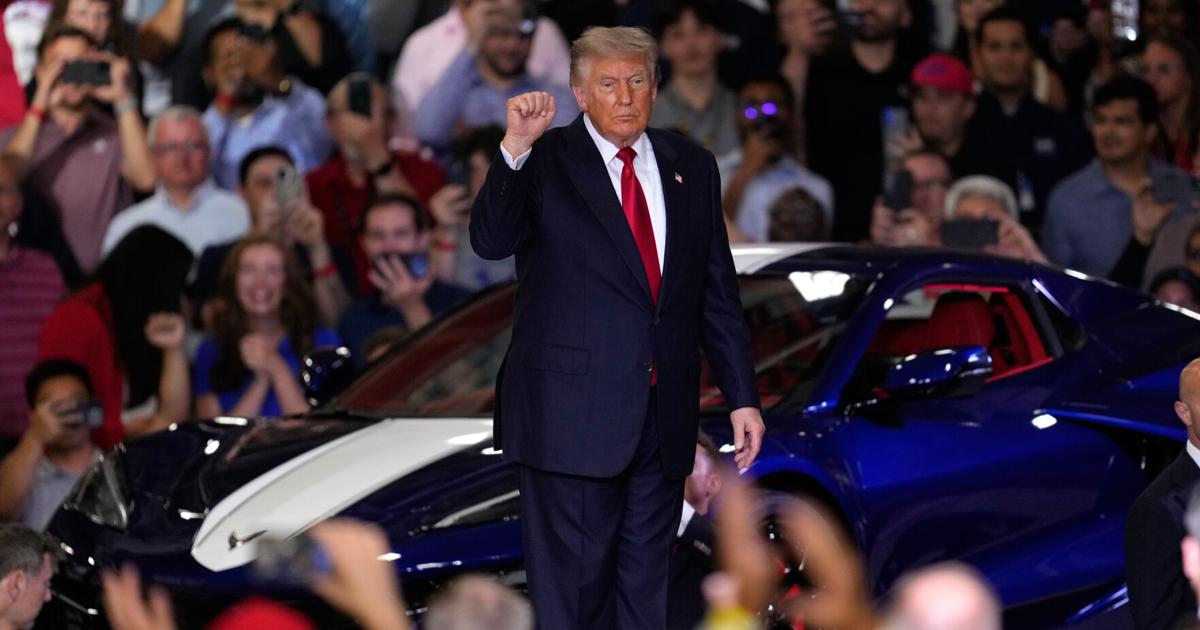
Manufacturing employment in Michigan has suffered under the tariff regime. The state lost 8,300 manufacturing jobs since Trump announced his major tariff push in April of last year. More recent studies paint an even bleaker picture: researchers estimate that 2025 tariffs cost the Midwest nearly 42,000 manufacturing jobs overall, with Michigan accounting for approximately 12,400 of those losses. In the auto parts sector specifically, Michigan shed about 4,000 jobs in the 12 months leading up to June 2026, though vehicle assembly operations added a modest 500 jobs during the same period.
Despite these economic headwinds, many Trump supporters at the Milford rally remained steadfast in their backing of the president, even as they acknowledged the personal financial strain. Lisa Scherer, a 64-year-old former landscaping company owner who now lives on Social Security benefits of $1,100 per month, acknowledged that high gas prices are “hurting a lot” and it is “very rough” to afford things. Yet she emphasized that she still believes the president is doing a good job overall. “But I’m just hoping, if we hang in there,” she said, expressing hope that short-term pain will lead to long-term gains. Expressing her concern about being left behind, Scherer remarked that Trump had “forgot about the people on a fixed income,” but she maintained her optimistic stance, saying, “I look at it like, I guess, No pain, no gain.”
Rose Stroud, a 75-year-old attendee from Commerce, Michigan, offered similarly unwavering support despite the economic conditions. “Trump is, like, No. 1. You know, he’s the best,” she said. The rally atmosphere was decidedly celebratory, with attendees chanting “10 more years!” when Trump discussed needing to leave office after January 2029.

Yet outside the rally, skeptics and economic analysts point to disconnect between Trump’s rhetoric and the economic data. Veteran Michigan pollster Bernie Porn expressed disbelief at the president’s characterization of current conditions. “When I was listening to him, I said, ‘What planet are you on?'” Porn said. He argued that Trump’s upbeat messaging cannot mask how tariffs are intensifying voters’ concerns about inflation and affordability—concerns that remain central issues as November’s midterm elections approach.
Automakers themselves have grappled with steep tariff costs. Industry-wide, automakers have absorbed roughly $35 billion in tariff-related expenses since Trump’s tariffs took effect. General Motors’ own projections estimate the company will face gross tariff costs of $2.5 billion to $3.5 billion in 2026 alone, primarily driven by tariffs on steel and aluminum. The industry has long warned that tariffs increase production costs, forcing companies to either absorb losses or pass expenses onto consumers through higher vehicle prices.
Trump’s visit to Michigan highlighted the complex political dynamics surrounding his trade agenda in a state he won in 2024 after it backed Democrat Joe Biden in 2020. The rally featured endorsements of Republican candidates including Senate candidate Mike Rogers and gubernatorial candidate John James. Yet while the crowds were enthusiastic, the economic impact of tariffs continues to pose a political challenge in a state where manufacturing remains central to the economy.
Democratic Governor Gretchen Whitmer has offered a competing assessment of Michigan’s economic trajectory under Trump’s tariff strategy. She has argued that the administration’s approach has hurt American auto manufacturing and is benefiting Chinese competitors. She warned that conditions would worsen without a shift in policy direction.
As Michigan heads toward crucial elections, the tension between Trump’s optimistic messaging and the economic struggles of working families and manufacturers remains unresolved. Many supporters continue to extend Trump the benefit of the doubt, betting that short-term costs will yield long-term benefits. But with each passing month of job losses and rising prices, that patience is increasingly being tested—even among those who helped return the president to office.