

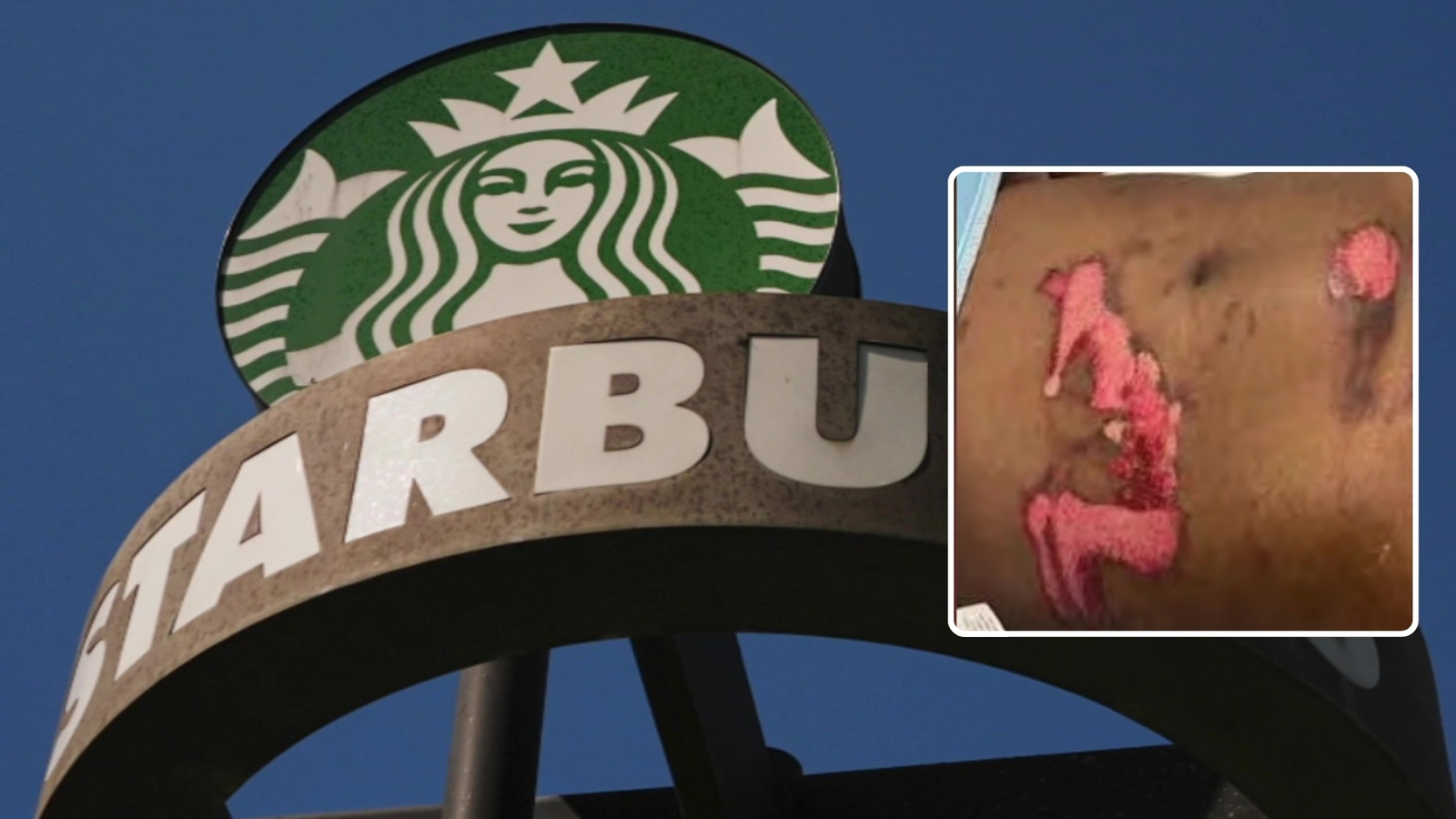
A Riverside County woman sues Starbucks after a lid popped off her drive-thru coffee, causing second-degree burns requiring several weeks of hospital surgery.
The incident happened last month in Wildomar when Leota Walker says a lid popped off her coffee, spilling scalding water on her stomach, inner thighs and her private parts.
Walker has spent several weeks in the hospital undergoing surgery.
The burns came from what Walker claims was a simple drive-thru visit gone wrong.
Walker and her attorneys are now suing the national coffee chain for negligence.
Walker’s legal team points to a troubling pattern.
The lawsuit points to documented incidents online where customers raised concerns over the company’s coffee lids.
Her attorney, Daniel DeSantis, voiced strong criticism of Starbucks’ practices in statements to reporters.
“Starbucks has known for many, many years that they serve their beverages way too hot,” DeSantis said. “Incidents like these continue to happen over and over and over again and Starbucks refuses to change its safety policies and procedures.”
The lawsuit seeks specific compensation for Walker’s damages.
The lawsuit seeks damages for Walker’s loss in wages and physical and emotional pain.
The company declined to address the allegations directly.
Starbucks declined to comment on the lawsuit.
Walker’s case joins a growing line of burn injuries traced to Starbucks beverages.
Last year, a jury in Los Angeles County awarded a man $50 million for a similar lawsuit against the company.
That plaintiff was Michael Garcia, a delivery driver whose case set a precedent.
Garcia sued after being burned when a “scalding hot” cup of tea spilled into his lap after a Starbucks worker handed him a tray containing three venti-sized hot-tea drinks through the drive-through window, with the barista acting negligently by not properly securing the drink and its lid in the drinks tray.
Garcia’s injuries proved catastrophic and permanent.
Garcia said he suffered life-changing third-degree burns, nerve damage and permanent injuries to his genitals and has PTSD following the mishap.
His attorney Nicholas Rowley framed the verdict in stark terms.
“Michael Garcia’s life has been forever changed,” Rowley said in a statement. “No amount of money can undo the permanent catastrophic harm he has suffered, but this jury verdict is a critical step in holding Starbucks accountable for flagrant disregard for customer safety and failure to accept responsibility.”
Starbucks fought the Garcia verdict from the bench.
A Starbucks spokesperson said the national coffee chain disagrees with the jury verdict and intends to file an appeal, saying “We sympathize with Mr. Garcia, but we disagree with the jury’s decision that we were at fault for this incident and believe the damages awarded to be excessive.”
The pattern of similar cases stretches back years. In 2015, a Florida woman won settlement money in a comparable incident. In 2017, a Denver woman sued Starbucks over scalding tea that not only burned her but killed her dog when it leaped into her lap. A San Diego woman named Jennifer Poppers sued in 2025 after lids failed on a cardboard tray of three coffees handed to her by a barista. In recent months, cases have piled up in California, Oregon, and Texas.
Industry observers note that Starbucks has received an enormous number of complaints about its equipment.
Reports indicate Starbucks receives at least 80 complaints monthly related to lids popping off, leading to spill hazards and burns.
Starbucks has maintained for years that it meets all applicable safety standards.
Walker’s incident in Wildomar drew immediate attention from personal injury lawyers who recognized the pattern. A lid detaching from a hot beverage in a drive-thru setting creates exposure not unlike what Garcia experienced two years earlier. Both plaintiffs suffered burns to sensitive areas of the body. Both cases involve the combination of excessive heat and a structurally compromised lid or its improper installation. Both occurred at drive-thru windows where staff hand beverages directly to customers. The similarity is why legal experts say Walker’s case has real teeth in court—juries have already proven willing to hold Starbucks accountable.