

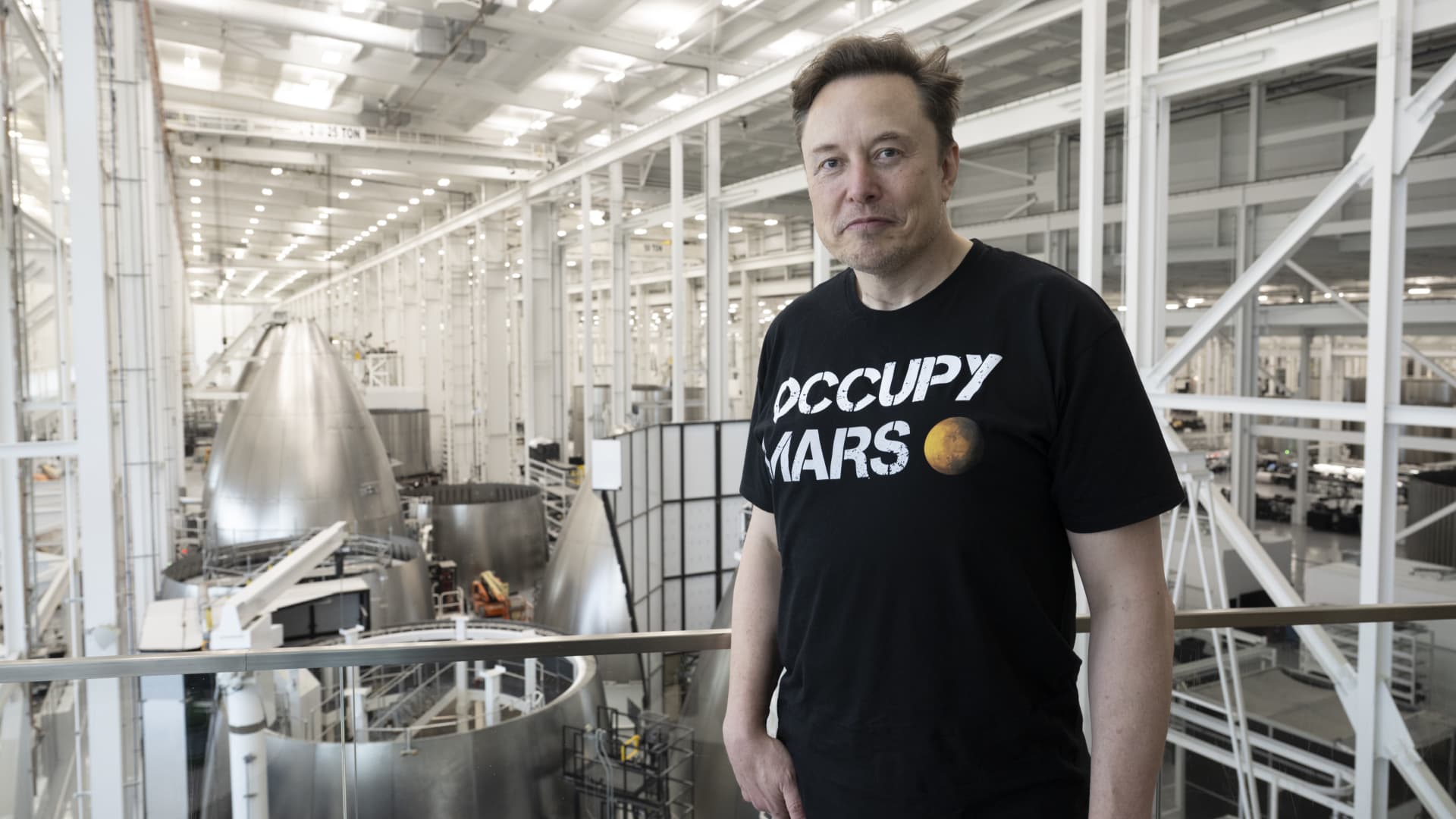
Elon Musk and SpaceX are bracing for a contentious first earnings call as a publicly traded company, with investors preparing to grill the rocket and satellite company on everything from its massive AI spending to ongoing technical troubles with its Starship program.
The company will report its second quarter financial results on August 4, after market close, followed by a live audio-only webcast at 4:30 p.m. Eastern Time. The earnings presentation marks the first time SpaceX management will face public shareholders and analysts since the company completed the largest initial public offering in history just two months ago, raising $75 billion at $135 per share in June and reaching a valuation of nearly $1.8 trillion.
The timing could not be more difficult. SpaceX stock has cratered more than 50 percent from its post-IPO intraday peak of around $225, falling roughly 20 percent below its IPO price. The decline reflects a confluence of challenges: fading post-IPO euphoria, investor profit-taking, mounting concerns about a major shareholder lockup expiration coming later this week when 911 million shares worth roughly $100 billion become available for sale, and growing skepticism about whether the company’s valuation makes financial sense.
Short sellers have intensified their bets against the stock, accumulating roughly $15.5 billion in unrealized gains since the public offering. An estimated 360 million SpaceX shares—roughly 56 percent of the available float—have reportedly been borrowed by short sellers positioning for further declines.
Musk’s pivot toward artificial intelligence spending has emerged as a central flashpoint for investor frustration. After SpaceX acquired Musk’s AI company xAI in February, the focus shifted dramatically from pure-play space and satellite internet to a complex three-segment business spanning space launches, satellite connectivity, and AI infrastructure. In the first quarter of 2026, SpaceX posted a net loss of $4.28 billion on $4.69 billion in revenue, driven largely by the AI division’s massive $5.06 billion research and development spending and infrastructure costs totaling $7.15 billion across both capital expenditure and R&D.
The central tension animating investor concerns is whether Starlink, SpaceX’s profitable satellite internet division, can generate enough cash flow to fund both Musk’s ambitions in AI infrastructure and the Starship rocket program. Starlink was SpaceX’s only profitable division last year, generating $4.42 billion in operating income on $11.39 billion in revenue. But analysts are asking whether Starlink’s profits can indefinitely subsidize AI capital spending that soared to approximately $10.2 billion during the second quarter alone.
Technical setbacks to Starship have amplified investor nervousness. The 13th test flight of the next-generation rocket encountered engine complications and was postponed twice, first due to technical issues and then because of adverse weather. During earlier Starship tests this year, engines shut down prematurely during ascent, and the booster crashed into the Gulf of Mexico rather than landing as planned. SpaceX has turned away satellite operators seeking dedicated Falcon 9 rides beyond 2028 to preserve launch capacity, adding to concerns about the company’s ability to scale operations profitably. Starship development has cost more than $15 billion to date and remains central to SpaceX’s long-term growth narrative.
Musk, who will participate on the call, faces pointed questions about governance and corporate structure. Multiple investors have raised concerns about Musk serving simultaneously as CEO and chairman, combined with his control through a special class of shares that grants him vastly outsized voting power. Critics argue the structure limits board independence and gives ordinary shareholders minimal say in how the company operates.
Wall Street expects SpaceX to report second-quarter revenue of around $6.8 billion to $6.9 billion, up significantly from the first quarter but still representing a company that is unprofitable overall. Analysts will scrutinize Starlink subscriber growth, AI revenue recognition from major contracts with Google Cloud and other providers, and capital expenditure projections for the remainder of the year. The company has never issued formal financial guidance, making any forward-looking commentary during the call especially significant.
SpaceX also faces questions about potential strategic moves, including reports of possible merger discussions with Tesla. Some Tesla investors pressed Musk on the topic during that company’s recent earnings call, though SpaceX President and Chief Operating Officer Gwynne Shotwell declined to rule out future synergies when asked about the possibility on SpaceX’s IPO day.
Investors have opened a dedicated online question portal allowing shareholders to submit queries and vote on which ones management should address. Beyond technical questions about Starship flight timelines and orbital refueling capabilities, shareholder questions ranged widely—from requests for more footage of Starship’s lunar lander to inquiries about SpaceX’s newly unveiled Shiba Inu mascot and whether the company would consider painting its rocket pink.
Yet beneath the whimsy lies serious concern. Morgan Stanley maintains a bullish $300 price target, but other analysts have turned skeptical. HSBC launched coverage with a neutral “hold” rating and a $115 price target. Some analysts worry that Starship development could encounter major technical setbacks that delay operational deployment by years, or that Starlink’s subscriber growth could stall as competing satellite services from Amazon and others move toward launch.
The earnings call comes at a pivotal juncture. SpaceX’s stock price has fallen so sharply and valuation multiples have compressed so severely that some investors see the dip as an opportunity before potential positive developments. Others worry the company is burning cash too quickly to justify its $1.4 trillion valuation, betting on technologies and business models that may never materialize at the scale Musk has promised.
How Musk threads the needle on August 4—balancing near-term financial realities with longer-term vision—will shape investor sentiment in the weeks ahead, particularly as insiders prepare to flood the market with shares later in the week.